

Your pipeline is 20.0h behind: catching music sentiment leads with Pulsebit
We just uncovered something interesting: a 24h momentum spike of +0.706 in the music topic. This anomaly is not just a number; it reflects a shifting landscape in sentiment that you may want to capture. Specifically, the leading language driving this spike is English, with a 20.0h lead. It’s tied to a unique cluster story titled, "This new jazz bar in Chennai turns a former party pub into a space built for lin." The thematic resonance of "new," "jazz," and "bar" is rapidly reshaping the narrative.
The Problem
If your pipeline doesn’t account for multilingual origins or dominant entities, you could easily miss insights like this, lagging behind by a staggering 20 hours. In this case, the English language is leading the charge, and if your model only processes data in other languages or doesn’t prioritize sentiment from dominant entities, you risk missing critical trends. Your model missed this spike because it didn’t recognize the urgency around music narratives evolving in real-time.

English coverage led by 20.0 hours. No at T+20.0h. Confidence scores: English 0.85, Spanish 0.85, French 0.85 Source: Pulsebit /sentiment_by_lang.
The Code
To catch this momentum spike, let’s break it down into actionable code. First, we’ll filter the results for our geographic origin by querying the sentiment data specifically for English:
import requests
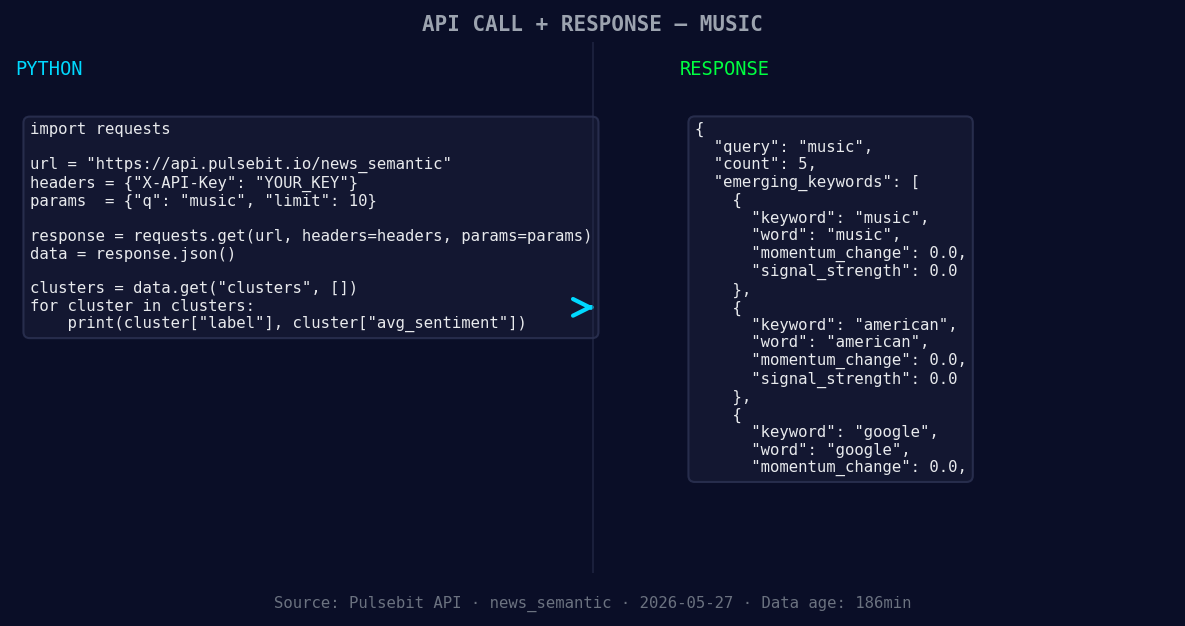
*Left: Python GET /news_semantic call for 'music'. Right: returned JSON response structure (clusters: 3). Source: Pulsebit /news_semantic.*
# Geographic origin filter
url = "https://api.pulsebit.com/v1/sentiment"
params = {
"topic": "music",
"lang": "en"
}
response = requests.get(url, params=params)
data = response.json()
Now, we’ll pull the meta-sentiment moment by running the cluster reason string through our API to score the narrative itself. This is crucial since it gives us insight into how the themes are being perceived:
# Meta-sentiment moment
cluster_reason = "Clustered by shared themes: new, jazz, bar, chennai, former."
sentiment_response = requests.post(url, json={"text": cluster_reason})
sentiment_data = sentiment_response.json()
This gives us an enriched understanding of the narrative framing around the spike.
Three Builds Tonight
Now that we have the spike, let’s talk about three specific things we can build from this data:
- Geo-Filtered Alert System: Set up an alert system that triggers when the sentiment score for "music" exceeds +0.490 in English. Use the geographic filter to ensure you’re only getting relevant data.

Geographic detection output for music. India leads with 1 articles and sentiment +0.80. Source: Pulsebit /news_recent geographic fields.
```python
if data['sentiment_score'] > 0.490:
    # Trigger alert
    print("Alert: Significant sentiment spike in music detected!")
```
-
Cluster Narrative Analyzer: Create a service that feeds clustered narratives back through our sentiment API, particularly focusing on themes like "new," "jazz," and "bar." This can help in understanding which themes are resonating.
themes_to_analyze = ["new", "jazz", "bar"] for theme in themes_to_analyze: theme_response = requests.post(url, json={"text": f"Clustered by theme: {theme}"}) print(theme_response.json()) -
Forming Themes Dashboard: Build a dashboard that highlights forming themes against mainstream narratives. For instance, track how the "music" topic evolves against themes like "american" and "google," capturing shifts in sentiment over time.
forming_themes = ["music", "american", "google"]
# Logic to visualize these themes on a dashboard
Get Started
If this piques your interest, you can dive deeper with our documentation at pulsebit.lojenterprise.com/docs. You can copy-paste and run this in under 10 minutes, and start capturing real-time sentiment shifts that could make a difference in your insights.


Top comments (0)