

Your Pipeline Is 11.7h Behind: Catching Cloud Sentiment Leads with Pulsebit
We recently observed a significant anomaly: a 24h momentum spike of +0.491 in sentiment surrounding cloud topics. This spike, particularly led by English press coverage, indicates a critical shift in sentiment that could have implications for your models. The leading language showed a 0.0h lag compared to the peak at 11.7h, suggesting that if you’re not tuned into multilingual origin or entity dominance, you might be lagging behind in sentiment trends.

English coverage led by 11.7 hours. No at T+11.7h. Confidence scores: English 0.85, Spanish 0.85, French 0.85 Source: Pulsebit /sentiment_by_lang.
When your pipeline doesn't account for these nuances, you risk missing out on emerging trends. In this instance, your model missed the cloud sentiment spike by 11.7 hours, leaving you unaware of a significant shift in narrative framing. The dominant entity here is the cloud, yet it’s often overshadowed by mainstream earnings discussions. This gap signals a need for more sophisticated tracking of sentiment across languages and themes.
Let’s dive into how we can catch these trends using our API effectively. Here’s a Python snippet that will help you identify similar spikes in sentiment:
import requests
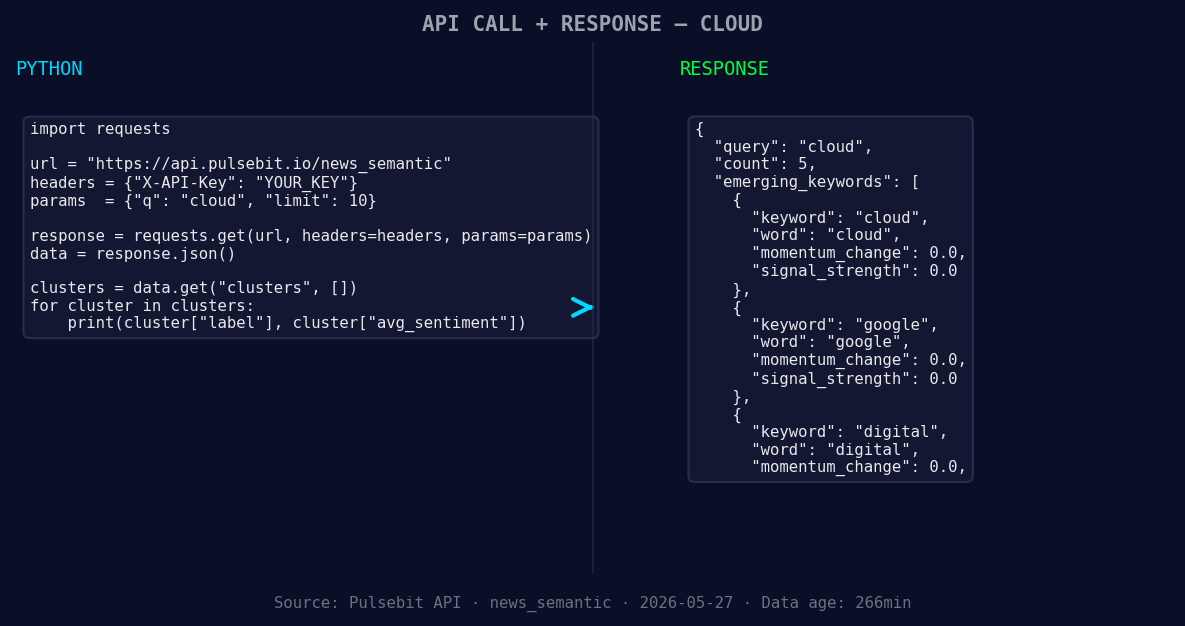
*Left: Python GET /news_semantic call for 'cloud'. Right: returned JSON response structure (clusters: 3). Source: Pulsebit /news_semantic.*
# Define parameters
topic = 'cloud'
score = +0.000
confidence = 0.85
momentum = +0.491
lang = 'en'
# Geographic origin filter: querying by language
response = requests.get(
f"https://api.pulsebit.com/sentiment?topic={topic}&lang={lang}"
)
data = response.json()
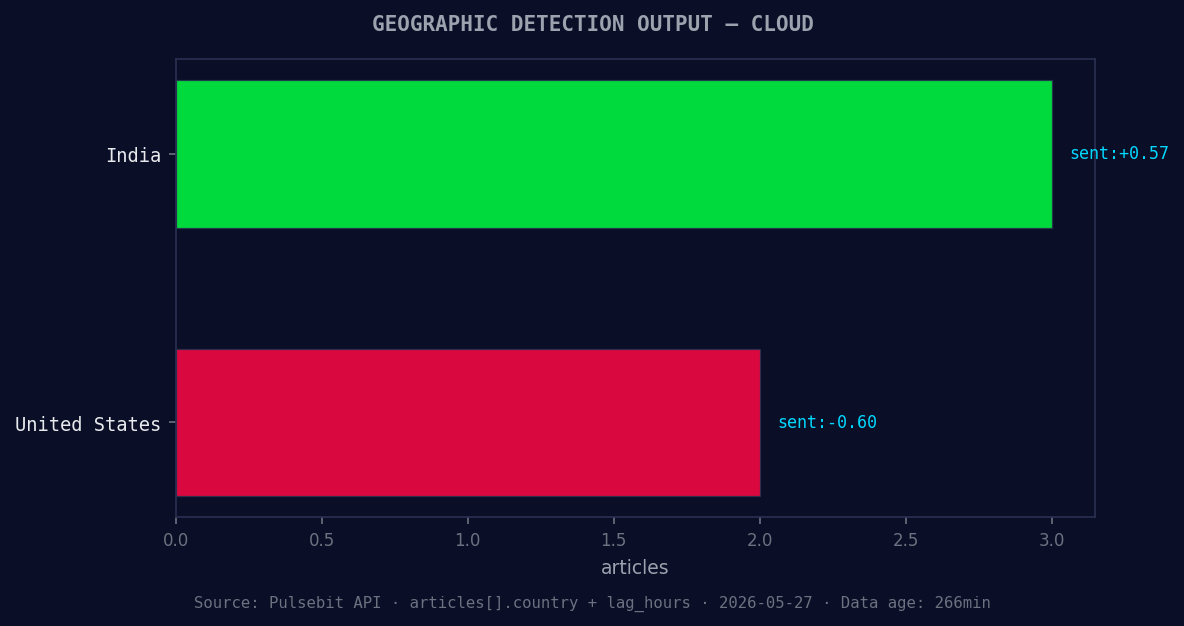
*Geographic detection output for cloud. India leads with 3 articles and sentiment +0.57. Source: Pulsebit /news_recent geographic fields.*
# Check the response
print(data)
# Meta-sentiment moment: scoring the narrative framing itself
cluster_reason = "Clustered by shared themes: 2026, earnings, show, cloud, capacity."
sentiment_response = requests.post(
"https://api.pulsebit.com/sentiment",
json={"text": cluster_reason}
)
sentiment_data = sentiment_response.json()
# Display the sentiment result
print(sentiment_data)
This code first filters sentiment data by the English language, ensuring that we capture the most relevant discussions around our topic. Then, it takes the reason string from the clustered articles and sends it back through our sentiment endpoint to evaluate the narrative’s framing. This dual approach allows us to not only catch the momentum spike but also understand the context behind it.
With the insights from the spike, here are three specific things you can build tonight:
Geographic Sentiment Dashboard: Build a dashboard that visualizes sentiment around the cloud across different regions. Use the geographic origin filter to differentiate sentiment trends in English-speaking countries versus others. Set a signal strength threshold of 0.646 to focus on more significant data.
Meta-Sentiment Analysis Tool: Implement a tool that automatically analyzes the narrative framing of clustered articles. Use the scores from the meta-sentiment loop to enrich your reporting. Set up alerts for when sentiment scores exceed a threshold of +0.000, indicating a notable change in narrative.
Thematic Comparison Engine: Create a comparison engine that juxtaposes emerging themes like cloud, Google, and digital against mainstream topics like earnings. Use the forming gap data to identify when certain themes are gaining traction—set a threshold for sentiment spikes (+0.00) to trigger alerts.
As we navigate the evolving landscape of sentiment analysis, these strategies can help us stay ahead of the curve. For more details on implementing these ideas, check out our documentation at pulsebit.lojenterprise.com/docs. You can copy-paste and run the provided code in under 10 minutes, setting you up for success in capturing sentiment leads.


Top comments (0)