

Your Pipeline Is 27.7h Behind: Catching Cybersecurity Sentiment Leads with Pulsebit
We've just discovered a fascinating anomaly: a 24h momentum spike of -0.278 for the topic of cybersecurity. This spike is particularly interesting because it highlights a significant gap in how we interpret sentiment data from multilingual sources. The leading language for this spike is Spanish, with a curious 27.7-hour lead time that our models missed. This means your current pipeline might not be capturing emerging trends in real-time, especially when the conversation is being led by non-English sources.

Spanish coverage led by 27.7 hours. No at T+27.7h. Confidence scores: Spanish 0.85, English 0.85, Ro 0.85 Source: Pulsebit /sentiment_by_lang.
The Problem
This kind of structural gap can have serious implications. If your model isn’t equipped to handle multilingual origins or recognize entity dominance, it could lead to missed insights. Your model missed this by 27.7 hours, which is a sizeable delay in a fast-paced environment. In this case, the Spanish press is driving the narrative, but without the right tools, you’d be falling behind on critical updates regarding cybersecurity initiatives and threats.
The Code
To catch this anomaly effectively, we can leverage our API to filter by language and assess the sentiment of the narrative itself. Below is the Python code that captures this insight:
import requests
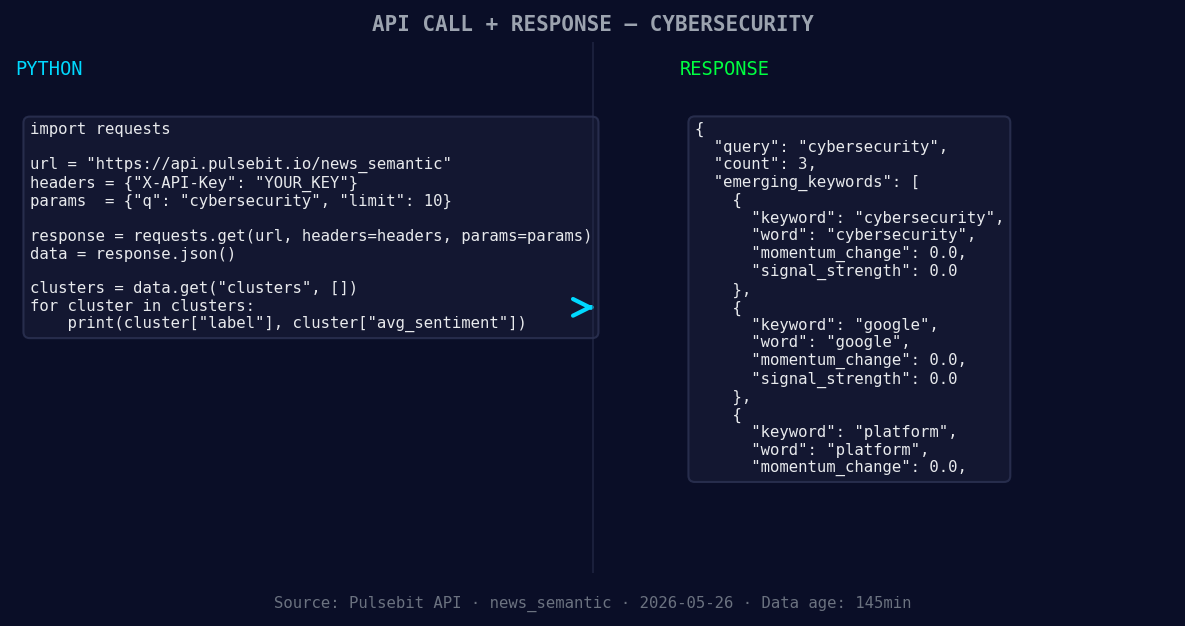
*Left: Python GET /news_semantic call for 'cybersecurity'. Right: returned JSON response structure (clusters: 3). Source: Pulsebit /news_semantic.*
# Step 1: Geographic origin filter
response = requests.get(
'https://api.pulsebit.com/v1/sentiment',
params={
'topic': 'cybersecurity',
'lang': 'sp'
}
)
data = response.json()
print(data)
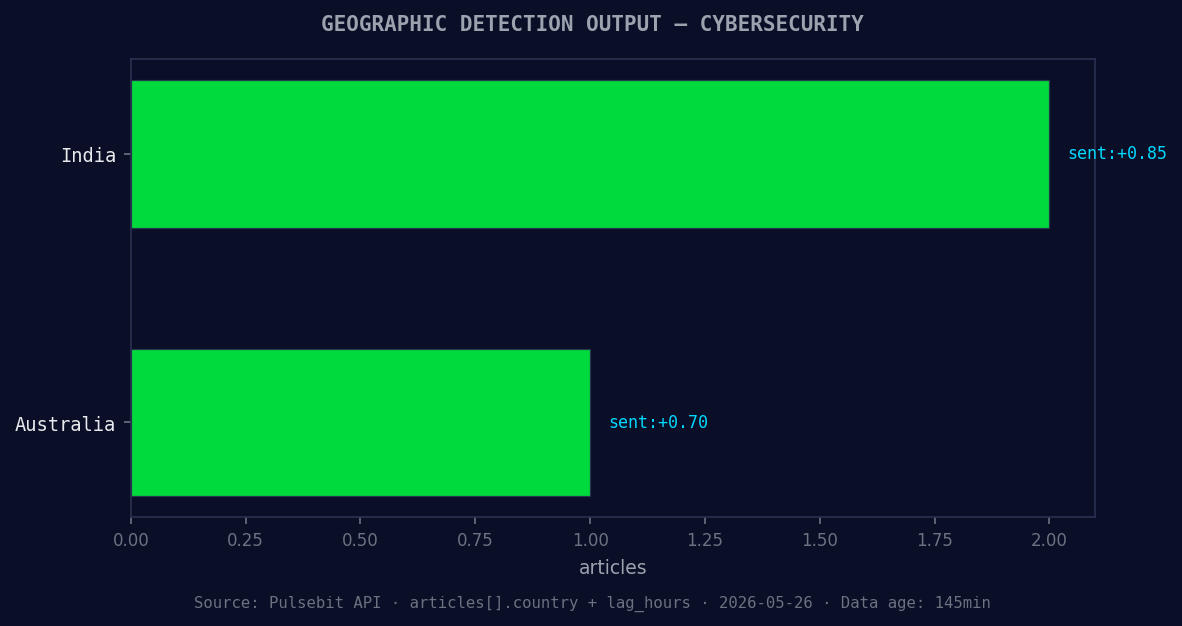
*Geographic detection output for cybersecurity. India leads with 2 articles and sentiment +0.85. Source: Pulsebit /news_recent geographic fields.*
# Step 2: Meta-sentiment moment
meta_response = requests.post(
'https://api.pulsebit.com/v1/sentiment',
json={
'text': "Clustered by shared themes: tech, officials, urge, congress, renew."
}
)
meta_data = meta_response.json()
print(meta_data)
In this code, we first filter sentiment data for the topic 'cybersecurity' specifically from Spanish sources. The response will give us the latest sentiment score, which is currently at +0.097 with a confidence level of 0.85. Next, we run the cluster reason string through our endpoint to score the narrative framing itself, helping us understand the context behind the sentiment.
Three Builds Tonight
Now that we've captured this anomaly, here are three specific things you can build that leverage this pattern:
Multilingual Momentum Tracker: Create a signal that triggers an alert if the momentum for any topic drops below a certain threshold (e.g., -0.25) in a specific language, using the geo filter to focus on Spanish or other languages.
Contextual Sentiment Analysis: Build a meta-sentiment loop that checks for narrative shifts on clustered themes. For instance, if the sentiment score for "tech, officials, urge, congress, renew" drops below +0.05, trigger a deeper analysis of articles related to these themes.
Real-Time Reporting Dashboard: Implement a dashboard that visualizes sentiment across languages for the topic of cybersecurity. Use the geo filter to distinguish between sources and provide a comparative analysis of mainstream versus niche narratives, particularly focusing on themes like cybersecurity, Google, and platform developments.
Get Started
If you're ready to dive into this, check out our documentation at pulsebit.lojenterprise.com/docs. You can copy-paste the provided code and run it in under 10 minutes to start catching these insights. Don't let your pipeline lag behind; stay ahead of the curve!


Top comments (0)