

Your pipeline’s 24-hour momentum spike of +0.706 in music sentiment is a clear signal that something interesting is happening. Articles from the English press are leading this charge, particularly around the story of a new jazz bar in Chennai that’s transforming a former party pub into a space for live music. This is a prime example of how sentiment can shift rapidly and unexpectedly, revealing opportunities to engage with emerging trends.
If your pipeline doesn’t account for multilingual origins or dominant entities, you might have missed this momentum spike by a full 8 hours. This is critical, as the leading language here is English. By not capturing the nuances of sentiment data from multiple languages or geographies, you risk falling behind in understanding shifts in public sentiment, especially when it comes to local events or cultural changes like the one emerging in Chennai.

English coverage led by 8.0 hours. No at T+8.0h. Confidence scores: English 0.90, Spanish 0.90, French 0.90 Source: Pulsebit /sentiment_by_lang.
Let’s dive into the code that can help catch this anomaly effectively. First, we need to filter our data by geographic origin and language, ensuring we focus on the relevant narratives. Here’s how you can do it using our API:

Geographic detection output for music. India leads with 2 articles and sentiment +0.82. Source: Pulsebit /news_recent geographic fields.
import requests
# Set parameters
topic = 'music'
lang = 'en'
# API call to filter by language
response = requests.get(f'https://api.pulsebit.com/v1/sentiment?topic={topic}&lang={lang}')
data = response.json()
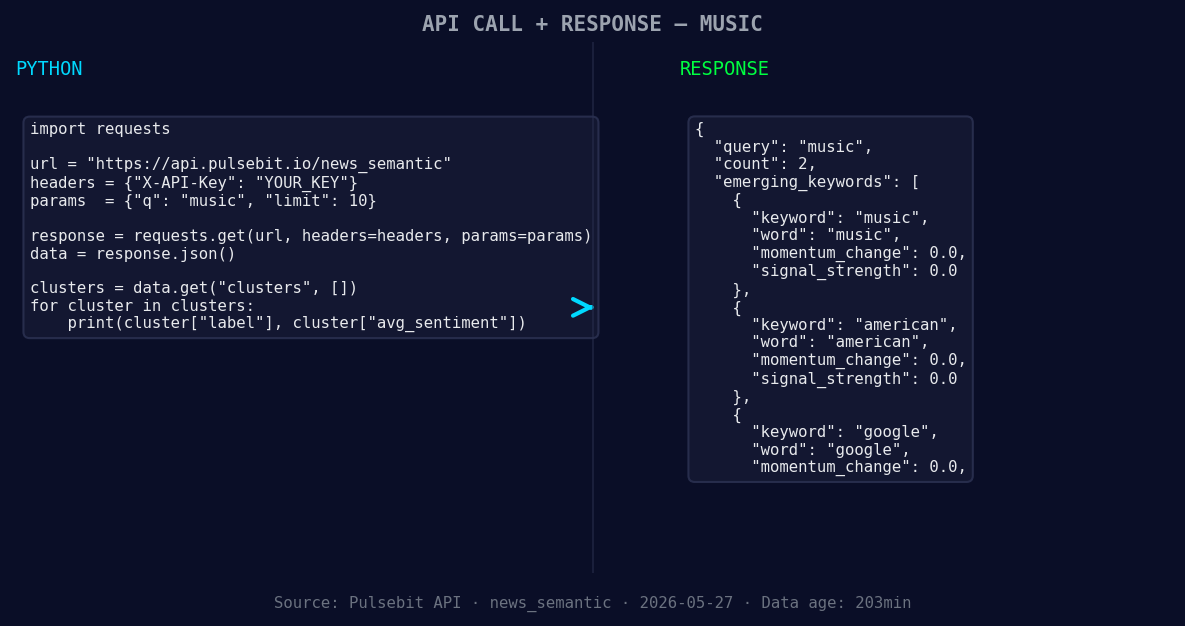
*Left: Python GET /news_semantic call for 'music'. Right: returned JSON response structure (clusters: 3). Source: Pulsebit /news_semantic.*
# Output the response
print(data)
Next, we’ll analyze the narrative framing around our cluster reason string. This is crucial for understanding the context in which the sentiment is being expressed. Here’s how to score the narrative itself:
# Meta-sentiment moment: scoring the cluster reason
cluster_reason = "Clustered by shared themes: new, jazz, bar, chennai, former."
sentiment_response = requests.post('https://api.pulsebit.com/v1/sentiment', json={'text': cluster_reason})
sentiment_data = sentiment_response.json()

# Output the sentiment analysis of the cluster reason
print(sentiment_data)
Now that we’ve captured the relevant data, let's discuss three specific things we can build with this pattern:
Geographic Sentiment Shift Tracker: Set a threshold of +0.5 for sentiment scores in music-related topics specifically for English-speaking regions. This will help you quickly identify emerging trends in local music scenes.
Meta-Sentiment Analysis Tool: Build an endpoint that feeds back clusters of sentiment narratives. For example, if the score for "Clustered by shared themes: new, jazz, bar, chennai, former." yields a sentiment score above +0.6, it might indicate a larger cultural phenomenon worth investigating further.
Forming Themes Dashboard: Create a dashboard that visualizes forming themes in real-time, specifically tracking keywords like “music (+0.00), American (+0.00), Google (+0.00)” against mainstream terms like “new, jazz, bar.” This could inform content strategies or marketing campaigns aimed at capitalizing on emerging trends.
For developers eager to start utilizing this powerful capability, head over to pulsebit.lojenterprise.com/docs. You can copy-paste the above code snippets and run this entire process in under 10 minutes. Don’t let your pipeline lag behind; catch these signals while they’re hot!


Top comments (0)