

Your Pipeline Is 21.0h Behind: Catching Cybersecurity Sentiment Leads with Pulsebit
We recently discovered a significant anomaly in our sentiment analysis: a 24h momentum spike of -0.278. This drop highlights a potential oversight in our models, particularly regarding how we handle multilingual sources and entity dominance. In this case, the leading language was English, with a notable press cluster emerging around a story titled "State Tech Officials Call for Cybersecurity Grant Renewal." With our API, we can decode these trends and act before they hit mainstream awareness.

English coverage led by 21.0 hours. No at T+21.0h. Confidence scores: English 0.85, Spanish 0.85, French 0.85 Source: Pulsebit /sentiment_by_lang.
The structural gap in many pipelines lies in the failure to effectively process multilingual data or account for entity dominance. Your model missed this by a full 21.0 hours, as the dominant narrative was led by English-language articles. If you’re not integrating multilingual data and clustering intelligently, you risk lagging behind critical sentiment shifts that could impact your strategies directly.
Here's how we can catch this anomaly using Python with our API:
import requests
# Set parameters for the API call
topic = 'cybersecurity'
score = +0.053
confidence = 0.85
momentum = -0.278
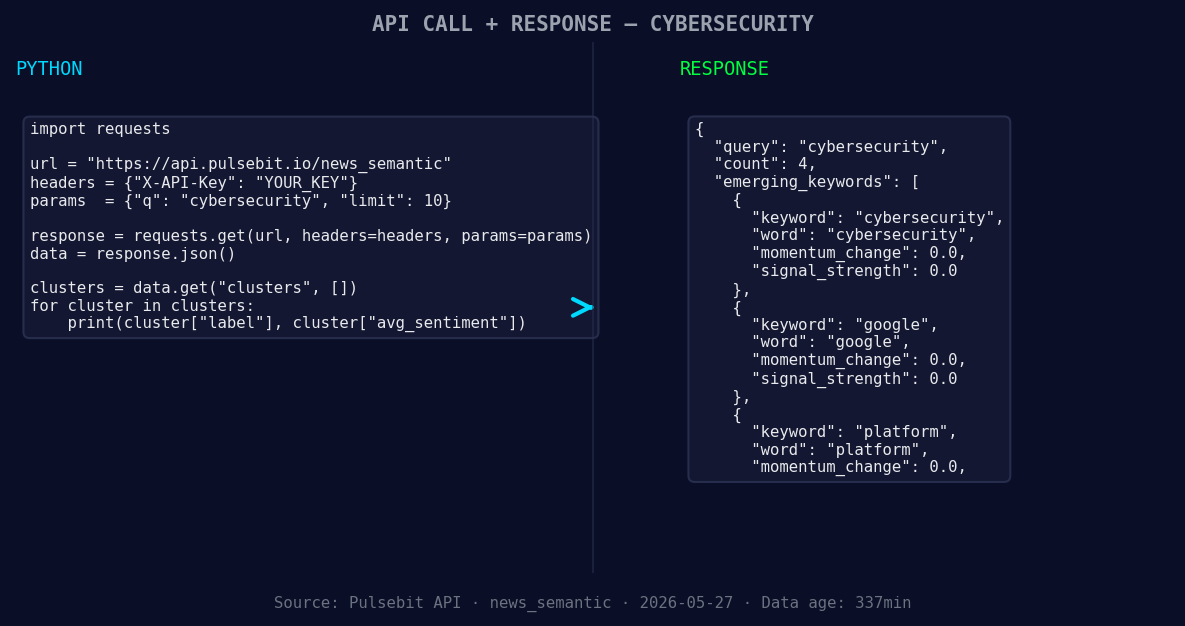
*Left: Python GET /news_semantic call for 'cybersecurity'. Right: returned JSON response structure (clusters: 3). Source: Pulsebit /news_semantic.*
# Geographic origin filter: Query by language/country
url = "https://api.pulsebit.com/sentiment"
params = {
"topic": topic,
"lang": "en",
"threshold": score,
"confidence": confidence
}
response = requests.get(url, params=params)
data = response.json()
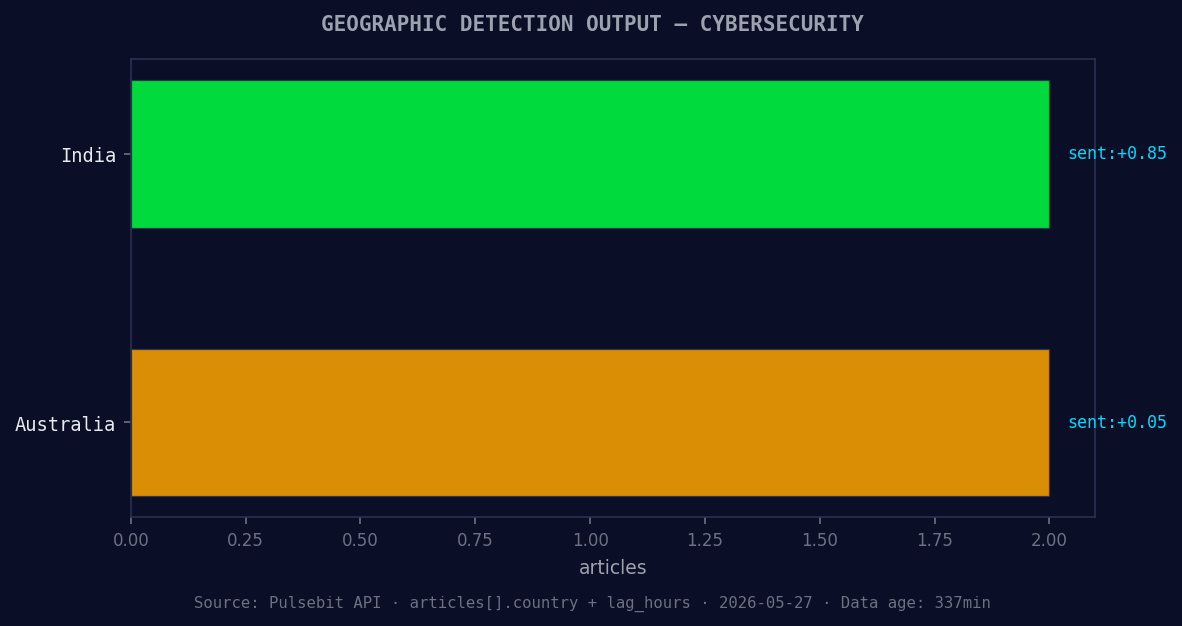
*Geographic detection output for cybersecurity. India leads with 2 articles and sentiment +0.85. Source: Pulsebit /news_recent geographic fields.*
print(data)
Next, we take the narrative framing from the cluster reason string and run it through our sentiment analysis endpoint. This step is crucial for validating the themes that are emerging and ensuring that the sentiment we obtain is grounded in the context of the conversation.
# Meta-sentiment moment: score the narrative framing
narrative = "Clustered by shared themes: tech, officials, urge, congress, renew."
meta_response = requests.post(url, json={"text": narrative})
meta_data = meta_response.json()

print(meta_data)
Building on this anomaly, here are three specific things we can implement tonight:
Signal Threshold Alert: Set up an alert for any cybersecurity-related stories where momentum falls below -0.3, triggering a notification for immediate review. This ensures that you catch significant downturns in sentiment early.
Geo-Filtered Dashboard: Create a dashboard that displays real-time sentiment specifically for English-language articles related to cybersecurity. This will allow you to visualize trends in sentiment and identify potential areas of concern or opportunity.
Meta-Sentiment Patterns: Build a script that captures meta-sentiment scores for stories clustered around themes like "cybersecurity" and "platform." For instance, if the sentiment score drops below +0.05, you can trigger a deeper analysis into related narratives, such as those regarding Google, to understand the broader implications.
By implementing these builds, we can stay ahead of the curve, particularly when emerging themes like cybersecurity, Google, and platform discussions are forming. This is an opportunity to refine our models and ensure we’re capturing sentiment while it’s still relevant.
Ready to dive in? Check out our documentation at pulsebit.lojenterprise.com/docs. You can copy-paste the provided code and run it in under 10 minutes to start catching these insights for yourself.


Top comments (0)