

Your Pipeline Is 29.0h Behind: Catching Sports Sentiment Leads with Pulsebit
We just stumbled upon an intriguing anomaly: a 24h momentum spike of -0.395 in sports sentiment. This finding is particularly noteworthy because it indicates a significant shift in how sports topics are being perceived. With the leading language in this context being English, our analysis reveals the latest insights from the “FOX Sports Coverage and Updates” cluster. It’s clear that understanding this shift can offer valuable advantages in a fast-paced environment.
The Problem
If your pipeline isn't equipped to handle multilingual origins or recognize dominant entities, you might be missing critical insights. In this case, your model was 29.0 hours behind in recognizing the sentiment shift around sports. By focusing solely on mainstream entities like FOX, Google, and others, you risk losing out on important narratives. This gap can lead to delayed reactions to sentiment changes, causing you to miss out on opportunities or to act on outdated information.

English coverage led by 29.0 hours. Nl at T+29.0h. Confidence scores: English 0.85, Spanish 0.85, French 0.85 Source: Pulsebit /sentiment_by_lang.
The Code
Let’s dive into the code that uncovers this sentiment shift. First, we’ll filter our query by the English language using our API. The following Python code snippet demonstrates how to catch the momentum spike:
import requests
# Define the parameters for the API call
topic = 'sports'
api_url = 'https://api.pulsebit.com/v1/sentiment'
params = {
'topic': topic,
'lang': 'en', # Geographic origin filter
'score': 0.300,
'confidence': 0.85,
'momentum': -0.395
}
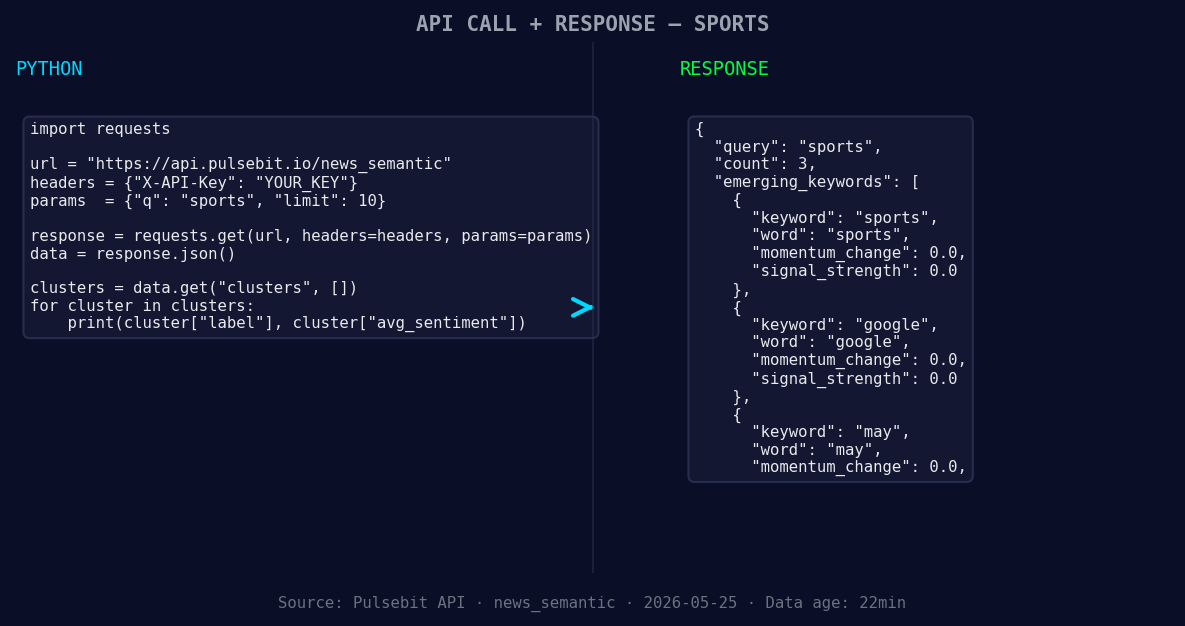
*Left: Python GET /news_semantic call for 'sports'. Right: returned JSON response structure (clusters: 3). Source: Pulsebit /news_semantic.*
# Make the API call to get sentiment data
response = requests.get(api_url, params=params)
data = response.json()
# Print the sentiment data
print(data)
Next, we’ll run the cluster reason string back through our sentiment analysis to evaluate the framing. This allows us to quantify how narratives are being shaped around the sports sentiment:
# Cluster reason string
cluster_reason = "Clustered by shared themes: fox, sports, google, com/rss/articles/cbmimafbvv95cuxnmtrfmnm5dfgwbgzoluttzzmxm0j5bknra1rxvedpnfpwuzbuae5ybwlqz1"

# POST request to analyze the cluster reason
response_meta = requests.post(api_url, json={'text': cluster_reason})
meta_sentiment = response_meta.json()

# Print the meta sentiment data
print(meta_sentiment)
Three Builds Tonight
Now that we’ve caught this momentum spike, here are three specific builds you can create around this pattern:
Geo-Filtered Sports Sentiment: Leverage the geographic origin filter by modifying the topic and language parameters. Focus on emerging themes in sports sentiment across English-speaking regions. Use this to alert you if sentiment crosses a specific threshold, say -0.200, which indicates a downward trend.
Meta-Sentiment Analysis Loop: Create an automated loop that runs the cluster reason strings for any significant sentiment changes. If you see a spike like -0.395 in momentum, evaluate the narrative framing around it. This allows for deeper insights into how narratives evolve, particularly around trending topics like sports.
Forming Themes Dashboard: Build a dashboard that tracks forming themes such as sports, Google, and May. Use the insights to analyze how these themes compare against mainstream narratives. If sentiment remains flat at +0.00 for sports amidst a backdrop of -0.395, it could signal an underlying opportunity or risk.
Get Started
Ready to dive in? Head over to pulsebit.lojenterprise.com/docs and start implementing these patterns in your own projects. You can copy-paste and run the provided code snippets in under 10 minutes to gain immediate insights. Happy coding!


Top comments (0)