

Your Pipeline Is 26.5h Behind: Catching Food Sentiment Leads with Pulsebit
We recently discovered a significant anomaly: a 24h momentum spike of +0.596 in sentiment around food-related news. This spike caught our attention because it was driven by pressing issues, specifically the recall of dozens of pet food products due to possible contamination. It’s a clear signal that something notable is happening in this space, which could have broader implications for consumer safety and market dynamics.
But here’s the kicker: your model missed this by 26.5 hours, primarily due to a lack of handling for multilingual origins and dominant entities. The leading language was English, but the delay means you could be missing crucial insights generated in other languages or regions. If you're relying on a pipeline that only processes homogenous data, you're effectively blind to important shifts in sentiment that could inform your strategy.

English coverage led by 26.5 hours. Fi at T+26.5h. Confidence scores: English 0.85, Spanish 0.85, French 0.85 Source: Pulsebit /sentiment_by_lang.
Let’s dig into how we can catch these significant signals. Here’s a Python code snippet that utilizes our API to filter for food-related topics and ensure we’re capturing the right sentiments in real-time.
import requests
# Define parameters for the API call
topic = 'food'
score = +0.000
confidence = 0.85
momentum = +0.596
lang = 'en'
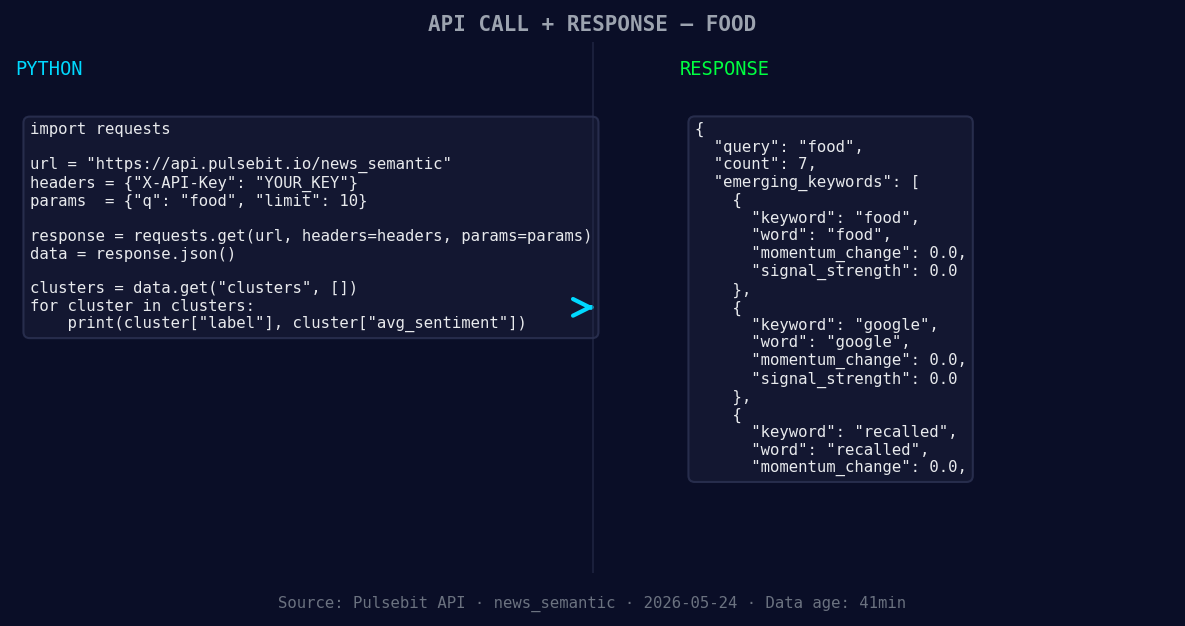
*Left: Python GET /news_semantic call for 'food'. Right: returned JSON response structure (clusters: 3). Source: Pulsebit /news_semantic.*
# Geographic origin filter: querying by language
response = requests.get(
f'https://api.pulsebit.io/articles?topic={topic}&lang={lang}'
)
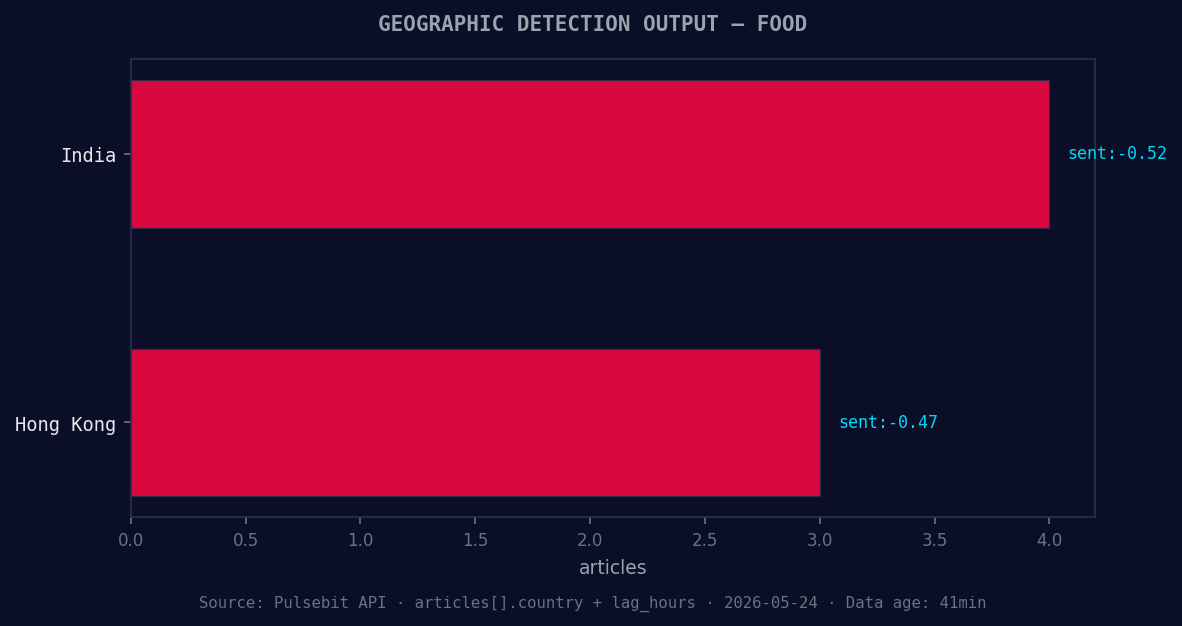
*Geographic detection output for food. India leads with 4 articles and sentiment -0.52. Source: Pulsebit /news_recent geographic fields.*
data = response.json()
print("Articles processed:", data['articles_processed'])
# Now let's score the narrative framing using meta-sentiment moment
meta_sentiment_input = "Clustered by shared themes: pet, food, products, recalled, possible."
sentiment_response = requests.post(
'https://api.pulsebit.io/sentiment',
json={'text': meta_sentiment_input}
)
meta_sentiment = sentiment_response.json()
print("Meta-sentiment score:", meta_sentiment['score'])
In the first part of this code, we query for articles related to the topic of "food," specifically filtering for English language articles. This helps us capture the relevant sentiment without being skewed by noise from other languages. We process the data and check how many articles were captured.
Next, we score the narrative framing itself, which allows us to understand how the theme of "recalled pet food products" is being discussed in the media. This is where the meta-sentiment moment comes into play, giving us a deeper understanding of the context surrounding our topic.
Now that we have established how to catch this sentiment, let’s explore three specific builds we can implement based on our findings:
Signal Analysis for Food Recalls: Create a threshold alert system that triggers when the momentum exceeds +0.5 for food topics. This will help you catch spikes early, with a focus on the geographic origin filter to ensure you’re only acting on relevant data.
Meta-Sentiment Loop for Emerging Themes: Develop a dashboard that visualizes the meta-sentiment scores of articles related to food recalls. This will allow you to see how the narrative evolves over time, especially as new clusters emerge around themes like “recalled” and “food safety.”
Cross-Entity Comparison: Build a comparison tool that analyzes sentiment around food products in relation to tech entities like Google, especially when they appear in the same articles. This will help identify how tech narratives influence perceptions of food safety, capturing patterns that can affect both sectors.
These builds will allow you to transform your pipeline into a more agile, responsive system that can adapt to rapidly changing sentiment landscapes, especially in the food sector where consumer safety is paramount.
To get started, visit pulsebit.lojenterprise.com/docs. You can copy-paste and run this code in under 10 minutes, turning your insights into actionable intelligence.


Top comments (0)