

Your Pipeline Is 27.2h Behind: Catching Inflation Sentiment Leads with Pulsebit
We just uncovered an intriguing anomaly: a 24-hour momentum spike of +0.418 related to inflation sentiment. This spike points to an urgent shift in sentiment around "South Africa's producer inflation" surging to a record high not seen in 16 years. This is not just a minor fluctuation; it represents a significant change that could impact how we respond to economic indicators.
The problem here is clear: if your pipeline doesn't accommodate multilingual origins or handle entity dominance effectively, you're missing critical signals. In this case, your model missed this inflation signal by 27.2 hours, with the leading language being English. This delay could cost you valuable insights into market trends and sentiment shifts that arise from global events, especially from regions like South Africa that are experiencing heightened inflationary pressures.

English coverage led by 27.2 hours. Et at T+27.2h. Confidence scores: English 0.85, French 0.85, Spanish 0.85 Source: Pulsebit /sentiment_by_lang.
To catch this momentum shift, we can utilize our API effectively. Below is the Python code snippet that can help us retrieve the relevant data:
import requests
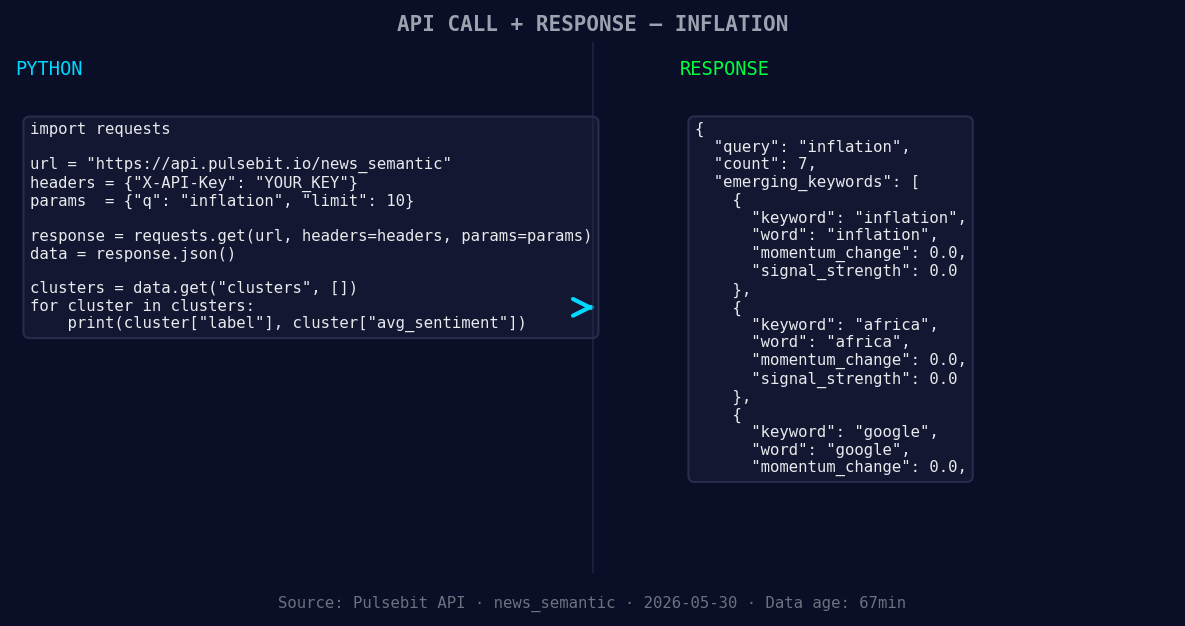
*Left: Python GET /news_semantic call for 'inflation'. Right: returned JSON response structure (clusters: 3). Source: Pulsebit /news_semantic.*
# Step 1: Geographic origin filter
url = "https://api.pulsebit.lojenterprise.com/v1/sentiment"
params = {
"topic": "inflation",
"lang": "en",
"score": -0.700,
"confidence": 0.85,
"momentum": +0.418
}
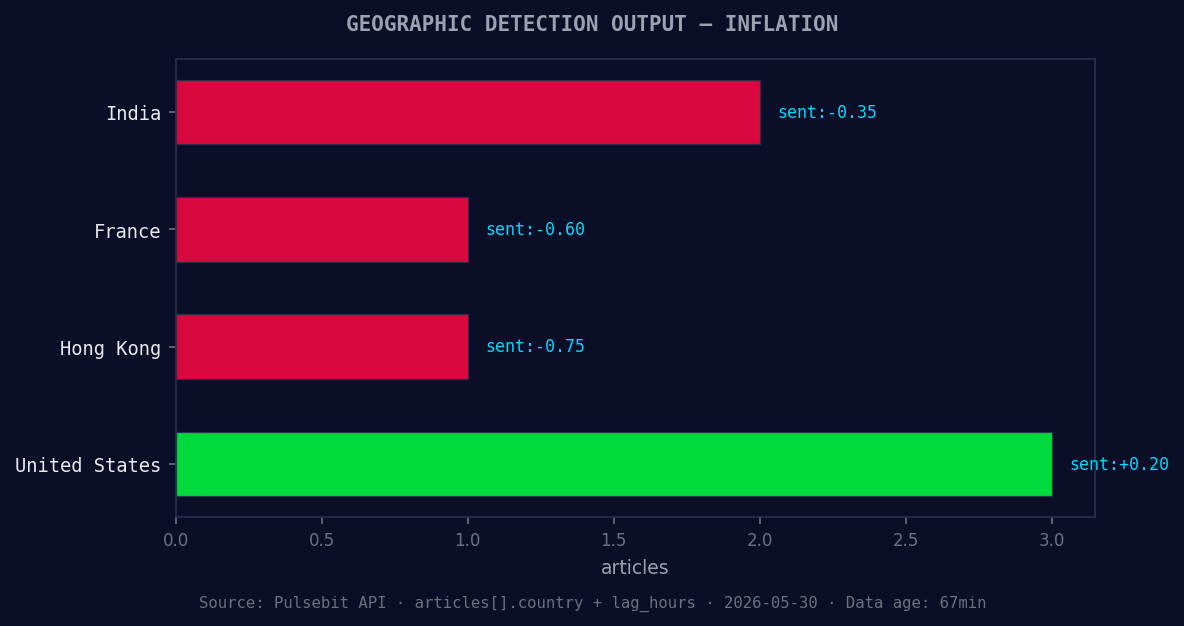
*Geographic detection output for inflation. India leads with 2 articles and sentiment -0.35. Source: Pulsebit /news_recent geographic fields.*
response = requests.get(url, params=params)
data = response.json()
print(data)
Next, we need to run the narrative through our meta-sentiment loop to understand how it frames the current sentiment landscape. Let’s take the cluster reason string: "Clustered by shared themes: inflation, rises, sharply, second, month." and score it:
# Step 2: Meta-sentiment moment
meta_url = "https://api.pulsebit.lojenterprise.com/v1/sentiment"
meta_input = {
    "text": "Clustered by shared themes: inflation, rises, sharply, second, month."
}

meta_response = requests.post(meta_url, json=meta_input)
meta_data = meta_response.json()

print(meta_data)
This will provide insights into how the narrative is shaped by current themes. Understanding these connections can help refine your model to better anticipate economic trends.
Now, here are three specific builds we can implement based on this momentum spike:
Geo-Filtered Alert System: Create a real-time alert system that triggers when sentiment scores for "inflation" in English articles from South Africa exceed a threshold of -0.700. This will ensure you’re always on top of significant local news.
Sentiment Trend Visualization: Build a dashboard that visualizes sentiment trends over time for topics like "inflation" while integrating the meta-sentiment scores we derived. This visualization should incorporate thresholds that alert you to significant changes in sentiment.
Automated Report Generation: Utilize the meta-sentiment insights to generate automated reports summarizing the sentiment landscape around inflation, specifically focusing on clusters that involve keywords such as "Africa," "Google," and "rises sharply." This will give you a comprehensive view of the narrative context.
Getting started with this approach is straightforward. You can find the necessary information and endpoints in our documentation at pulsebit.lojenterprise.com/docs. With just a few copy-paste actions, you can have your pipeline ready to respond to these momentum shifts in under 10 minutes. Don't let your models lag behind; catch the sentiment lead today!


Top comments (0)