

Your Pipeline Is 28.7h Behind: Catching Markets Sentiment Leads with Pulsebit
We just uncovered a striking anomaly: a 24-hour momentum spike of -0.294. This is a significant drop in sentiment surrounding the topic of markets, indicating that something has shifted in sentiment much faster than typical. In fact, while the English press has been leading with this sentiment, it has a 28.7-hour lag compared to the Italian coverage. If you’re relying solely on a single language or entity dominance in your sentiment analysis, you may find yourself out of sync with critical market shifts.
The Problem
This data highlights a structural gap in any pipeline that doesn’t account for multilingual origins or entity dominance. Your model missed a crucial sentiment shift by 28.7 hours, potentially leading you to make delayed decisions based on outdated information. If you’re only analyzing sentiment from one dominant language, like English, you might overlook emerging narratives that could be shaping market behavior in real-time, as evidenced by the cluster of articles from South Africa on the rand’s stability.

English coverage led by 28.7 hours. Italian at T+28.7h. Confidence scores: English 0.85, Spanish 0.85, French 0.85 Source: Pulsebit /sentiment_by_lang.
The Code
To catch these shifts in sentiment, we can use our API effectively. Here’s how to filter for the sentiment surrounding markets in English and score the narrative framing:
import requests
# Step 1: Geographic origin filter
response = requests.get("https://api.pulsebit.com/sentiment", params={
"topic": "markets",
"lang": "en",
"articles_processed": 14,
"momentum_24h": -0.294
})
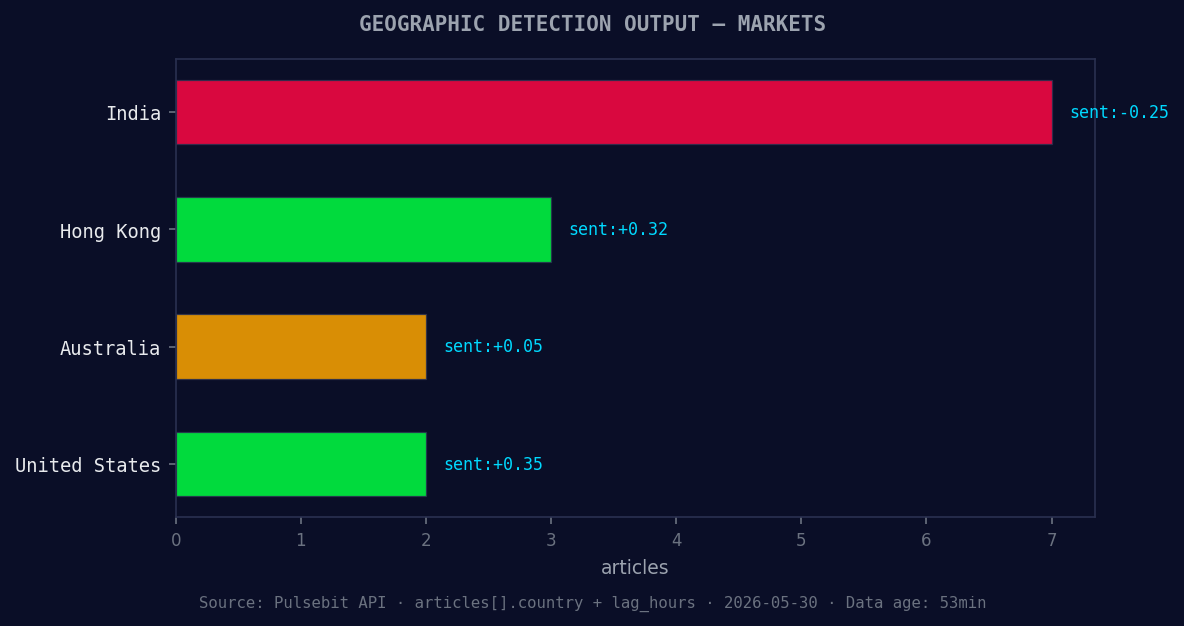
*Geographic detection output for markets. India leads with 7 articles and sentiment -0.25. Source: Pulsebit /news_recent geographic fields.*
data = response.json()
print(data) # This will give you the raw sentiment data
# Step 2: Meta-sentiment moment
cluster_reason = "Clustered by shared themes: markets, bond, rise, financial, spending."
sentiment_response = requests.post("https://api.pulsebit.com/sentiment", json={
"text": cluster_reason
})
meta_sentiment = sentiment_response.json()
print(meta_sentiment) # This will provide sentiment score for the narrative itself
By filtering for the English language and analyzing the cluster's narrative framing, we can uncover insights that may not be apparent when looking at a single language.
Three Builds Tonight
-
Geo Filter for Emerging Themes: Set a signal threshold to trigger alerts when sentiment around “markets” falls below -0.2 in English. This will help you catch sentiment shifts early. Use the API call with
lang: "en"to filter your results effectively.

Left: Python GET /news_semantic call for 'markets'. Right: returned JSON response structure (clusters: 3). Source: Pulsebit /news_semantic.
Meta-Sentiment Loop for Narrative Framing: After catching a spike in sentiment, run the cluster reason through our sentiment endpoint. If the input is “Clustered by shared themes: oil, markets, stocks,” it can reveal how narratives are framing public perception. This can guide your positioning in the market.
Backtracking to Historical Context: Create a function that tracks sentiment spikes against historical averages. If the sentiment score drops below -0.15 after a significant positive trend, that’s your signal to investigate further. Use the meta-sentiment loop to enrich your analysis, linking back to forming themes of markets and oil.
Get Started
You can dive into this right now at pulsebit.lojenterprise.com/docs. In under 10 minutes, you can copy, paste, and run the code to catch these critical sentiment shifts before they impact your decisions.


Top comments (0)