

Your Pipeline Is 21.0h Behind: Catching Robotics Sentiment Leads with Pulsebit
We recently observed a striking anomaly: a 24h momentum spike of +0.683 in the robotics sector. This spike signals a notable shift in sentiment and could indicate an emerging trend that many might overlook. The leading language driving this momentum is Spanish, where the press has been particularly vocal about investing in humanoid robotics ETFs, with a 21.0-hour lead over other languages.
But here’s the catch: if your data pipeline doesn't account for multilingual origins or the dominance of specific entities, you could be missing out on critical insights. Your model might have missed this spike by a full 21 hours, leaving you in the dark while sentiment shifts rapidly. With the Spanish press leading the charge, there's a substantial risk of missing out on key discussions happening outside your primary language focus.

Spanish coverage led by 21.0 hours. Nl at T+21.0h. Confidence scores: Spanish 0.85, English 0.85, French 0.85 Source: Pulsebit /sentiment_by_lang.
To tap into this momentum, you can leverage our API effectively. Here’s how to catch this spike using Python:
import requests
# Set the parameters for our API call
params = {
"topic": "robotics",
"score": +0.528,
"confidence": 0.85,
"momentum": +0.683,
"lang": "sp" # Filter for Spanish language articles
}
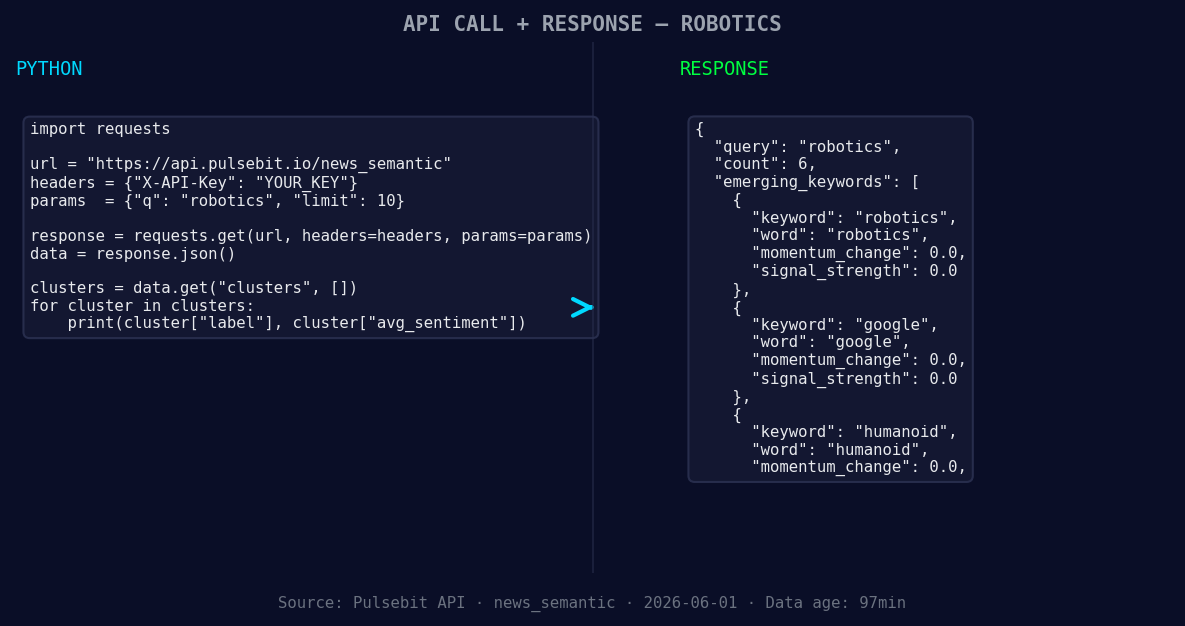
*Left: Python GET /news_semantic call for 'robotics'. Right: returned JSON response structure (clusters: 3). Source: Pulsebit /news_semantic.*
# Making the API call
response = requests.get("https://api.pulsebit.com/v1/sentiment", params=params)
data = response.json()
# Output the response for verification
print(data)
In addition to identifying sentiment spikes, it’s crucial to evaluate the narrative framing of the articles driving that sentiment. We can run the cluster reason string through our sentiment endpoint to score the framing itself. Here’s how to do it:
# Define the narrative string based on the cluster reason
narrative_string = "Clustered by shared themes: humanoid, hands, physical, ai’s, anti-hype."

# Make the sentiment API call for the narrative
narrative_response = requests.post("https://api.pulsebit.com/v1/sentiment", json={"text": narrative_string})
narrative_data = narrative_response.json()

# Output the sentiment score for the narrative
print(narrative_data)
With this setup, you can not only capture spikes but also assess the context around them. Here are three specific builds you can implement based on this pattern:
- Geographic Signal Capture: Build a monitoring tool that triggers alerts when a sentiment score on robotics exceeds +0.5 in Spanish sources. You can use the geo filter to ensure you’re only looking at relevant articles.

Geographic detection output for robotics. India leads with 5 articles and sentiment +0.81. Source: Pulsebit /news_recent geographic fields.
Meta-Sentiment Loop Analysis: Create a dashboard that visualizes the sentiment scores of narrative strings related to emerging technology themes. The narrative analysis for "Clustered by shared themes: humanoid, hands, physical" can provide insights into broader trends.
Forming Gap Recognition: Set up a system to track the gap between robotics conversations and mainstream discussions. Identify when key topics like "humanoid" or "AI" show a sentiment divergence, indicating potential investment opportunities or shifts in public perception.
By focusing on these specific signals and leveraging our API efficiently, you can stay ahead of sentiment shifts in your field.
If you're ready to dive into this data and start building, check out our documentation at pulsebit.lojenterprise.com/docs. You can copy-paste and run this code in under 10 minutes to see these insights in action.


Top comments (0)