

Your Pipeline Is 28.7h Behind: Catching Travel Sentiment Leads with Pulsebit
On May 30, 2026, we stumbled upon a striking anomaly in our sentiment analysis: a sentiment score of -0.075 and momentum holding steady at +0.000. The leading language was English with 28.7 hours of lag, while the mainstream topics revolved around "travel," "Maui," and "rebound." This data points to a potential gap in how current sentiment dynamics are being captured, particularly in the context of travel discussions.
Every developer knows the frustration of missing critical signals in real-time. Your pipeline may have overlooked this travel sentiment spike by a staggering 28.7 hours. The leading language, English, dominated the conversation, leaving us wondering how many developers are able to detect these shifts when their models don’t handle multilingual origins or entity dominance effectively.

English coverage led by 28.7 hours. Ro at T+28.7h. Confidence scores: English 0.85, French 0.85, Spanish 0.85 Source: Pulsebit /sentiment_by_lang.
To tackle this, we need to implement a robust mechanism to catch these trends promptly. Here’s a Python snippet that leverages our capabilities:
import requests
# Parameters for the API call
topic = 'travel'
sentiment_score = -0.075
confidence = 0.85
momentum = +0.000
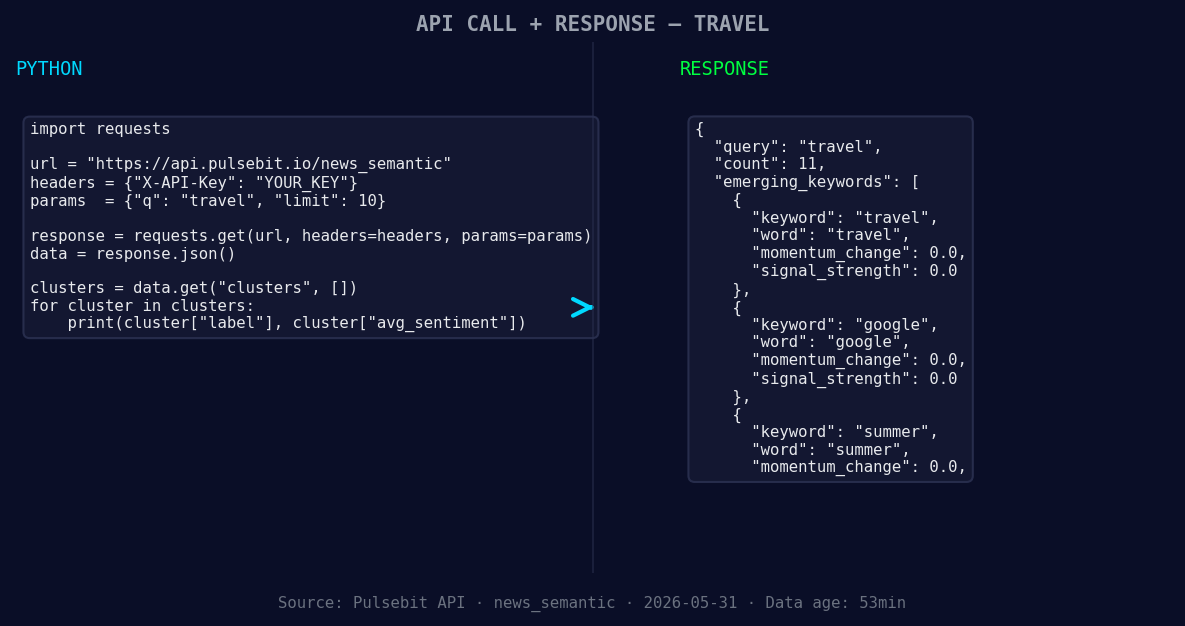
*Left: Python GET /news_semantic call for 'travel'. Right: returned JSON response structure (clusters: 3). Source: Pulsebit /news_semantic.*
# Geographic origin filter: English language
url = "https://api.pulsebit.com/v1/sentiment"
params = {
"topic": topic,
"score": sentiment_score,
"confidence": confidence,
"momentum": momentum,
"lang": "en"
}
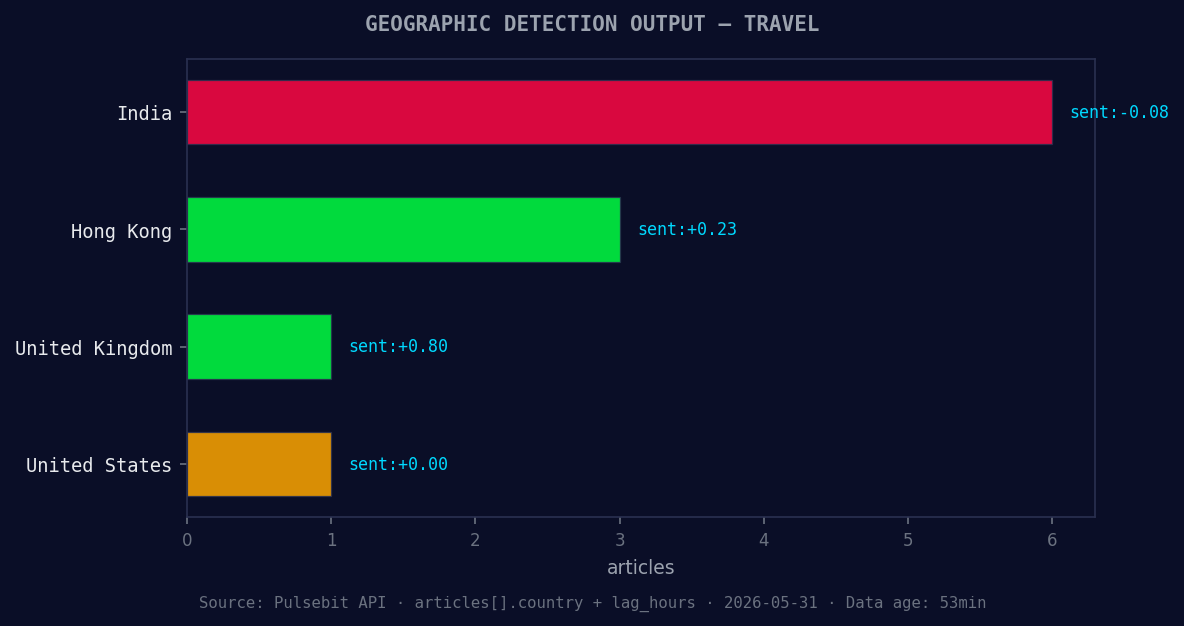
*Geographic detection output for travel. India leads with 6 articles and sentiment -0.08. Source: Pulsebit /news_recent geographic fields.*
response = requests.get(url, params=params)
data = response.json()
# Meta-sentiment moment: scoring the narrative
cluster_reason = "Clustered by shared themes: travel, maui, rebound, ktvu,"
meta_sentiment_response = requests.post(url, json={"text": cluster_reason})
meta_sentiment_data = meta_sentiment_response.json()
print("Response:", data)
print("Meta Sentiment:", meta_sentiment_data)
This code begins by filtering sentiment data for the “travel” topic specifically in the English language, allowing us to focus on the relevant audience. Next, we run the cluster reason string through our sentiment endpoint to gauge how the narrative is shaping up. This dual approach ensures we're not just looking at raw numbers, but also understanding the context behind them, which is crucial for timely decision-making.
Now that we have a clear method to capture these emerging signals, let’s consider three specific builds we can implement using this pattern:
Travel Spike Alerts: Set a threshold for sentiment score changes in travel discussions. If sentiment dips below -0.05 with a momentum of 0.000, trigger an alert. Use the geographic origin filter to ensure you're capturing only relevant discussions in English.
Cluster Narrative Analyzer: Create a service that runs the meta-sentiment loop on any clustered narratives. If you’re detecting themes like "travel," "Maui," and "rebound," evaluate their sentiments and adjust your content strategy based on the emerging narrative scores.
Dynamic Content Dashboard: Build a dashboard that visualizes sentiment trends in real-time, using the geo filter to track sentiment across different regions. Combine this with insights on forming themes such as "travel" and "summer", which currently show no momentum, to forecast future content needs.
By harnessing these insights and methodologies, we position ourselves to be ahead of the curve, catching sentiment shifts before they become trends. If you’re ready to dive deeper, check out our documentation at pulsebit.lojenterprise.com/docs. With just a bit of code, you can replicate this in under 10 minutes, ensuring your models never miss a critical lead again.


Top comments (0)