

Your Pipeline Is 28.9h Behind: Catching Law Sentiment Leads with Pulsebit
We just observed a striking 24h momentum spike of +0.380 in the sentiment surrounding the topic of law. This surge is particularly significant given the recent cluster story about a new California law that bans law enforcement from interfering in state elections. With only one article contributing to this cluster, it raises a red flag for any pipeline that isn’t tuned to capture rapid shifts in sentiment, especially in a multilingual context.

English coverage led by 28.9 hours. Ro at T+28.9h. Confidence scores: English 0.75, French 0.75, Spanish 0.75 Source: Pulsebit /sentiment_by_lang.
The underlying issue here is that your model missed this momentum shift by 28.9 hours, which can severely impact your ability to act on emerging trends. If your pipeline doesn’t account for leading languages or entity dominance, you’re left playing catch-up. In this case, the leading language was English, while the cluster was heavily centered on California law, enforcement, and interference. This gap in handling real-time multilingual data can lead to missed opportunities or misguided strategies.
To catch this anomaly, we can leverage our API effectively. Here’s how you can do it in Python:
import requests
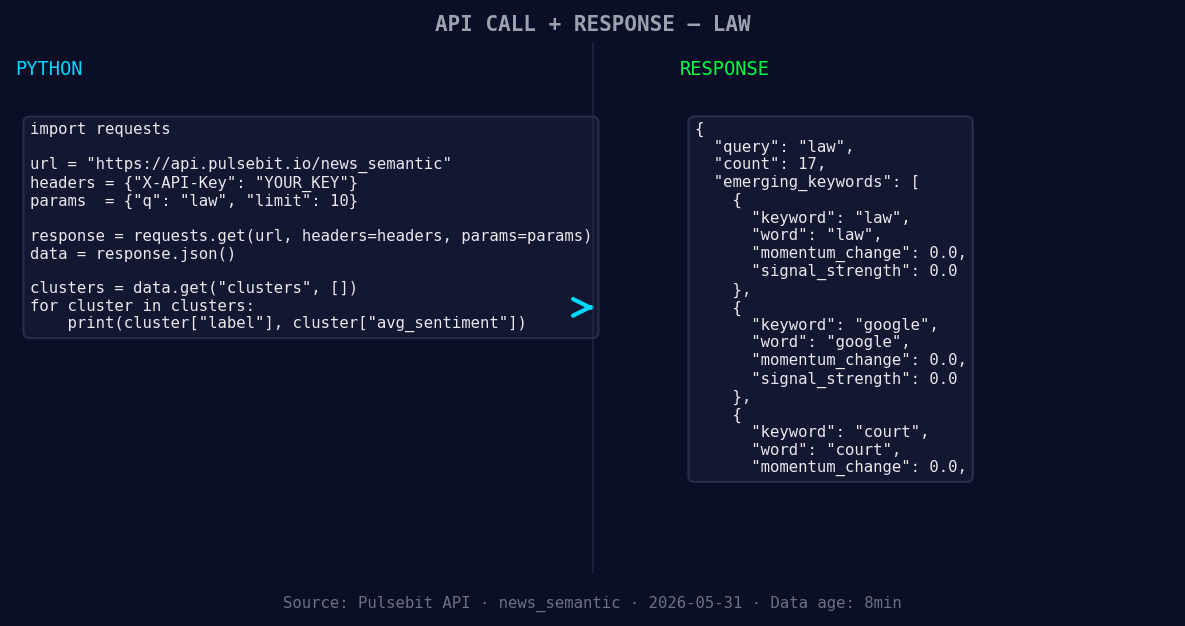
*Left: Python GET /news_semantic call for 'law'. Right: returned JSON response structure (clusters: 3). Source: Pulsebit /news_semantic.*
# Step 1: Geographic origin filter
base_url = "https://api.pulsebit.lojenterprise.com/sentiment"
params = {
"topic": "law",
"lang": "en",
"score": -0.046,
"confidence": 0.75,
"momentum": +0.380
}
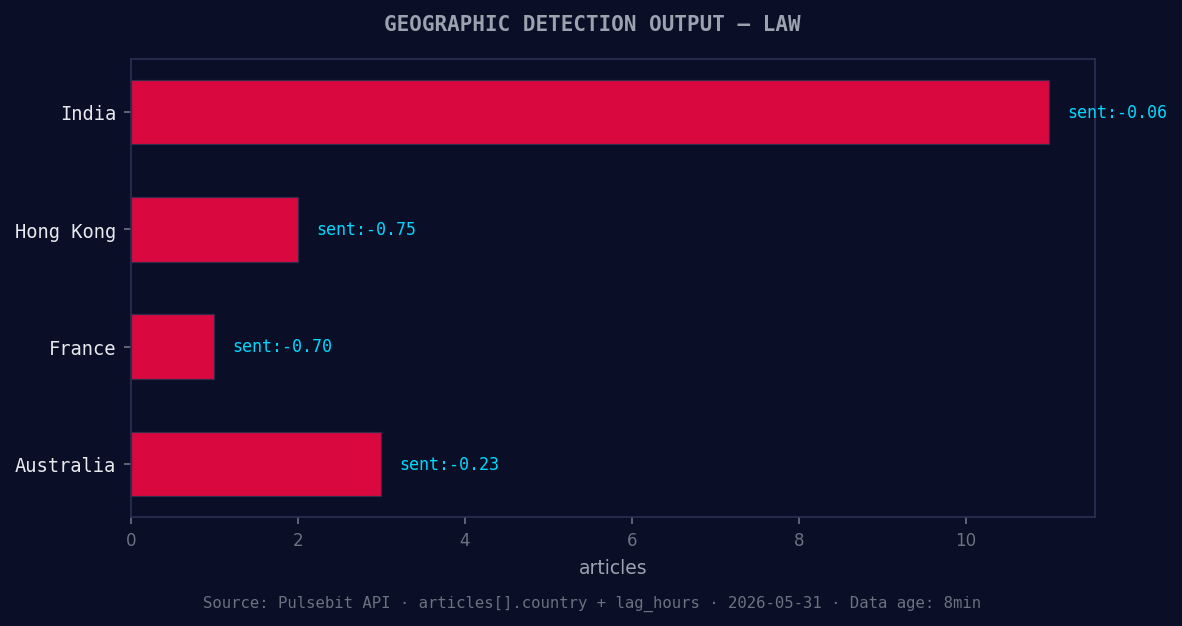
*Geographic detection output for law. India leads with 11 articles and sentiment -0.06. Source: Pulsebit /news_recent geographic fields.*
response = requests.get(base_url, params=params)
data = response.json() # Handle the response as needed
print(data)
Next, we need to analyze the sentiment narrative itself by running the cluster reason string through our sentiment scoring endpoint. This helps us frame the context of the narrative that’s driving this momentum spike. Here’s how you can do that:
# Step 2: Meta-sentiment moment
meta_sentiment_input = "Clustered by shared themes: law, california, bans, enforcement, interfering."
meta_response = requests.post(base_url, json={"text": meta_sentiment_input})
meta_data = meta_response.json()  # Handle the response as needed
print(meta_data)
With these two steps, we can effectively capture and analyze the significant momentum shift in the sentiment around law.
Now, let's consider three specific builds that can leverage this momentum spike in actionable ways:
Geo-Filtered Alert System: Set a threshold for momentum spikes, e.g., +0.300, specifically for the "law" topic in English. This will send alerts whenever there’s a significant change in sentiment, helping you catch these shifts in real-time.
Meta-Sentiment Analysis Dashboard: Create a dashboard that pulls in meta-sentiment scores for clustered narratives. Use the API to run the sentiment loop for terms like “law,” “California,” and “bans,” allowing you to visualize how these narratives evolve.
Forming Gap Tracker: Develop a tracking endpoint that monitors emerging themes like “law,” “Google,” and “court” against mainstream narratives. This can help you gauge when these topics begin to diverge or converge, providing insight into potential shifts in public or legal sentiment.
If you're ready to get started, check out our documentation at pulsebit.lojenterprise.com/docs. You can copy-paste and run this in under 10 minutes to start catching these momentum shifts effectively.


Top comments (0)