

Your Pipeline Is 15.0h Behind: Catching Renewable Energy Sentiment Leads with Pulsebit
We recently uncovered something interesting: the sentiment score for renewable energy is sitting at +0.158, but the momentum is flat at +0.000. What stands out even more is that the leading language for this sentiment is English, clocking in at 15.0 hours ahead of its nearest competitor, Dutch. This anomaly indicates a significant lag in our pipelines when it comes to capturing emerging trends around renewable energy, specifically in multilingual contexts.

English coverage led by 15.0 hours. Nl at T+15.0h. Confidence scores: English 0.85, French 0.85, Spanish 0.85 Source: Pulsebit /sentiment_by_lang.
When your model misses a spike like this by 15.0 hours, it exposes a structural gap in how it handles multilingual origins and entity dominance. Notably, the English language shows a dominant sentiment while the Dutch language is trailing without a proper understanding of the energy narrative. If your pipeline isn’t accounting for these variances, you could miss critical sentiment shifts that could inform your strategy.
import requests
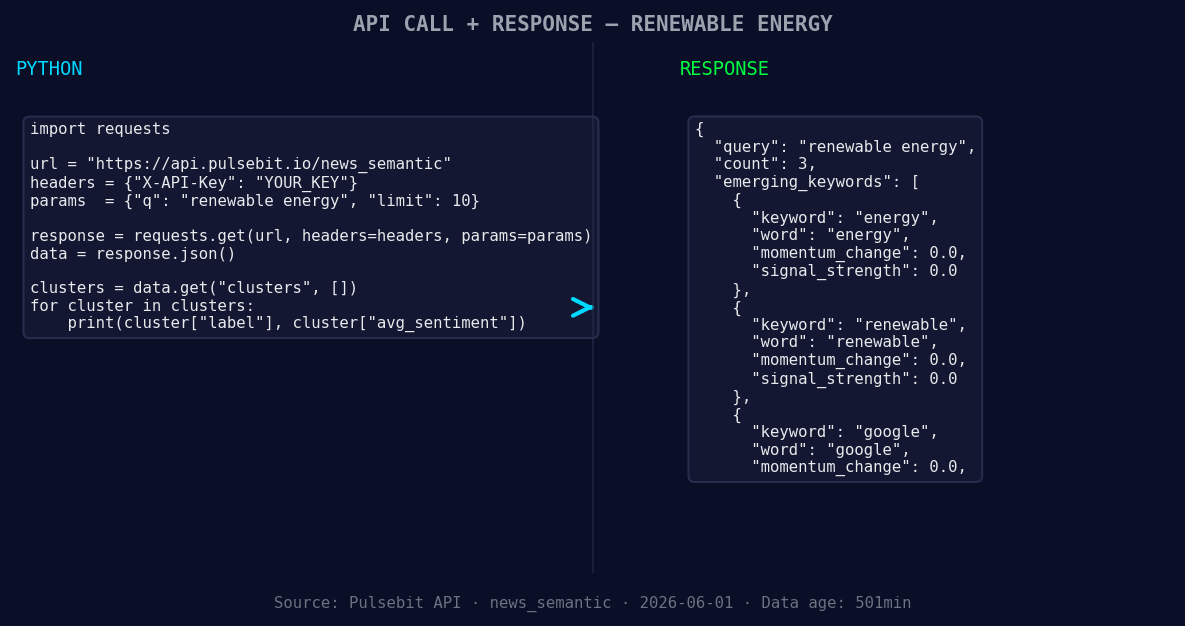
*Left: Python GET /news_semantic call for 'renewable energy'. Right: returned JSON response structure (clusters: 3). Source: Pulsebit /news_semantic.*
# Set up parameters for the sentiment analysis.
topic = 'renewable energy'
score = +0.158
confidence = 0.85
momentum = +0.000
# Geographic origin filter: query by language/country
response = requests.get('https://api.pulsebit.com/v1/sentiment', params={
'topic': topic,
'lang': 'en'
})
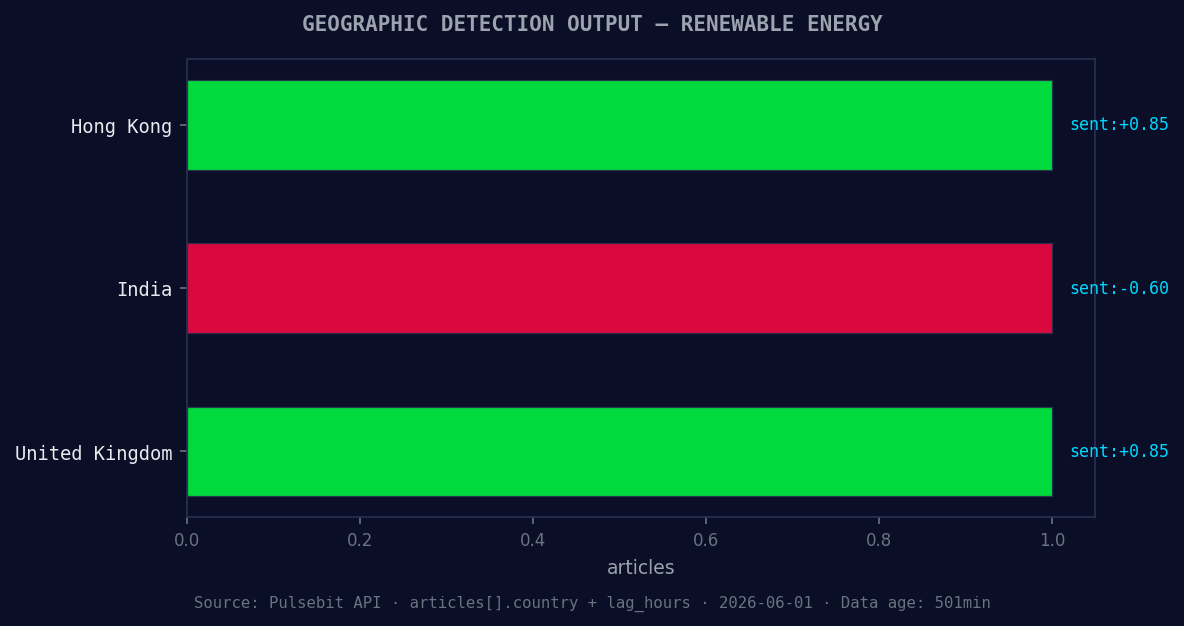
*Geographic detection output for renewable energy. Hong Kong leads with 1 articles and sentiment +0.85. Source: Pulsebit /news_recent geographic fields.*
# Check response status
if response.status_code == 200:
print("Success:", response.json())
else:
print("Error:", response.status_code)
# Meta-sentiment moment: score the narrative framing
narrative = "Clustered by shared themes: matters:, balancing, renewable, energy, biodiversity"
meta_response = requests.post('https://api.pulsebit.com/v1/sentiment', json={
'text': narrative
})
if meta_response.status_code == 200:
print("Meta Sentiment Score:", meta_response.json())
else:
print("Meta Sentiment Error:", meta_response.status_code)
In this code, we first set up a request to capture sentiment around the topic of renewable energy, specifically filtering for English language responses. The response gives us crucial insights into how this sector is perceived. Next, we take the narrative framing generated around the clustered themes and run it through another sentiment analysis to score how well this story resonates. This dual approach not only enhances our understanding of the data but also allows us to refine our narratives and strategies.
Here are three specific builds you can implement using this pattern:
Sentiment Threshold Alert: Set an alert when the sentiment score for renewable energy crosses +0.15 with a confidence of at least 0.80. This helps you catch significant swings in sentiment early.
Geo-Sensitivity Index: Build a dashboard that visualizes sentiment across different languages and countries. Use the geo filter to compare how different regions perceive renewable energy and identify which areas may require targeted messaging.
Meta-Sentiment Loop: Use the narrative framing from the meta-sentiment analysis to refine your content strategy. If the themes include energy and biodiversity, prioritize these topics in your communication to align with audience sentiment.
These builds leverage the forming themes around energy and renewables, focusing on the nuances of sentiment that may be overlooked if only mainstream narratives are considered.
To get started, check out our documentation at pulsebit.lojenterprise.com/docs. You can copy-paste this code and run it in under 10 minutes, allowing you to tap into these insights right away.


Top comments (0)