

Your pipeline is currently 13.0 hours behind in sentiment detection, with a sentiment score of +0.38 and momentum at +0.00. This anomaly is particularly interesting as it highlights a gap in the processing of multilingual sentiment, specifically within the sports category. The leading language in this spike is Spanish, indicating that while the English sentiment landscape is relatively stable, there’s a significant surge in Spanish-language articles surrounding the upcoming friendly match between Germany and Finland.

Spanish coverage led by 13.0 hours. Nl at T+13.0h. Confidence scores: Spanish 0.85, English 0.85, French 0.85 Source: Pulsebit /sentiment_by_lang.
This gap exposes a structural flaw in pipelines that don’t accommodate for multilingual origins or entity dominance. Your model missed this sentiment shift by 13.0 hours, which is critical when you consider that the leading language here is Spanish. In a landscape where time-sensitive information can sway decisions, being behind on emerging narratives can lead to missed opportunities.
To catch this sentiment spike, we can leverage our API effectively. Below is the Python code that allows us to filter for Spanish articles and gauge the sentiment around the clustered themes.
import requests
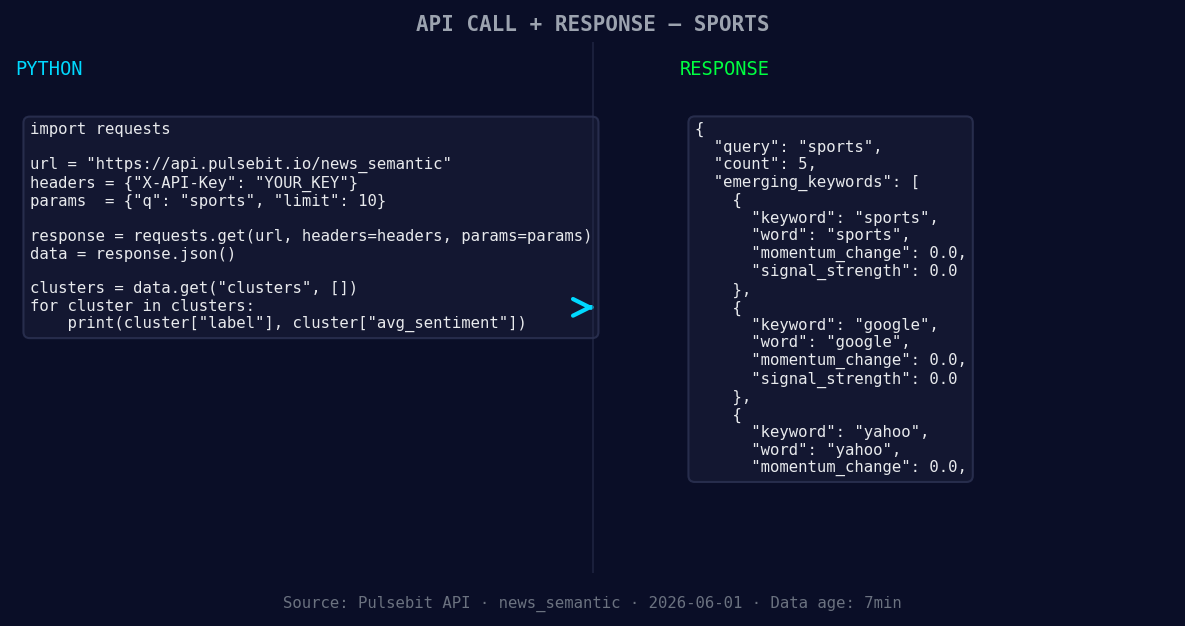
*Left: Python GET /news_semantic call for 'sports'. Right: returned JSON response structure (clusters: 3). Source: Pulsebit /news_semantic.*
# Step 1: Geographic origin filter
url = "https://api.pulsebit.com/v1/sentiment"
headers = {"Content-Type": "application/json"}
params = {
"topic": "sports",
"lang": "sp", # Spanish language filter
"score": +0.380,
"confidence": 0.85,
"momentum": +0.000
}
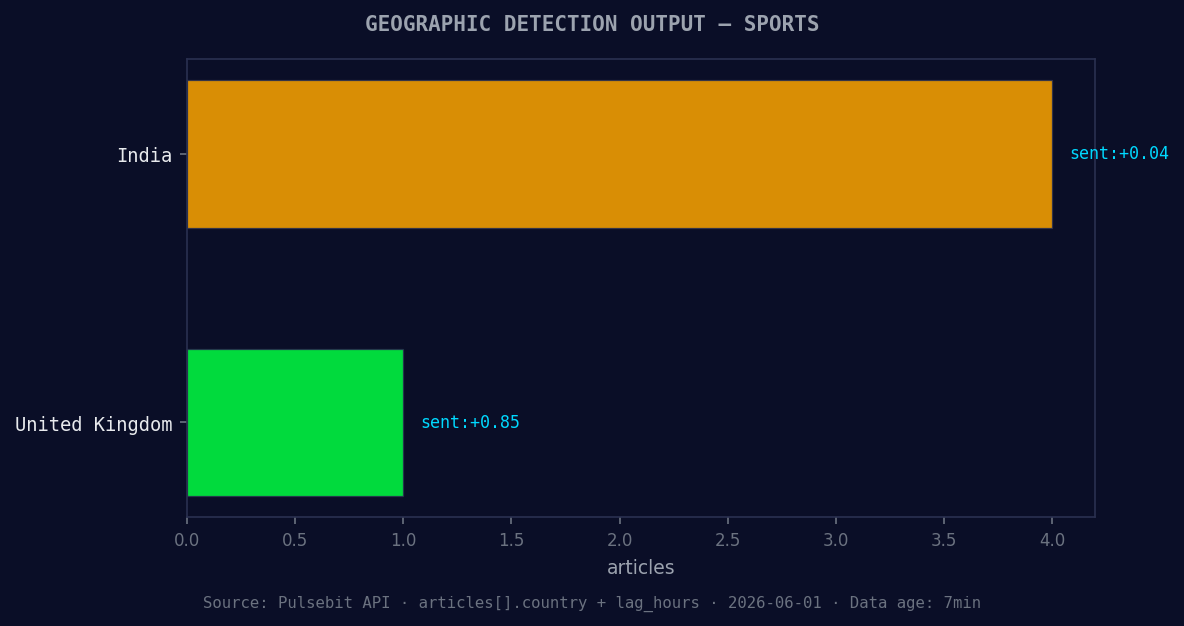
*Geographic detection output for sports. India leads with 4 articles and sentiment +0.04. Source: Pulsebit /news_recent geographic fields.*
response = requests.get(url, headers=headers, params=params)
data = response.json()
print(data) # Check the returned data
# Step 2: Meta-sentiment moment
meta_sentiment_input = "Clustered by shared themes: watch, germany, finland, live, stream:."
meta_response = requests.post(url, headers=headers, json={"input": meta_sentiment_input})
meta_data = meta_response.json()
print(meta_data) # Check the meta sentiment response
This code snippet first queries articles in Spanish related to sports to capture that +0.380 sentiment score. We then run the clustered narrative back through our sentiment endpoint, assessing how the framing of the narrative itself influences perception. This dual-layered approach ensures that we are not only reacting to sentiment shifts but also comprehending the underlying narratives that drive them.
With these insights, we can build several useful applications:
Geo-Sentiment Alerts: Set up a threshold signal where any sports sentiment score surpassing +0.35 in Spanish prompts an alert. This allows us to stay ahead of emerging storylines, particularly useful for teams covering international sports.
Meta-Sentiment Analysis: Create a routine job that runs the meta-sentiment loop on any new articles tagged with "sports". For instance, if the cluster reason string includes "watch, germany, finland", we can flag this for deeper analysis or immediate response.
Forming Theme Tracker: Build a dashboard that tracks forming themes like sports (+0.00), Google (+0.00), Yahoo (+0.00) alongside mainstream narratives. This will help us visualize how different entities are reacting to events in real-time and provide actionable insights.
You can get started with this at pulsebit.lojenterprise.com/docs. We’ve designed it so that you can copy-paste and run this in under 10 minutes, empowering you to harness sentiment data effectively right away.


Top comments (0)