

Your Pipeline Is 27.7h Behind: Catching Cybersecurity Sentiment Leads with Pulsebit
We’ve spotted a notable anomaly: a 24h momentum spike of +0.203 in cybersecurity sentiment. This data point indicates that something significant is brewing in the cybersecurity domain, yet many models might overlook it due to structural limitations. The leading language in this spike is English, with a press lead of 27.7 hours. If your pipeline isn't designed to handle such nuances, you might have missed this valuable insight by over a day.
The gap here is substantial. Your model could be lagging significantly, especially if it doesn’t account for multilingual origins or the dominance of certain entities. In this case, the leading language was English, but that doesn’t mean the sentiment is limited to just English-speaking audiences. If your model is stuck processing data without considering these factors, you could easily miss critical shifts in sentiment—like the pressing call from the DoD CIO for enhanced focus on foundational cybersecurity.

English coverage led by 27.7 hours. Et at T+27.7h. Confidence scores: English 0.85, Spanish 0.85, French 0.85 Source: Pulsebit /sentiment_by_lang.
Here’s how we can leverage our API to catch these critical insights. Below is a Python snippet that fetches the relevant sentiment data while accounting for geographic origin.
import requests
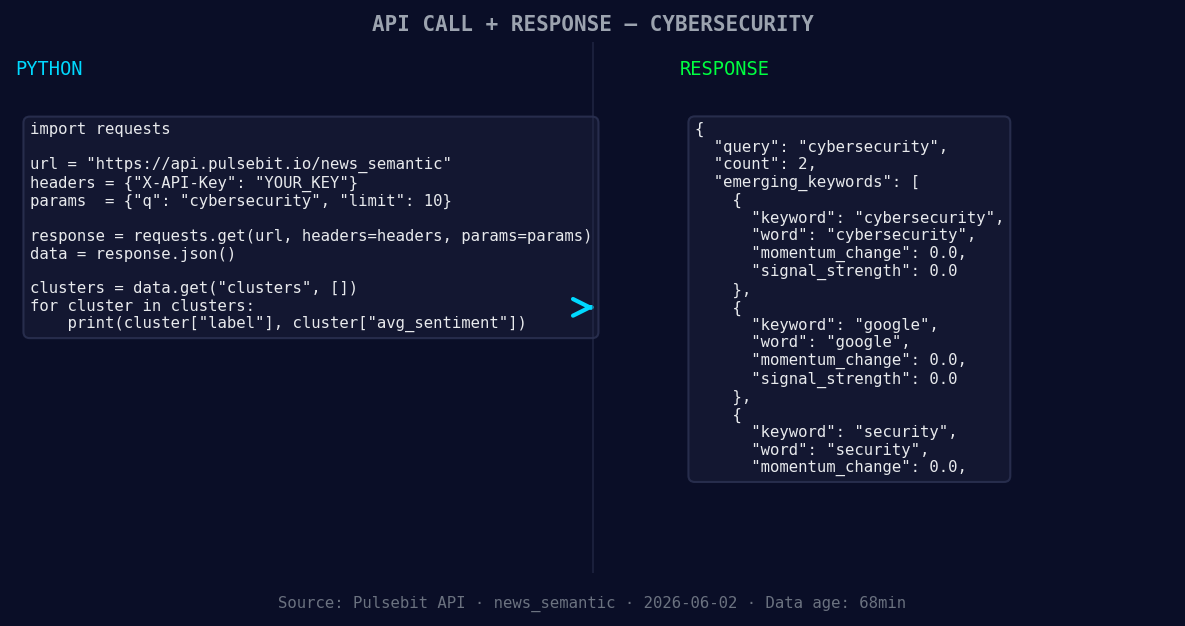
*Left: Python GET /news_semantic call for 'cybersecurity'. Right: returned JSON response structure (clusters: 3). Source: Pulsebit /news_semantic.*
# Define parameters
topic = 'cybersecurity'
score = +0.525
confidence = 0.85
momentum = +0.203
# Geographic origin filter
response = requests.get(
'https://api.pulsebit.com/sentiment',
params={
'topic': topic,
'momentum': momentum,
'lang': 'en'
}
)
data = response.json() # Processed data
# Meta-sentiment moment
narrative = "Clustered by shared themes: cio, implores, industry, put, greater."
meta_response = requests.post(
'https://api.pulsebit.com/sentiment',
json={'text': narrative}
)
meta_data = meta_response.json() # Meta-sentiment data
In this code, we first filter sentiment analysis by the English language to ensure we’re honing in on the right audience. The second part scores the narrative framing itself, providing context for the spike. Not only does this help validate the sentiment, but it also enriches our understanding of the underlying themes driving it.
Now, let’s consider three specific builds we can implement based on this discovery:
- Geographic Filter for Cybersecurity Signals: Set a signal threshold for cybersecurity topics. For instance, you could trigger alerts when the sentiment score for 'cybersecurity' exceeds +0.5 in English-speaking regions. This allows you to catch sentiment shifts before they go mainstream.

Geographic detection output for cybersecurity. United States leads with 2 articles and sentiment +0.85. Source: Pulsebit /news_recent geographic fields.
Meta-Sentiment Analysis Weighted by Cluster Themes: Develop a scoring mechanism that weighs narratives based on the frequency of keywords from the clustered themes. For example, prioritize narratives that include "cio", "implores", and "industry" when assessing the strength of emerging cybersecurity stories.
Forming Gap Alerts: Create a monitoring system that compares emerging themes like 'cybersecurity', 'google', and 'security' against mainstream narratives. Use our API to trigger alerts when these themes show divergence, indicating that industry discussions may be advancing faster than public sentiment.
By taking these steps, you can ensure that your pipeline is not just reactive but anticipatory—ready to catch the next wave of sentiment before it becomes obvious.
Ready to get started? Check out our documentation at pulsebit.lojenterprise.com/docs. You can copy-paste and run these examples in under 10 minutes. Let's stay ahead of the curve!


Top comments (0)