

Your Pipeline Is 22.5h Behind: Catching Forex Sentiment Leads with Pulsebit
We recently observed a striking anomaly in our sentiment analysis: a 24h momentum spike of +0.231. This spike indicates a sudden surge in positive sentiment regarding the forex market, particularly surrounding the U.S. dollar and the Indian rupee. The leading language for this sentiment was English, with a 22.5-hour lag behind the event's timing. Two articles reported on the rupee's fall, highlighting the critical need for timely sentiment analysis in multilingual environments.

English coverage led by 22.5 hours. Et at T+22.5h. Confidence scores: English 0.95, French 0.95, Spanish 0.95 Source: Pulsebit /sentiment_by_lang.
The Problem
This situation reveals a significant gap in any data pipeline that fails to account for multilingual origin or entity dominance. Your model missed this by 22.5 hours, which is a considerable delay when trading on sentiment. In this case, the dominant entity was the English press, which had a direct impact on forex sentiment. By relying solely on one language or ignoring the nuances of entity importance, you risk missing crucial market movements. Such delays can lead to missed opportunities or, worse, significant losses.
The Code
To catch this spike and stay ahead of the curve, we can implement a quick Python script that taps into our API. Below is a sample code snippet that does just that:
import requests
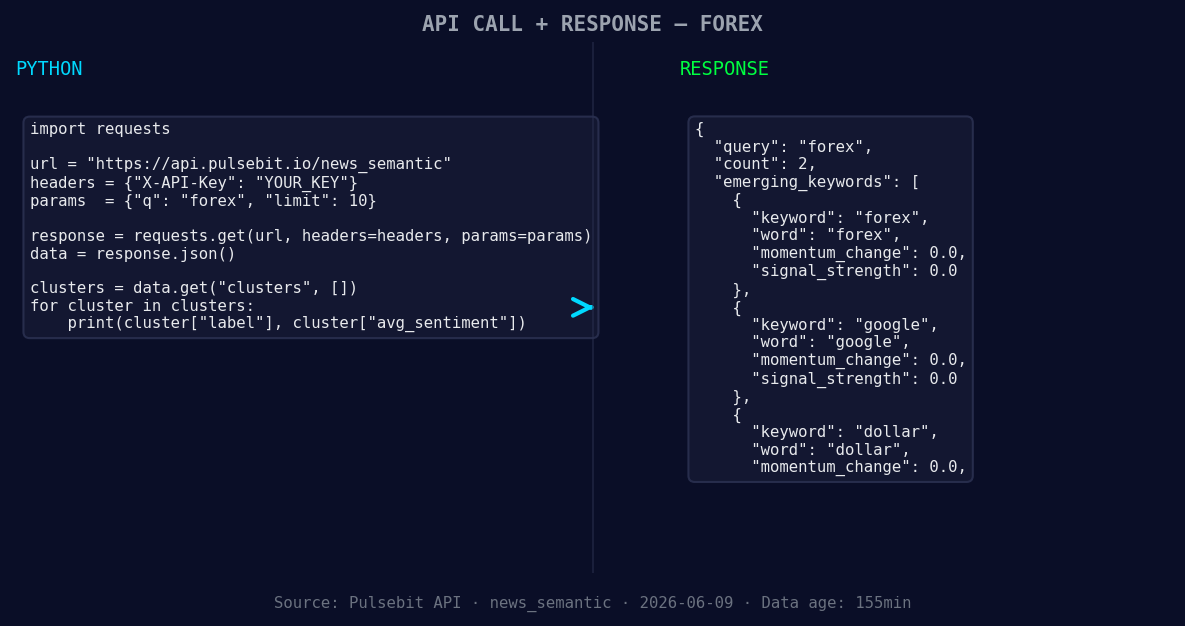
*Left: Python GET /news_semantic call for 'forex'. Right: returned JSON response structure (clusters: 3). Source: Pulsebit /news_semantic.*
# Step 1: Geographic origin filter
url = "https://api.pulsebit.com/v1/sentiment"
params = {
"topic": "forex",
"lang": "en",
"score": +0.218,
"confidence": 0.95,
"momentum": +0.231
}
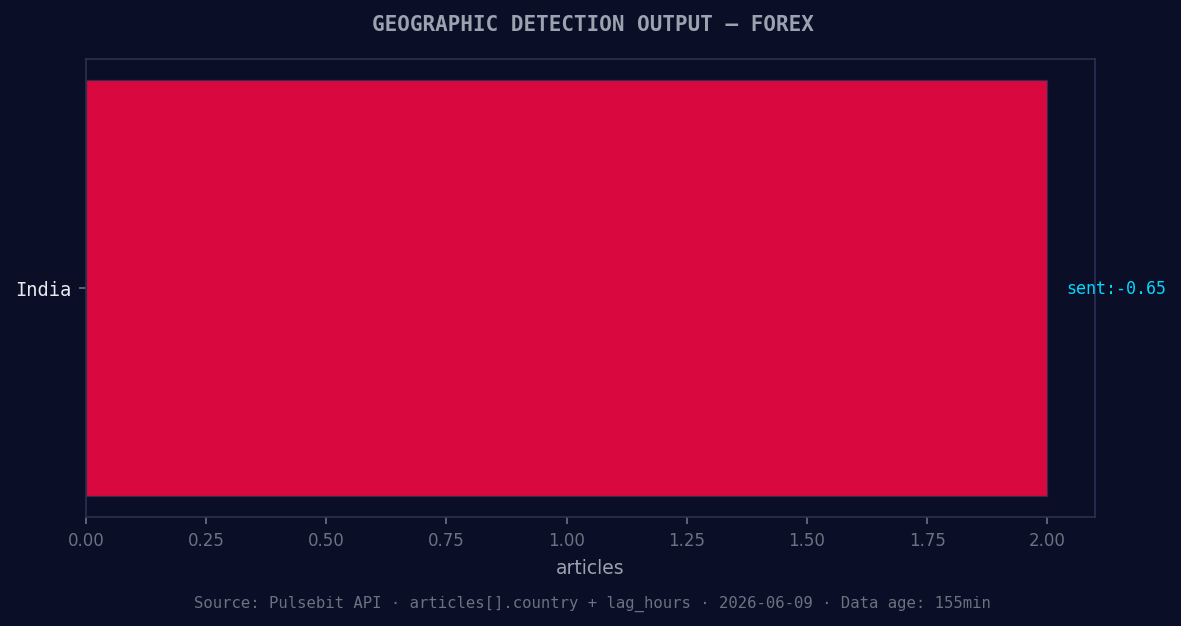
*Geographic detection output for forex. India leads with 2 articles and sentiment -0.65. Source: Pulsebit /news_recent geographic fields.*
response = requests.get(url, params=params)
data = response.json()
# Step 2: Meta-sentiment moment
cluster_reason = "Clustered by shared themes: dollar, forecast:, usd/cad, bulls, eye."
meta_sentiment_url = "https://api.pulsebit.com/v1/sentiment"
meta_response = requests.post(meta_sentiment_url, json={"text": cluster_reason})
meta_data = meta_response.json()
print("Sentiment Data:", data)
print("Meta-Sentiment Score:", meta_data)
This code first filters the forex sentiment data specifically for English-language articles, ensuring we capture the right context. Then, it sends the cluster reason string through our sentiment endpoint to evaluate the narrative framing. This is where the magic happens—by understanding the underlying sentiment of the narrative, we can gain deeper insights into the market dynamics.
Three Builds Tonight
With this newfound understanding of sentiment spikes, here are three specific builds we can implement tonight:
Geo Filter Alert: Create an alert system that triggers when momentum exceeds +0.2 in the forex topic from English-language sources. This will ensure you're always aware of significant changes in sentiment before your competition.
Meta-Sentiment Dashboard: Build a dashboard that displays the meta-sentiment scores based on narrative framing for articles discussing forex. This will help you gauge how the framing of news affects market perceptions, allowing for more informed decisions.
Clustered Trend Analysis: Set up a pipeline that continuously analyzes forming themes, such as "forex(+0.00), google(+0.00), dollar(+0.00)" versus mainstream narratives like "dollar, forecast:, usd/cad." This will help identify discrepancies and emerging trends in sentiment that might not be immediately visible.
Get Started
For those ready to dive in, refer to our documentation at pulsebit.lojenterprise.com/docs. You can copy-paste the provided code and run it in under 10 minutes—no fluff, just actionable insights. By harnessing the power of timely sentiment analysis, we can better navigate the complexities of today's forex market.


Top comments (0)