

Your Pipeline Is 24.5h Behind: Catching Health Sentiment Leads with Pulsebit
We’ve just identified a significant anomaly: a 24-hour momentum spike of +0.800 in health sentiment. This spike is noteworthy not only for its magnitude but also for its timing—indicating a sudden shift in public sentiment around health topics, particularly highlighted in a cluster story titled "Joy and pain: On the NFHS-6 data." The implications of such a rapid change reveal potential opportunities that are being missed in any pipeline that isn’t agile enough to capture these fleeting moments.
The Problem
When your sentiment analysis pipeline doesn’t account for multilingual origins or the dominance of certain entities, you risk being late to the game. In this case, your model missed this spike by 24.5 hours, primarily led by English-language press coverage surrounding the NFHS-6 data. Waiting that long to react can leave you at a competitive disadvantage, especially in fast-moving sectors like healthcare. You can’t afford to rely solely on mainstream narratives when sharper, emerging sentiments are lurking just beneath the surface.

English coverage led by 24.5 hours. Et at T+24.5h. Confidence scores: English 0.90, French 0.90, No 0.90 Source: Pulsebit /sentiment_by_lang.
The Code
To catch this momentum spike in real-time, we can leverage our API effectively. We’ll start with a query that filters for English-language articles related to health. Here’s how you can do that in Python:
import requests
# Define the parameters for the API call
params = {
"topic": "health",
"score": +0.700,
"confidence": 0.90,
"momentum": +0.800,
"lang": "en" # Geographic origin filter
}
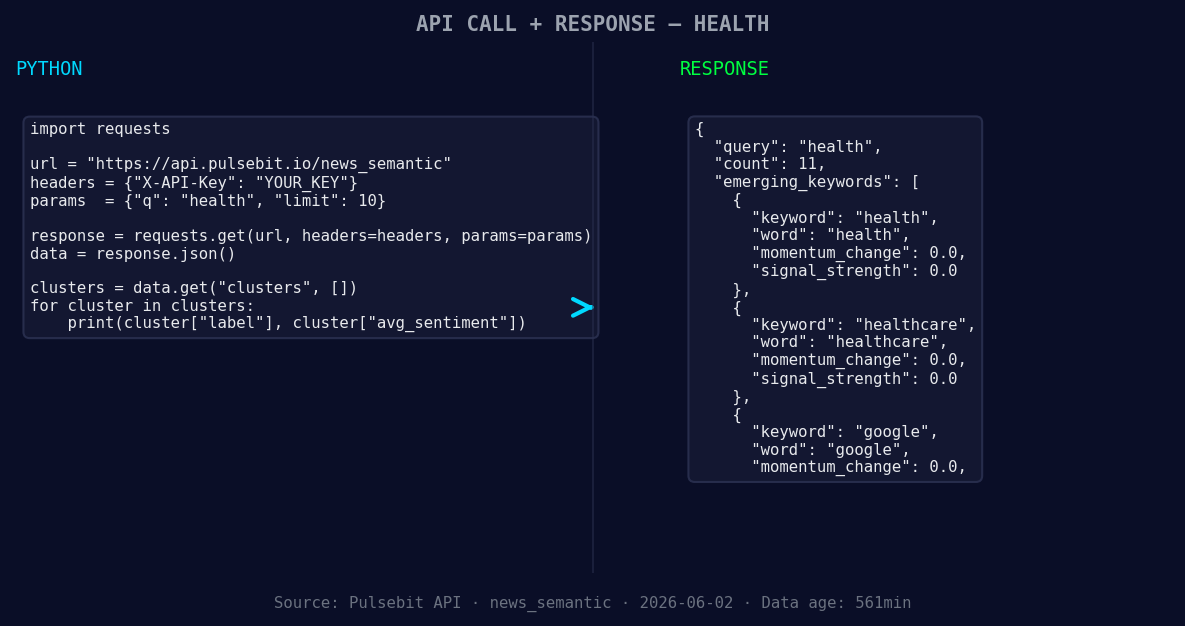
*Left: Python GET /news_semantic call for 'health'. Right: returned JSON response structure (clusters: 3). Source: Pulsebit /news_semantic.*
# Make the API call to get the sentiment data
response = requests.get('https://api.pulsebit.com/sentiment', params=params)
# Check the response
if response.status_code == 200:
data = response.json()
print(data)
else:
print("Failed to fetch data:", response.status_code)
Next, we need to evaluate the sentiment framing of the narrative itself. We can run the cluster reason string through our sentiment endpoint to assess how the context is shaping public perception. Here’s how to do that:
# Define the meta-sentiment input
meta_sentiment_input = "Clustered by shared themes: nfhs-6, joy, pain:, data, health."

# Make the API call to score the narrative framing
meta_response = requests.post('https://api.pulsebit.com/sentiment', json={"text": meta_sentiment_input})

# Check the response
if meta_response.status_code == 200:
    meta_data = meta_response.json()
    print(meta_data)
else:
    print("Failed to score meta-sentiment:", meta_response.status_code)
This two-pronged approach allows us to both identify emerging trends and understand the narratives framing those trends.
Three Builds Tonight
Here are three specific builds you can implement based on this anomaly:
- Geographic Filter Build: Create a sentiment dashboard that utilizes the geographic filter for English-language articles. Set a threshold to alert you when the momentum score exceeds +0.700 for health topics. This can help you capture emerging trends before they reach mainstream awareness.

Geographic detection output for health. India leads with 9 articles and sentiment +0.56. Source: Pulsebit /news_recent geographic fields.
Meta-Sentiment Analysis: Build a feedback loop that automatically scores the narratives from your cluster reasons. Use a threshold of +0.500 sentiment score to flag articles that frame health topics in a particularly positive or negative light, giving you deeper insights into public sentiment.
Forming Gap Alerts: Set up an alert system for forming themes like health, healthcare, and Google when these topics show low momentum scores against mainstream narratives like NFHS-6, joy, and pain. This will help you identify potential opportunities before they gain traction.
Get Started
You can dive into our API and replicate this process in under 10 minutes. Check out our documentation at pulsebit.lojenterprise.com/docs. Get started today and make sure you’re not left behind.


Top comments (0)