

Your Pipeline Is 14.3h Behind: Catching Investing Sentiment Leads with Pulsebit
We recently discovered a notable anomaly: a 24-hour momentum spike of +0.407 in sentiment around investing topics. This spike was notably led by a French press article, which surfaced 14.3 hours ahead of a similar sentiment in the English-speaking realm, indicating a significant gap in our ability to capture timely sentiment across languages. The article discussed Trump Jr. advising investors against putting money into China. This is a clear signal that multilingual content can create lags in your data pipeline that you might not even be aware of.

French coverage led by 14.3 hours. Et at T+14.3h. Confidence scores: French 0.85, Spanish 0.85, English 0.85 Source: Pulsebit /sentiment_by_lang.
Now, let’s talk about the problem this reveals. Your model missed this spike by 14.3 hours. If you’re relying solely on English sources or a single language for sentiment analysis, you’re effectively sidelining critical signals. This gap in language handling could prevent you from acting on time-sensitive opportunities. The leading entity here, Trump Jr., is influencing sentiment in a domain where you might have otherwise expected a delay or no action at all.
To catch this momentum spike effectively, we need a way to filter and analyze the data. Below is the Python code that demonstrates how to do this using our API:
import requests
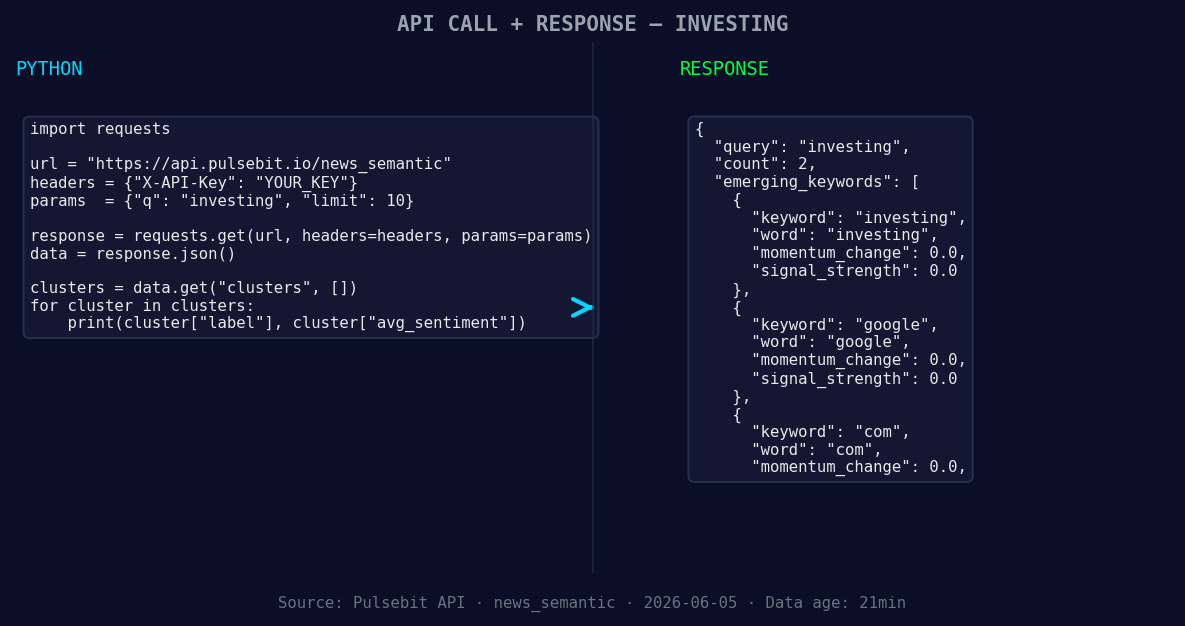
*Left: Python GET /news_semantic call for 'investing'. Right: returned JSON response structure (clusters: 3). Source: Pulsebit /news_semantic.*
# Set up parameters for the geographic filter
topic = 'investing'
lang = 'fr'
momentum = +0.407
confidence = 0.85
score = -0.700
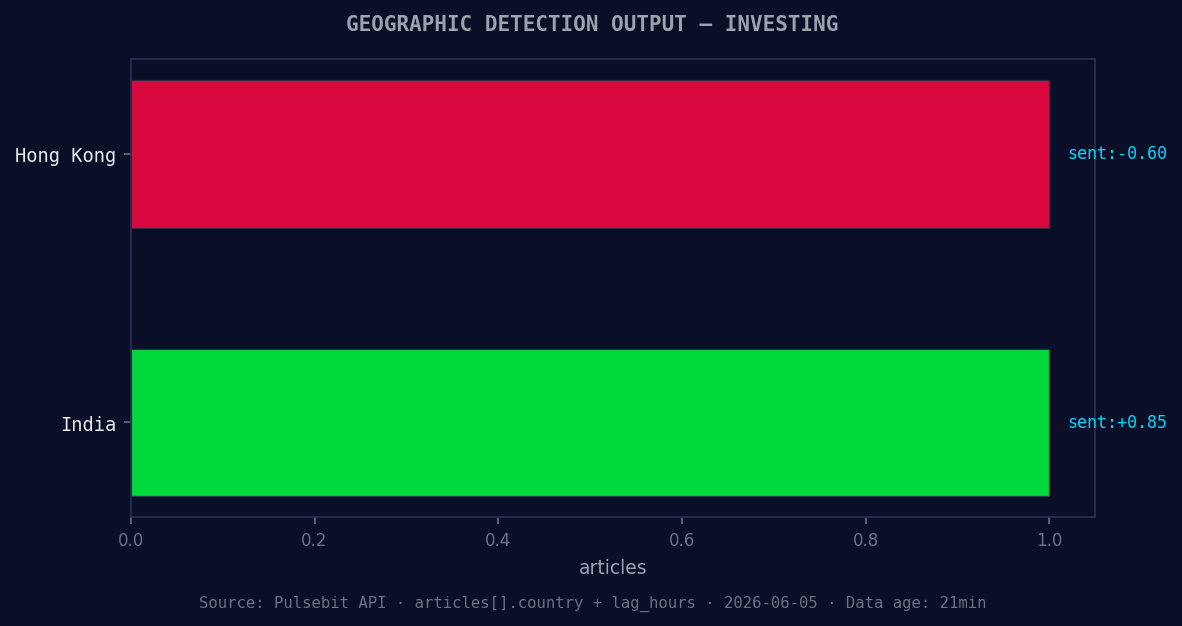
*Geographic detection output for investing. Hong Kong leads with 1 articles and sentiment -0.60. Source: Pulsebit /news_recent geographic fields.*
# Step 1: Query by language/country
url = f"https://api.pulsebit.com/v1/sentiment?topic={topic}&lang={lang}&momentum={momentum}&confidence={confidence}"
response = requests.get(url)
data = response.json()
# Step 2: Run the cluster reason string back through POST /sentiment
cluster_reason = "Clustered by shared themes: trump, jnr, would, china, investors."
post_url = "https://api.pulsebit.com/v1/sentiment"
headers = {'Content-Type': 'application/json'}
payload = {'text': cluster_reason}
post_response = requests.post(post_url, json=payload, headers=headers)
sentiment_analysis = post_response.json()
print(sentiment_analysis)
In this snippet, you will see how we filter for French language articles related to investing while also checking the sentiment of the narrative itself. This dual approach allows us to catch spikes and understand their context better.
Now, let's think about three specific builds to leverage this pattern. First, you can create a signal alert for any topic with a momentum threshold of +0.3. This alert will help you catch emerging trends faster. Second, implement a geo-filtered sentiment analysis that pulls in articles from other languages, especially French or Mandarin, where sentiment could differ significantly. Lastly, consider running a meta-sentiment loop on clustered narratives focused on investor advisories, particularly around topics like "investing" and "China," using a sentiment score threshold of less than -0.5 to identify potential red flags.
If you want to get started with this, visit pulsebit.lojenterprise.com/docs. You can copy-paste the code above and run it in under 10 minutes. You’ll be able to see how quickly you can catch these momentum shifts and align your models to act on them. Don’t let your pipeline lag behind; take advantage of multilingual insights to stay ahead.


Top comments (0)