

Your Pipeline Is 24.6h Behind: Catching Health Sentiment Leads with Pulsebit
We recently observed a significant anomaly: a 24h momentum spike of +0.800 in health-related sentiment. This spike is compelling, especially considering the leading language of the press was English, with a 0.0h lag against the Netherlands at 24.6h. The cluster story titled "Joy and pain: On the NFHS-6 data" indicates a focused narrative emerging in this domain, highlighting a convergence of themes around health, joy, and pain that deserves our attention.
The Problem
If your sentiment analysis pipeline isn't tuned to handle multilingual origins or dominant entities, you might have missed this spike by 24.6 hours. The leading language was English, but the sentiment was also influenced by narratives emerging from other regions and languages. Your model may have overlooked critical signals and delayed your response to emerging trends. In a fast-paced environment, a lag like this can mean missing out on significant insights that could inform your strategies.

English coverage led by 24.6 hours. Nl at T+24.6h. Confidence scores: English 0.85, Spanish 0.85, French 0.85 Source: Pulsebit /sentiment_by_lang.
The Code
To catch this momentum spike effectively, we can use our API to filter by geographic origin and then analyze the narrative framing. Here’s how you can do it in Python:
import requests
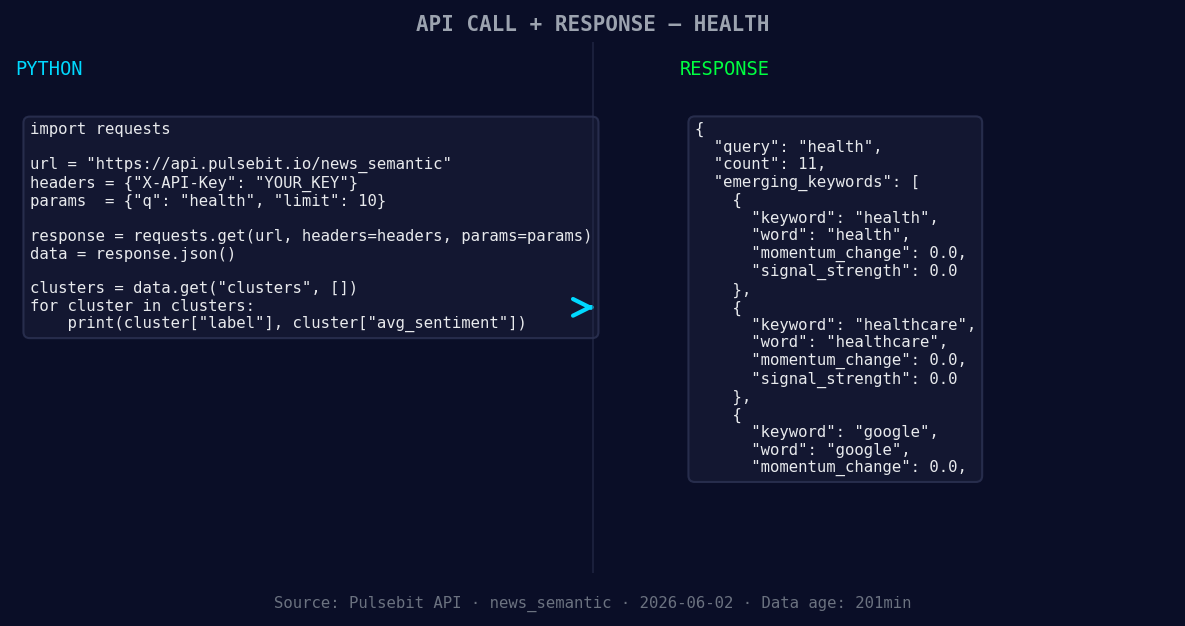
*Left: Python GET /news_semantic call for 'health'. Right: returned JSON response structure (clusters: 3). Source: Pulsebit /news_semantic.*
# Geographic origin filter: query by language/country
url = "https://api.pulsebit.com/v1/sentiment"
params = {
"topic": "health",
"lang": "en",
"score": 0.700,
"confidence": 0.85,
"momentum": 0.800
}
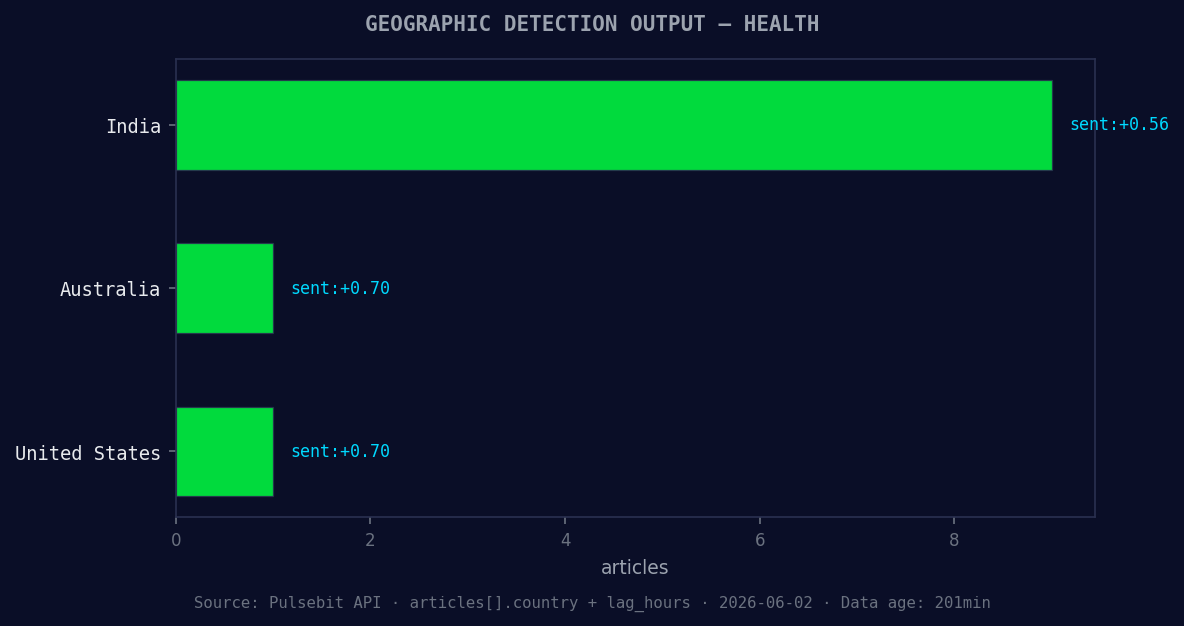
*Geographic detection output for health. India leads with 9 articles and sentiment +0.56. Source: Pulsebit /news_recent geographic fields.*
response = requests.get(url, params=params)
data = response.json()
print(data) # Inspect the response for relevant insights
Next, we will run the cluster reason string through our sentiment scoring system to score the narrative itself:
# Meta-sentiment moment: score the narrative framing
narrative = "Clustered by shared themes: nfhs-6, joy, pain:, data, health."
meta_sentiment_url = "https://api.pulsebit.com/v1/sentiment"
meta_response = requests.post(meta_sentiment_url, json={"text": narrative})
meta_data = meta_response.json()
print(meta_data)  # Check how the narrative is framed sentimentally
Three Builds Tonight
With this pattern in mind, here are three builds you can implement immediately:
Geographic Origin Filter: Create an alert system that triggers when health sentiment spikes above a threshold (e.g., +0.500) in English-speaking regions. Use the endpoint with the language filter like we did above to get real-time insights as they emerge.
Meta-Sentiment Loop: Build a dashboard that visualizes sentiment shifts not just by topic but also by narrative framing. Utilize the endpoint for scoring narratives to create composite scores for clusters around themes like "health" and "joy", allowing you to see shifts in public sentiment dynamically.
Forming Themes Analysis: Develop a feature that tracks emerging themes in real-time. Set a threshold for sentiment scores around the keywords "health", "healthcare", and "Google" and correlate these with mainstream narratives around "nfhs-6", "joy", and "pain". This can help you identify shifts in public discourse that may influence health policy or consumer behavior.
Get Started
You can dive deeper into how to implement these builds at pulsebit.lojenterprise.com/docs. With the examples provided, you can copy, paste, and run this in under 10 minutes. Don't let your pipeline lag behind!


Top comments (0)