

Your Pipeline Is 25.0h Behind: Catching Governance Sentiment Leads with Pulsebit
We recently discovered a notable anomaly in the data: a 24h momentum spike of +0.252 related to governance sentiment. This is significant, as it underscores a shift in how governance reforms are perceived, particularly within the context of Africa's Agenda 2063. The leading language for this spike was English, with a notable cluster story titled "Africa urged to strengthen governance reforms under Agenda 2063" found within the data. This single article encapsulates a critical sentiment that might have otherwise slipped through the cracks.
When we analyze this data, it reveals a structural gap in any pipeline that fails to handle multilingual origins or entity dominance. Imagine your model missing a crucial sentiment shift by a staggering 25 hours simply because it wasn’t designed to account for the leading language or dominant entity during this period. In this case, the lag in reporting on governance issues in other languages could mean missing out on essential insights that influence decision-making and public opinion.

English coverage led by 25.0 hours. German at T+25.0h. Confidence scores: English 0.85, French 0.85, Spanish 0.85 Source: Pulsebit /sentiment_by_lang.
To catch this momentum spike, we can leverage our API effectively. Below is a Python snippet that demonstrates how to filter articles by language and query for sentiment:
import requests
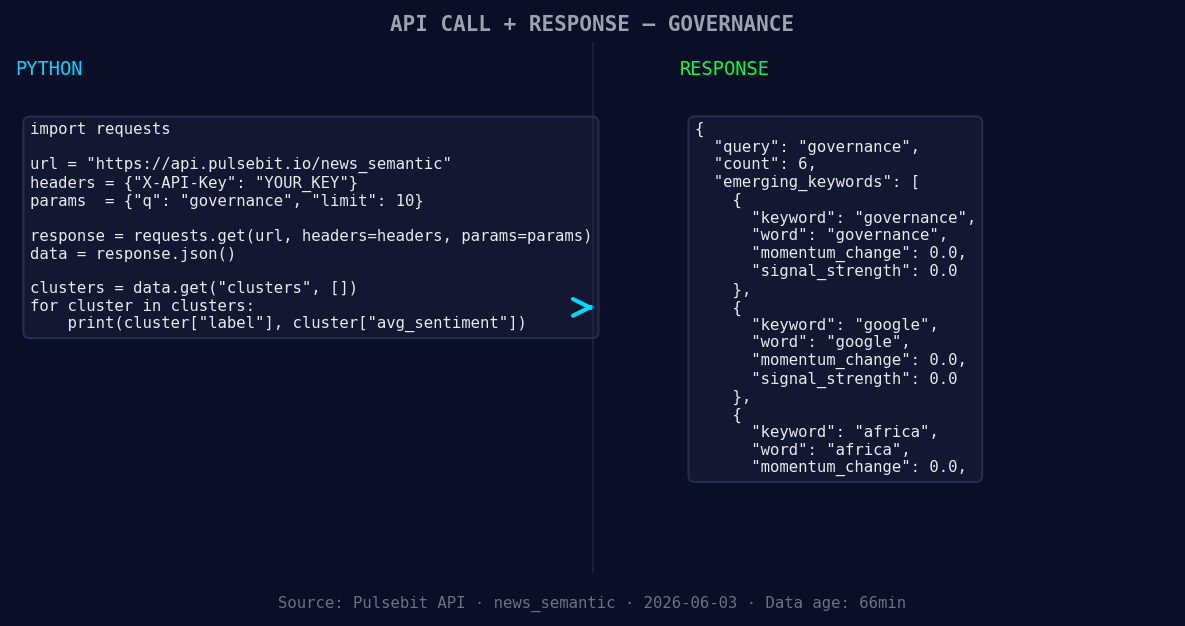
*Left: Python GET /news_semantic call for 'governance'. Right: returned JSON response structure (clusters: 3). Source: Pulsebit /news_semantic.*
# Step 1: Geographic origin filter
url = "https://api.pulsebit.com/articles"
params = {
"topic": "governance",
"lang": "en", # Filtering for English articles
}
response = requests.get(url, params=params)
articles = response.json()
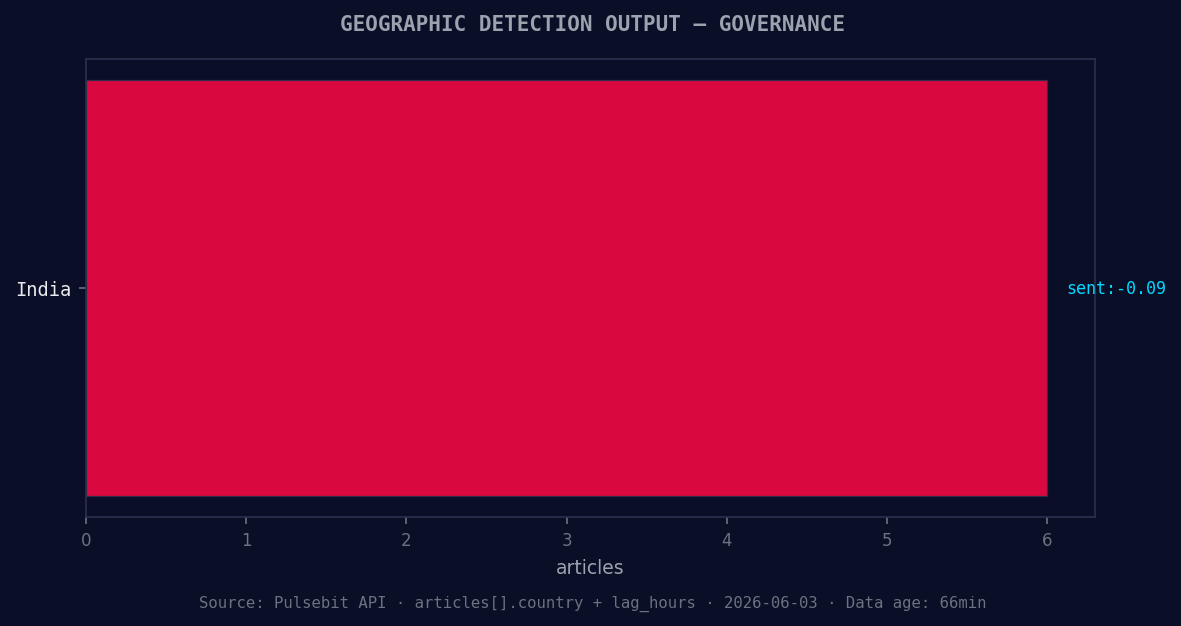
*Geographic detection output for governance. India leads with 6 articles and sentiment -0.09. Source: Pulsebit /news_recent geographic fields.*
# Step 2: Meta-sentiment moment
cluster_reason = "Clustered by shared themes: africa, urged, strengthen, governance, reforms."
sentiment_url = "https://api.pulsebit.com/sentiment"
sentiment_response = requests.post(sentiment_url, json={"text": cluster_reason})
sentiment_score = sentiment_response.json()
print("Articles:", articles)
print("Sentiment Score:", sentiment_score)
In this example, we first filter articles related to "governance" in English. Then, we send a second request to analyze the narrative framing around our clustered themes. The input string we use is crafted to reflect the key topics identified in our initial spike.
Here are three specific builds that you can implement with this pattern:
Geo-filtered Governance Insights: Create a real-time dashboard that tracks governance sentiment from English articles. Set a threshold of +0.200 for the momentum score to trigger alerts. This ensures that you're always aware of shifts in sentiment that can impact policy discussions.
Meta-Sentiment Loop: Build a sentiment analysis tool that runs the cluster reason string through our sentiment endpoint. Use the response to gauge public perception of governance reforms. Set a threshold for the sentiment score to flag any narratives below +0.500 for further investigation.
Thematic Comparison: Contrast the forming themes (governance, google, africa) against mainstream narratives. Use a comparative analysis where you query both the forming and mainstream themes, looking for significant sentiment variances. This could help identify emerging trends and provide deeper insights into public sentiment.
If you're ready to dive into this data and start building your own sentiment-driven applications, check out our documentation at pulsebit.lojenterprise.com/docs. You can copy-paste the code provided and run it in under 10 minutes to start harnessing the power of real-time sentiment analysis.


Top comments (0)