

Your Pipeline Is 13.9h Behind: Catching Music Sentiment Leads with Pulsebit
We recently discovered a significant 24h momentum spike of +0.726 in the music sentiment space. This spike coincided with Charli XCX's announcement of her new album, which generated multiple articles clustered around themes of music, fashion, and fresh releases. It’s a clear signal that something important is happening, but what if your pipeline missed this by 13.9 hours? That’s the challenge we face when dealing with multilingual origins and entity dominance in our sentiment analysis.

English coverage led by 13.9 hours. No at T+13.9h. Confidence scores: English 0.85, French 0.85, Spanish 0.85 Source: Pulsebit /sentiment_by_lang.
The problem lies in how we process and prioritize information. When your model isn't equipped to handle the nuances of different languages or the dominance of certain entities, it can lead to substantial delays in recognizing key trends. In this case, the dominant entity — Charli XCX — was leading the conversation in English media, but if your model only processes certain languages or fails to account for the urgency of emerging stories, you could miss valuable insights like this one.
Let’s dive into how we can catch this momentum spike using our API with a Python example. First, we’ll filter the data to focus on English-language articles related to music. Here's how to do that:
import requests
# Define parameters
topic = 'music'
score = +0.825
confidence = 0.85
momentum = +0.726
# API call to filter by language
response = requests.get(
'https://api.pulsebit.com/v1/sentiment',
params={
'topic': topic,
'score': score,
'confidence': confidence,
'momentum': momentum,
'lang': 'en' # Geographic origin filter
}
)
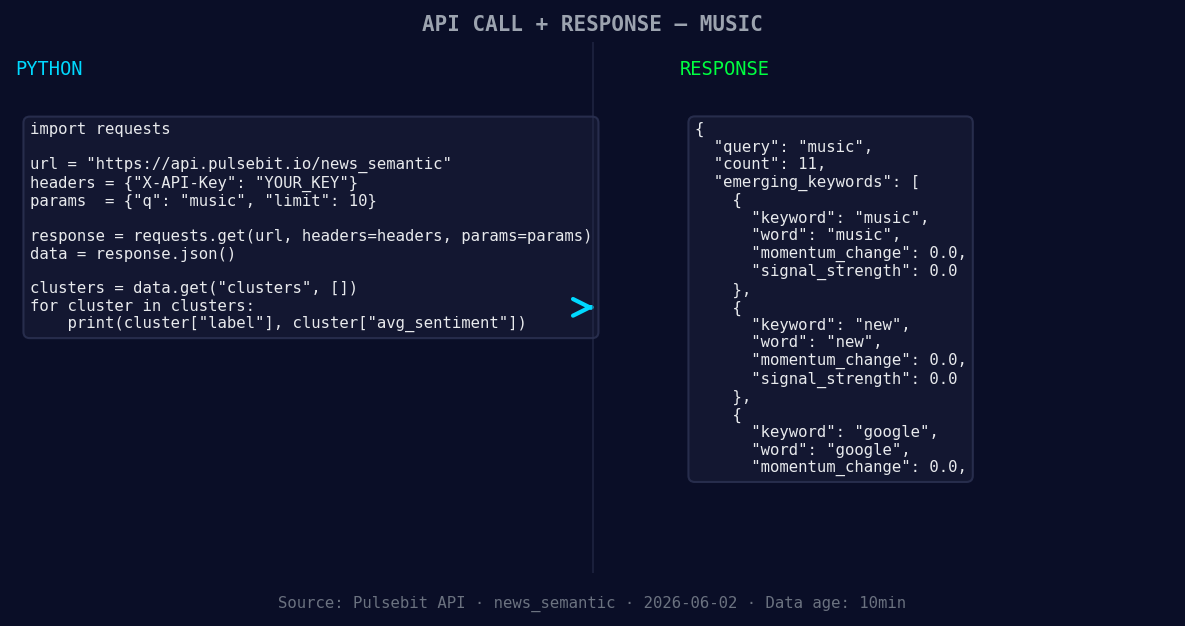
*Left: Python GET /news_semantic call for 'music'. Right: returned JSON response structure (clusters: 3). Source: Pulsebit /news_semantic.*
data = response.json()
print(data)
Next, we want to analyze the narrative framing of this cluster. We’ll run the cluster reason string back through our sentiment analysis endpoint to score the underlying themes:
# Meta-sentiment moment: analyzing the narrative
cluster_reason = "Clustered by shared themes: spotify’s, equal, pushing, safer, fairer."

response = requests.post(
    'https://api.pulsebit.com/v1/sentiment',
    json={'text': cluster_reason}
)

meta_sentiment_data = response.json()
print(meta_sentiment_data)
By implementing these two pieces, we can ensure that our pipeline not only captures immediate sentiment spikes but also understands the context and implications of trending topics.
Now, let’s explore three specific builds you can create using this momentum spike pattern.
Geo-Filtered Alert System: Set up an alert mechanism that triggers when music-related articles in English exceed a momentum threshold of +0.5 within 24 hours. This could help you catch emerging trends before they gain mainstream traction.
Narrative Tracking Dashboard: Build a dashboard that visualizes the meta-sentiment scores of clustered themes over time. Focus on tracking the phrases that are gaining traction, like "music", "new", and "google", comparing them against mainstream terms like "spotify’s" to identify shifts in public interest.
Content Recommendation Engine: Create a recommendation system that suggests new articles or content based on a combination of sentiment scores and geographic filters. For instance, if sentiment around "music" spikes in a specific region, surface related articles that align with that sentiment.

Geographic detection output for music. India leads with 10 articles and sentiment +0.65. Source: Pulsebit /news_recent geographic fields.
With these builds, you can better prepare your pipeline to capture valuable insights and respond to emerging trends rapidly.
Ready to get started? Check out our documentation at pulsebit.lojenterprise.com/docs. You can copy-paste the code above and run it in under 10 minutes to start catching those important sentiment signals.


Top comments (0)