

Your Pipeline Is 16.2h Behind: Catching Digital Transformation Sentiment Leads with Pulsebit
We recently observed a striking anomaly: a 24-hour momentum spike of +0.257 centered around the theme of digital transformation. The leading language was French, with a notable 16.2-hour lead over English, creating a clear opportunity for us to grasp emerging sentiment in this space. Two articles clustered around the narrative "GeekyAnts Recognized for AI and Digital Transformation" highlight the significance of this moment. Something is happening, and we need to adapt our pipelines to capture it.
When we look at this data, it’s evident that any pipeline not equipped to handle multilingual sources is at a serious disadvantage. Your model missed out on this significant spike by 16.2 hours—an eternity in the fast-paced world of sentiment analysis. The dominance of French-language articles means that important insights can slip through the cracks if we only focus on English sources. The gap is not just in the language itself but in how we interpret and act on this emerging sentiment.

French coverage led by 16.2 hours. Et at T+16.2h. Confidence scores: French 0.85, English 0.85, Spanish 0.85 Source: Pulsebit /sentiment_by_lang.
Let’s dive into the code. We can use our API to pull in the relevant data and analyze the sentiment around this digital transformation topic. Here’s how we can catch this momentum spike:
import requests
# Set up parameters for the API call
topic = 'digital transformation'
score = +0.850
confidence = 0.85
momentum = +0.257
lang = 'fr' # French language filter
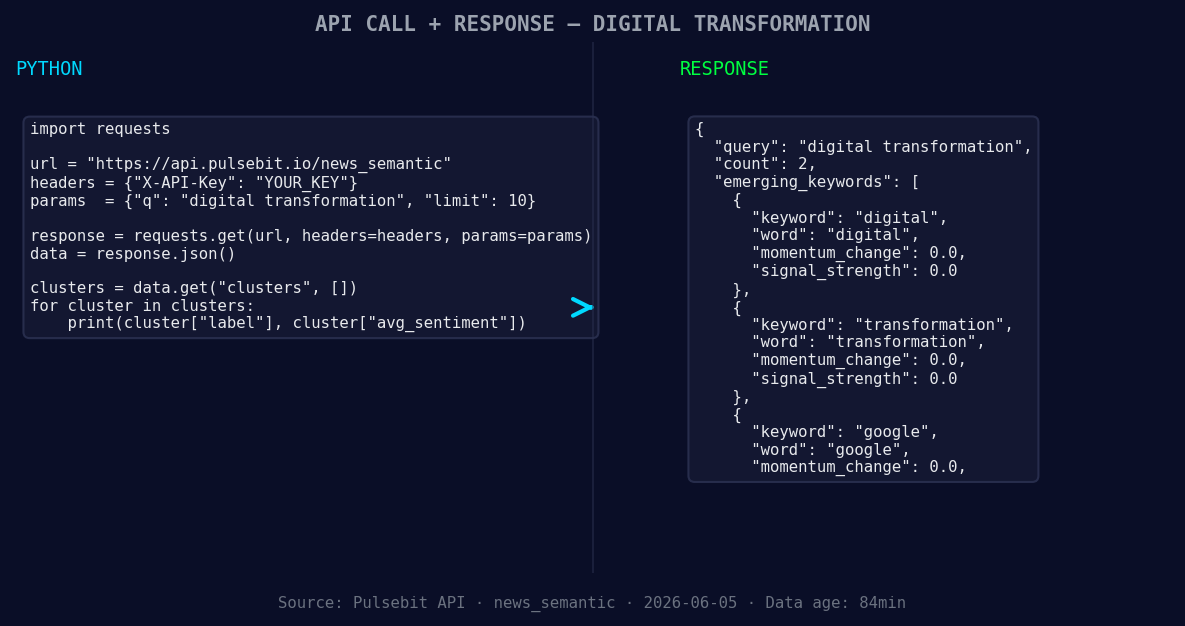
*Left: Python GET /news_semantic call for 'digital transformation'. Right: returned JSON response structure (clusters: 3). Source: Pulsebit /news_semantic.*
# Geographic origin filter
response = requests.get(f'https://api.pulsebit.com/v1/sentiment?q={topic}&lang={lang}')
data = response.json()
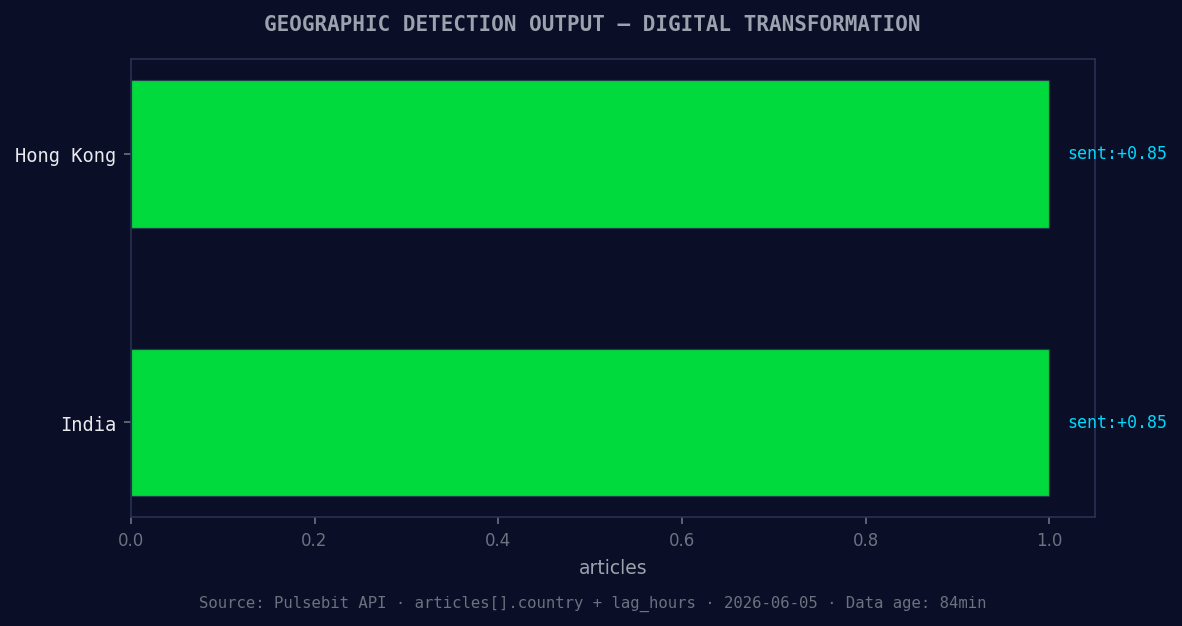
*Geographic detection output for digital transformation. Hong Kong leads with 1 articles and sentiment +0.85. Source: Pulsebit /news_recent geographic fields.*
# Extracting the relevant information
articles = data['articles_processed']
print(f'Processed {articles} articles in French.')
# Meta-sentiment moment
meta_reason = "Clustered by shared themes: transformation, healthcare, market, hit, usd."
sentiment_response = requests.post('https://api.pulsebit.com/v1/sentiment', json={'text': meta_reason})
sentiment_data = sentiment_response.json()
print(f'Meta sentiment score: {sentiment_data["sentiment_score"]}')
In this code, we first query our API for articles related to "digital transformation" in French. This allows us to leverage the momentum spike and understand how sentiment is evolving in a language that is currently leading the conversation. After that, we run the cluster reason string through our sentiment analysis endpoint to gauge how the narrative framing itself is impacting overall sentiment. This dual approach not only captures the spike but also contextualizes it within the broader narrative.
Now, here are three specific builds we can implement based on our findings:
Geo-Specific Alert System: Set a threshold where if momentum exceeds +0.250 in French articles, trigger an alert to your development team. This allows you to act promptly on emerging trends before they become mainstream.
Meta-Sentiment Dashboard: Create a dashboard that feeds real-time sentiment scores from clustered narratives. You can use the sentiment data from the meta-sentiment loop, focusing on the themes of digital transformation, healthcare, and market, providing a holistic view of sentiment shifts.
Trend Analysis with Dynamic Filters: Build an analysis endpoint that dynamically adjusts based on forming themes like digital, transformation, and Google against mainstream topics. If any of these themes see a score above +0.00, it should flag them for further exploration.
To get started, check out our documentation at pulsebit.lojenterprise.com/docs. You can copy-paste this code and run it in under 10 minutes, allowing you to harness the power of sentiment analysis in real-time. Don’t let your pipeline lag behind—stay ahead of the curve!


Top comments (0)