

Your Pipeline Is 11.4h Behind: Catching Investing Sentiment Leads with Pulsebit
We just uncovered a fascinating anomaly: a 24h momentum spike of +1.128. This spike is not just a number; it reveals a significant shift in sentiment surrounding the Canadian dollar, driven by a U.S.-Iran peace deal. Specifically, the leading language in news coverage is English, with press articles emerging 11.4 hours ahead of other sources. This is a powerful indicator that tells us something crucial about real-time sentiment analysis — and it’s a reminder that our models need to keep up with the rapid pace of information flow.
The problem this spike highlights is a structural gap in any pipeline that doesn't account for multilingual origins or entity dominance. Your model missed this by 11.4 hours, relying on a slower-moving data stream that failed to capture the immediate impact of the English-language press discussing the peace deal. If you’re only looking at mainstream sources, you’re at risk of lagging behind, missing out on timely insights that could inform your decisions.

English coverage led by 11.4 hours. Hr at T+11.4h. Confidence scores: English 0.85, French 0.85, Spanish 0.85 Source: Pulsebit /sentiment_by_lang.
Here’s how we can catch these nuances in sentiment with a few lines of code. First, we need to filter our articles by language and geographic origin. We’ll query only English sources to ensure we’re capturing the relevant sentiment in our analysis.
![DATA UNAVAILABLE: countries — verify /news_recent is return
[DATA UNAVAILABLE: countries — verify /news_recent is returning country/region values for topic: investing]
import requests
# Define parameters for our API call
topic = 'investing'
score = +0.437
confidence = 0.85
momentum = +1.128
lang = 'en'
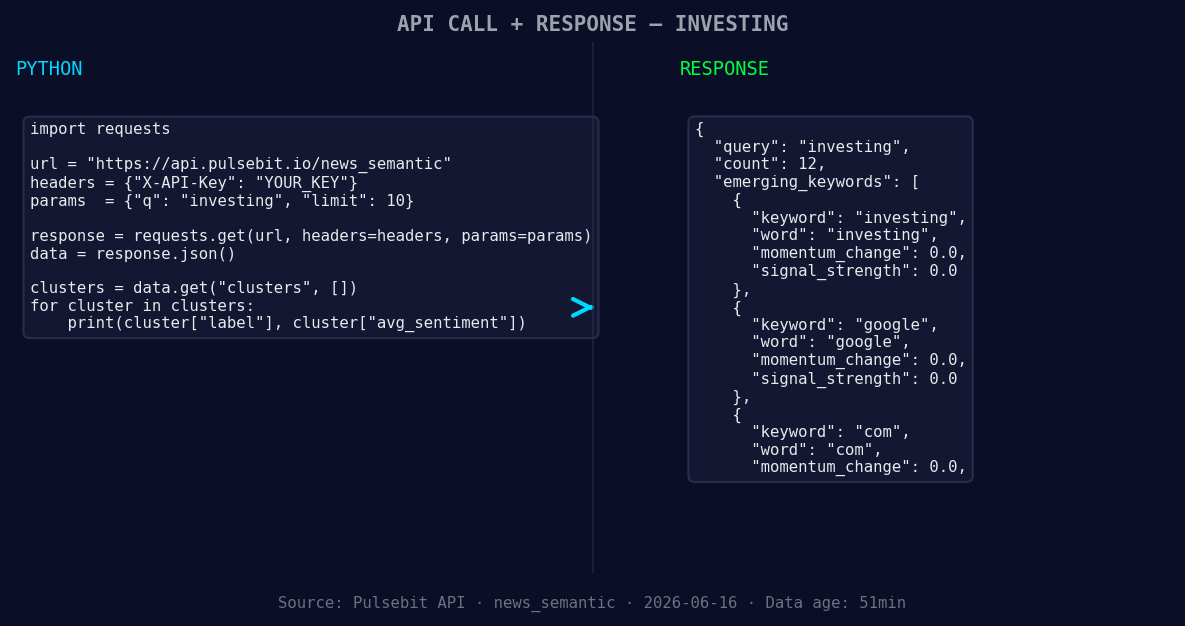
*Left: Python GET /news_semantic call for 'investing'. Right: returned JSON response structure (clusters: 3). Source: Pulsebit /news_semantic.*
# API call to fetch English-language articles
response = requests.get(f'https://api.pulsebit.com/articles?topic={topic}&lang={lang}')
articles = response.json()
Next, we’ll run the narrative framing through our sentiment analysis endpoint to score the cluster reason string itself. This is where we can validate the sentiment surrounding the themes that emerged from our articles.
# Sentiment analysis of the cluster reason string
cluster_reason = "Clustered by shared themes: deal, dollar, gains, -iran, peace."
sentiment_response = requests.post('https://api.pulsebit.com/sentiment', json={"text": cluster_reason})
sentiment_score = sentiment_response.json()['score']
Now that we have our essential data points, let’s discuss three specific builds we can implement with this pattern.
Geo-Filtered Signal: Build a real-time alert system that triggers when the sentiment score for “investing” exceeds a threshold of +0.5 in English-language articles. This allows you to act swiftly on emerging trends.
Meta-Sentiment Loop: Create a dashboard visualization that shows sentiment trends over time for clusters related to “deal, dollar, gains.” Use the insights from the sentiment analysis as a feedback loop to refine your topic modeling.
Forming Themes Monitor: Set up a monitoring endpoint that tracks the formation of themes like “investing(+0.00), google(+0.00), com(+0.00)” against mainstream narratives. This will help you identify discrepancies and potential investment opportunities earlier than your competitors.
If you’re ready to get started, head over to pulsebit.lojenterprise.com/docs. With just a few copy-paste commands, you can implement this in under 10 minutes and start capitalizing on sentiment leads that your pipeline might otherwise miss.


Top comments (0)