

On July 27, 2026, we noticed a striking anomaly: a 24h momentum spike of +0.193. This figure isn’t just another number; it indicates a significant shift in sentiment surrounding the topic of "world." We observed that the leading language was English, with a noteworthy cluster story about Charlie Verco, who recently broke a world paddleboarding record. This discovery highlights the dynamic nature of sentiment and the stories that can emerge, driven by unique events.
However, if your pipeline doesn’t account for multilingual origins or dominance in certain entities, you’re likely missing out on critical insights. Your model missed this by an eye-opening 27.3 hours. While the English press led the charge in reporting, the lag indicates a gap in understanding how different languages and narratives can shape sentiment. You could have been ahead of the curve but were left playing catch-up.

English coverage led by 27.3 hours. No at T+27.3h. Confidence scores: English 0.85, Spanish 0.85, French 0.85 Source: Pulsebit /sentiment_by_lang.
To catch this sort of momentum, we can leverage our API effectively. Here's a straightforward Python code snippet to identify this spike based on the parameters we've established.
import requests
# Define parameters for the API call
topic = 'world'
score = +0.050
confidence = 0.85
momentum = +0.193
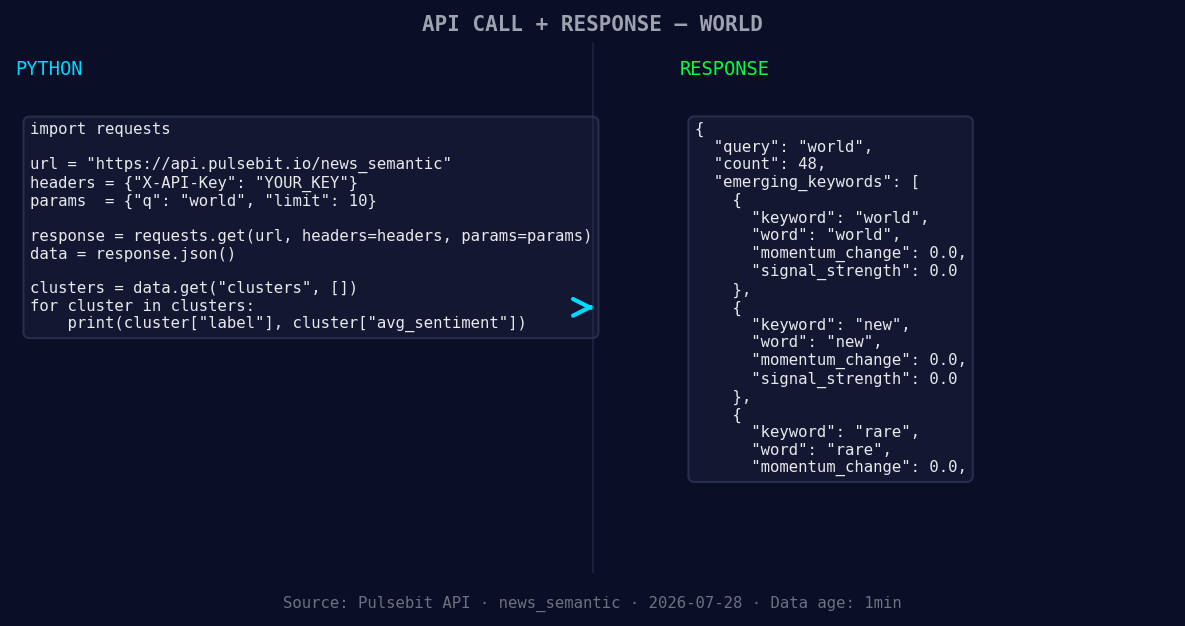
*Left: Python GET /news_semantic call for 'world'. Right: returned JSON response structure (clusters: 3). Source: Pulsebit /news_semantic.*
# Geographic origin filter: query by language
response = requests.get(
'https://api.pulsebit.com/v1/sentiment',
params={
'topic': topic,
'lang': 'en',
'score': score,
'confidence': confidence
}
)
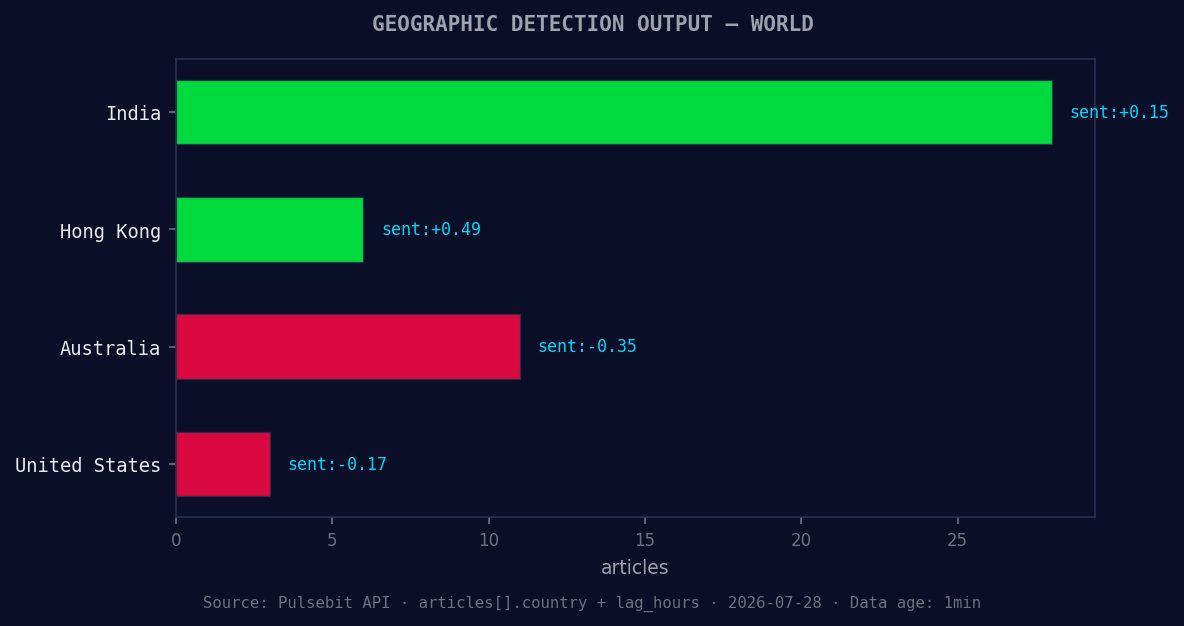
*Geographic detection output for world. India leads with 28 articles and sentiment +0.15. Source: Pulsebit /news_recent geographic fields.*
# Check if the request was successful
if response.status_code == 200:
print("Filtered response: ", response.json())
else:
print("Error in API call: ", response.status_code)
# Meta-sentiment moment: scoring the narrative framing
cluster_reason = "Clustered by shared themes: record, shark, attack, charlie, verco."
sentiment_response = requests.post(
'https://api.pulsebit.com/v1/sentiment',
json={'text': cluster_reason}
)
# Print the sentiment score of the narrative
if sentiment_response.status_code == 200:
print("Sentiment of the cluster reason: ", sentiment_response.json())
else:
print("Error in sentiment scoring: ", sentiment_response.status_code)
This code will allow you to filter by language and capture the essence of the story. The first part fetches sentiment data specific to English articles on the topic. Then, we run the cluster reason string through our sentiment endpoint to gauge how the narrative itself is being framed. This dual approach is crucial for understanding the context behind the numbers.
Now, let’s talk about three specific builds we can implement with this pattern:
Geo Filter Build: Set a threshold for sentiment spikes in English articles. Use the endpoint to flag stories that exceed a specified score (e.g., +0.050) and have a minimum momentum (e.g., +0.150). This helps you catch emerging trends in real-time.
Meta-Sentiment Loop: Create a recurring job that runs the cluster reason through the sentiment scoring endpoint for every significant spike detected. This could involve setting a threshold for narrative framing, allowing you to adjust your engagement strategy based on how positively or negatively the story is perceived.
Forming Themes Alert: Implement an alert system that triggers when themes like "world," "new," or "rare" rise against a backdrop of mainstream narratives like "has," "writers," or "guild." Use our geo filter to ensure you capture sentiment shifts globally, keeping you informed about local stories that might not be on everyone’s radar.
If you’re ready to harness this insight, dive into our documentation at pulsebit.lojenterprise.com/docs. You can copy-paste and run this in under 10 minutes, letting you capitalize on sentiment trends before they become mainstream.


Top comments (0)