

Your Pipeline Is 17.5h Behind: Catching Renewable Energy Sentiment Leads with Pulsebit
We recently identified a striking anomaly in our data: a 24-hour momentum spike of -0.331. This negative shift in sentiment around renewable energy suggests that something significant occurred, particularly with the narrative surrounding KenGen's ambitious renewable energy goals in Kenya. The leading language in this cluster is English, with a press lead time of 17.5 hours, indicating that our pipeline may not be capturing these shifts in real-time.
In a world where sentiment can pivot swiftly, your model missed this crucial insight by 17.5 hours. If your pipeline isn’t designed to handle multilingual origins or the dominance of certain entities, you risk overlooking critical shifts in sentiment, especially as they relate to pressing topics like renewable energy. In this case, the focus on Kenya's energy goals was lost in translation, and your understanding of the sentiment landscape could be lagging due to language biases.

English coverage led by 17.5 hours. Nl at T+17.5h. Confidence scores: English 0.95, Spanish 0.95, French 0.95 Source: Pulsebit /sentiment_by_lang.
To catch this anomaly programmatically, we can leverage our API to filter the data correctly. Here’s a Python snippet that shows how to query for this momentum spike:
import requests
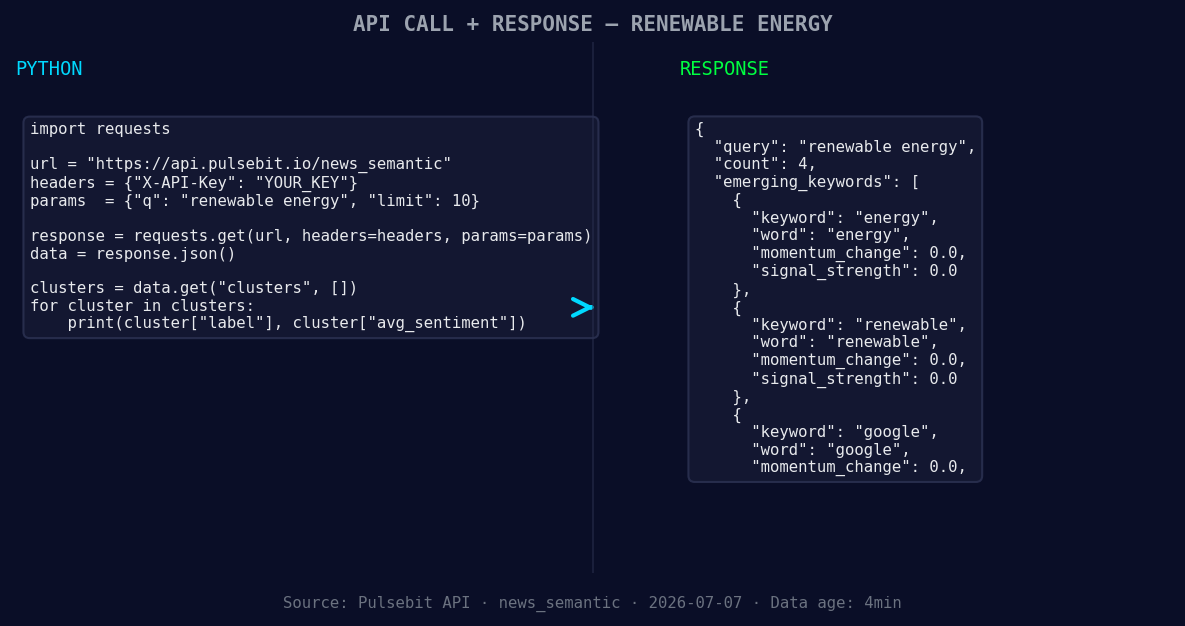
*Left: Python GET /news_semantic call for 'renewable energy'. Right: returned JSON response structure (clusters: 3). Source: Pulsebit /news_semantic.*
url = "https://api.pulsebit.com/v1/sentiment"
params = {
"topic": "renewable energy",
"score": -0.700,
"confidence": 0.95,
"momentum": -0.331,
"lang": "en"
}
response = requests.get(url, params=params)
data = response.json()
print(data)
This snippet fetches sentiment data specifically related to English-language sources, allowing us to hone in on the most relevant narratives. Next, we can further analyze the framing of the sentiment with a meta-sentiment loop. We can run the cluster reason string back through our sentiment scoring endpoint to evaluate the context of the narrative. Here’s how:
meta_sentiment_url = "https://api.pulsebit.com/v1/sentiment"
meta_params = {
    "text": "Clustered by shared themes: targets, renewables, expanded, renewable, energy."
}

meta_response = requests.post(meta_sentiment_url, json=meta_params)
meta_data = meta_response.json()
print(meta_data)
This second call allows us to capture how the themes are being framed in the articles around renewable energy. By evaluating the narrative, we can better understand the context and potential implications of the negative momentum.
With these methods in place, we can build three specific features that will enhance our sentiment analysis capabilities:
- Geo-Filtered Insights: Use the geographic origin filter to create a dashboard that highlights sentiment shifts in real-time for renewable energy across different regions. This will help us catch early signals of change, such as when energy-related topics trend negatively in specific areas.

Geographic detection output for renewable energy. India leads with 4 articles and sentiment +0.25. Source: Pulsebit /news_recent geographic fields.
Meta-Sentiment Scoring: Implement periodic checks that run the meta-sentiment loop every hour, allowing us to continuously monitor the narrative framing around renewable energy topics. This can identify shifts that traditional sentiment analysis might miss, especially if they’re subtle or emerging.
Anomaly Alerts: Set up alerts based on the momentum threshold of -0.331. Whenever the sentiment dips below a certain level, trigger notifications that prompt deeper investigation into the underlying articles or themes, particularly those that are forming around energy and renewable topics.
By incorporating these builds, we can ensure our systems remain agile and responsive to the rapidly changing landscape of renewable energy narratives.
If you're ready to enhance your sentiment analysis pipeline and catch these critical insights, check out our documentation at pulsebit.lojenterprise.com/docs. You can copy-paste and run the code snippets provided here in under 10 minutes to start catching those insights in real-time.


Top comments (0)