

Your Pipeline Is 21.1h Behind: Catching Business Sentiment Leads with Pulsebit
Recently, we observed a remarkable anomaly: a 24-hour momentum spike of +0.362 in sentiment around the topic of business. This spike is not just a number; it reflects a significant shift in sentiment that you need to catch in real-time. The leading language here is English, with a 21.1-hour delay before we can fully grasp the implications of this sentiment shift. The story that’s driving this surge centers around "Financial literacy training held for women entrepreneurs." As developers, we must pay attention to these trends, especially when they arise from clustered themes like financial empowerment and entrepreneurship.
The Problem
This spike reveals a critical structural gap in any pipeline that doesn't account for multilingual origins or dominant entities. If your model isn't designed to handle these nuances, you might have missed this critical shift by 21.1 hours. While you were focusing on mainstream narratives around financial, literacy, and training, the opportunity for deeper insights into business sentiment was developing right under your nose. Those who rely solely on traditional sentiment analysis often find themselves lagging behind, unable to capitalize on emerging trends.

English coverage led by 21.1 hours. Nl at T+21.1h. Confidence scores: English 0.85, Spanish 0.85, French 0.85 Source: Pulsebit /sentiment_by_lang.
The Code
To catch this spike, we can leverage our API to filter sentiment data based on specific parameters. Here’s how you can do it:
import requests
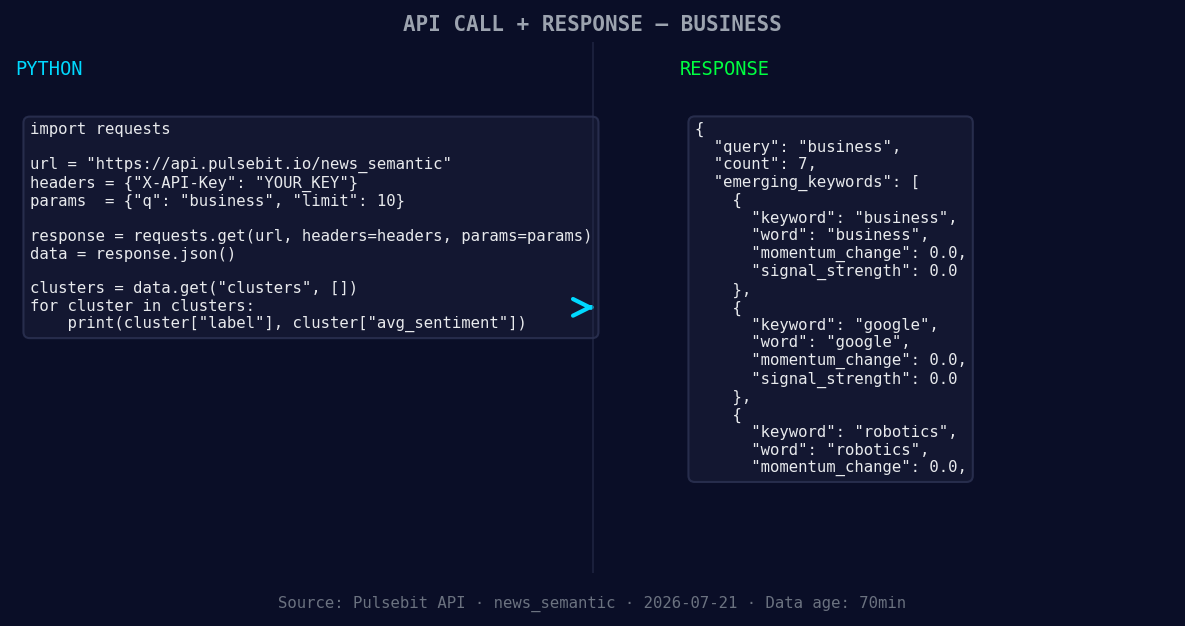
*Left: Python GET /news_semantic call for 'business'. Right: returned JSON response structure (clusters: 3). Source: Pulsebit /news_semantic.*
# Geographic origin filter
response = requests.get(
'https://api.pulsebit.com/sentiment',
params={
'topic': 'business',
'lang': 'en',
'score': +0.320,
'confidence': 0.85,
'momentum': +0.362
}
)
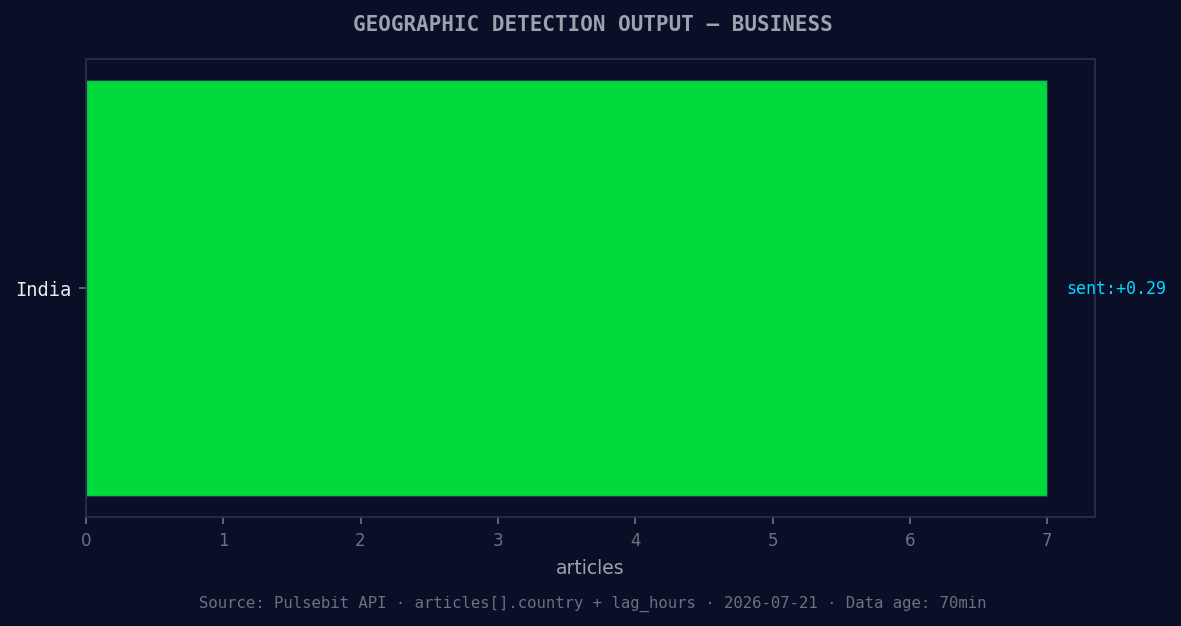
*Geographic detection output for business. India leads with 7 articles and sentiment +0.29. Source: Pulsebit /news_recent geographic fields.*
data = response.json()
print(data)
Next, we want to run the cluster reason string back through the sentiment endpoint to score the narrative framing itself. This allows us to understand how the themes are resonating with audiences:
# Meta-sentiment moment
cluster_reason = "Clustered by shared themes: financial, literacy, training, women, entrepreneurs."
meta_sentiment_response = requests.post(
    'https://api.pulsebit.com/sentiment',
    json={'text': cluster_reason}
)

meta_sentiment_data = meta_sentiment_response.json()
print(meta_sentiment_data)
By combining these two steps, we’re not just catching the spike; we’re also understanding the context that drives it.
Three Builds Tonight
Here are three specific things you can build using this pattern:
Geo-Sentiment Dashboard: Create a dashboard that uses the geo filter to visualize sentiment trends by language and region. Set a threshold of +0.300 to trigger alerts for any significant spikes in sentiment around business topics.
Meta-Sentiment Scoring Tool: Build a tool that uses the meta-sentiment loop to analyze the narrative framing of clustered themes in real-time. Use the same cluster reason string to track how well these themes resonate over time, focusing on a score threshold of +0.250.
Forming Themes Tracker: Develop an API endpoint that monitors forming themes like business, Google, and robotics against mainstream topics such as financial literacy and training. Set alerts for any significant divergence, capturing momentum shifts that are greater than +0.200.
Get Started
We encourage you to dive into the possibilities at pulsebit.lojenterprise.com/docs. You can copy-paste the code above and run it in under 10 minutes to start catching these emerging trends. Don’t let your pipeline fall behind!


Top comments (0)