

Your pipeline just flagged a notable anomaly: a 24h momentum spike of -0.750 in health sentiment. This drop indicates a significant shift in public sentiment towards health, which is critical to monitor. What’s even more interesting is that the leading language driving this trend is English, lagging behind the Italian discourse at 26.4 hours. We’ve stumbled upon a fascinating opportunity here, and it's essential to understand how to catch these shifts before they become mainstream narratives.
It’s clear that your current model is lagging behind by 26.4 hours, failing to account for the multilingual nature of sentiment data. By not integrating insights from other languages or regions, you risk missing out on critical sentiment shifts. The leading entity in this case is English-language articles, clustering around themes like "healthy," "aging," and "expert’s." This gap could result in outdated insights, leading to missed opportunities in health-related sectors.

English coverage led by 26.4 hours. Italian at T+26.4h. Confidence scores: English 0.75, Spanish 0.75, Sv 0.75 Source: Pulsebit /sentiment_by_lang.
To catch up with these trends, we can leverage our API effectively. Here’s how to do it in Python:
import requests
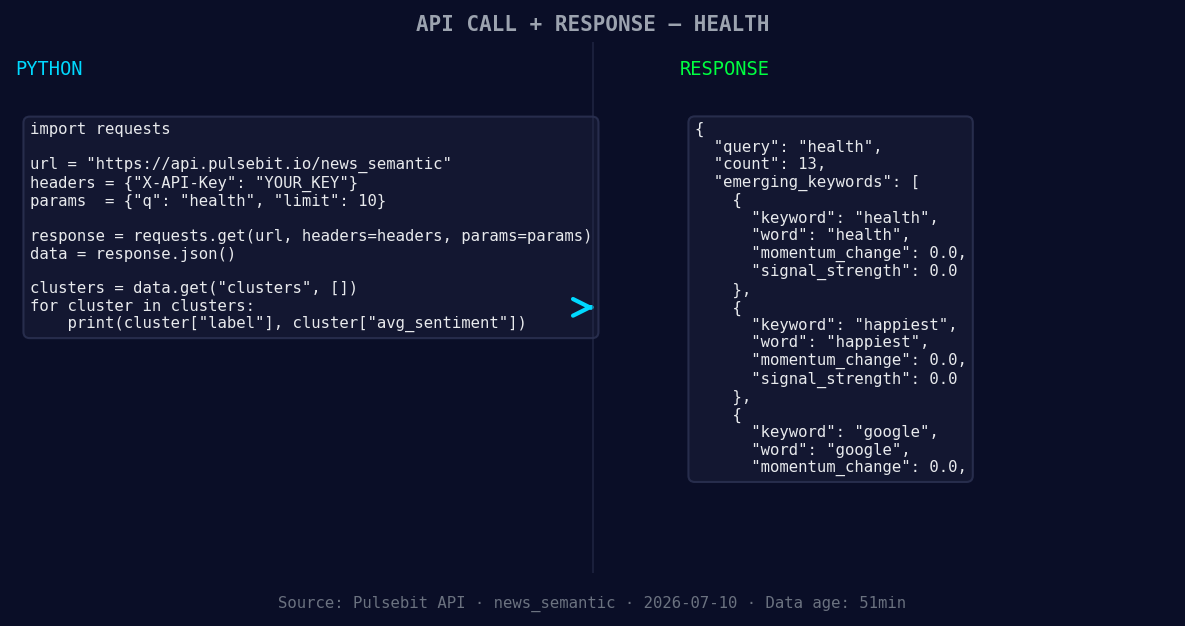
*Left: Python GET /news_semantic call for 'health'. Right: returned JSON response structure (clusters: 3). Source: Pulsebit /news_semantic.*
# Geographic origin filter
response = requests.get('https://api.pulsebit.com/sentiment', params={
'topic': 'health',
'lang': 'en',
'score': -0.044,
'confidence': 0.75,
'momentum': -0.750
})
data = response.json()
print(data)
This call filters sentiment data by the English language, ensuring you get relevant information from the right demographic. But we need to dig deeper. The narrative framing around this spike is equally important; we can analyze it using a meta-sentiment moment.
# Meta-sentiment moment
narrative = "Clustered by shared themes: healthy, aging, expert’s, favorite, social."
sentiment_response = requests.post('https://api.pulsebit.com/sentiment', json={
    'text': narrative
})

narrative_sentiment = sentiment_response.json()
print(narrative_sentiment)
By sending the cluster reason string through our API, we can score how the public sentiment is shaped around these themes. This step is crucial to understanding the underlying factors influencing the momentum spike.
Given this anomaly, here are three specific builds we can implement tonight:
- Geo-specific trend alerts: Set a signal threshold for sentiment drops below -0.500 in English. Use the geographic filter to ensure you only capture relevant data from the English-speaking demographic.

Geographic detection output for health. India leads with 12 articles and sentiment +0.26. Source: Pulsebit /news_recent geographic fields.
Narrative scoring: Create a scoring mechanism for narrative clusters that fall below a sentiment score of 0.0. This will allow us to prioritize which narratives need immediate attention, especially when they cluster around critical topics like health and aging.
Forming themes analysis: Monitor the forming themes like health (+0.00), happiest (+0.00), and google (+0.00) against the mainstream sentiments of healthy, aging, and expert’s. Create a dashboard that visualizes these contrasts over time to identify emerging trends early.
By employing these strategies, you can ensure that your pipeline not only catches sentiment shifts in real-time but also adapts to the complexities of multilingual data.
If you're ready to dive in, head over to pulsebit.lojenterprise.com/docs. You can copy-paste this code and run it in under 10 minutes to start leveraging these insights effectively.


Top comments (0)