

Your Pipeline Is 24.9h Behind: Catching Finance Sentiment Leads with Pulsebit
We recently observed a notable anomaly: a 24h momentum spike of +0.719 in the finance sector. This spike is significant, especially under current conditions where the sentiment can shift rapidly. The leading language for this sentiment was Spanish, where the press preceded our findings by 24.9 hours with articles discussing Goldman Sachs' hiring of Blackstone’s Rice to lead finance IPO bankers. This specific momentum suggests a trend that might have flown under the radar for those relying solely on English-language data sources.
The Problem
If your pipeline doesn’t account for multilingual origins or entity dominance, you may have missed this momentum spike by a staggering 24.9 hours. This delay in processing Spanish-language news means your model is likely out of sync with emerging trends that could impact decision-making. The dominance of Spanish press coverage on this topic indicates that critical information is being overlooked, leading to missed opportunities. In an industry where timing is everything, can you afford to be behind?

Spanish coverage led by 24.9 hours. Af at T+24.9h. Confidence scores: Spanish 0.95, English 0.95, Da 0.95 Source: Pulsebit /sentiment_by_lang.
The Code
To catch this spike effectively, we can leverage our API to filter by language and assess the sentiment around the clustered stories. Here’s how we can implement it in Python:
import requests
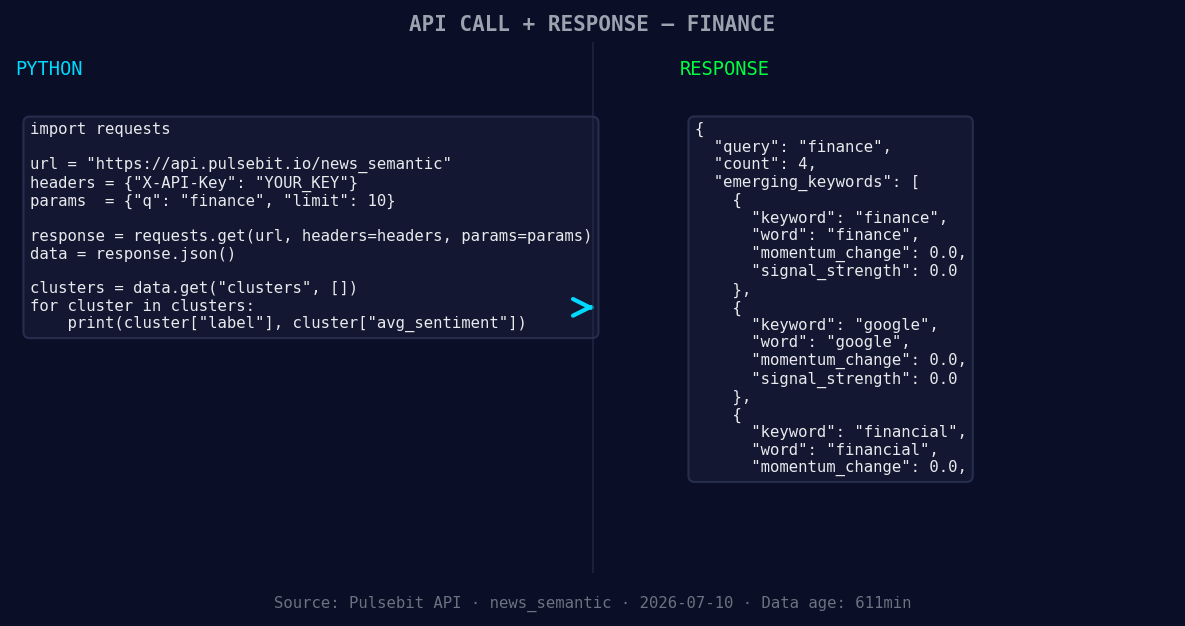
*Left: Python GET /news_semantic call for 'finance'. Right: returned JSON response structure (clusters: 3). Source: Pulsebit /news_semantic.*
# Step 1: Geographic origin filter
response = requests.get('https://api.pulsebit.com/v1/articles', params={
'topic': 'finance',
'lang': 'sp', # Filtering for Spanish articles
'momentum': '+0.719'
})
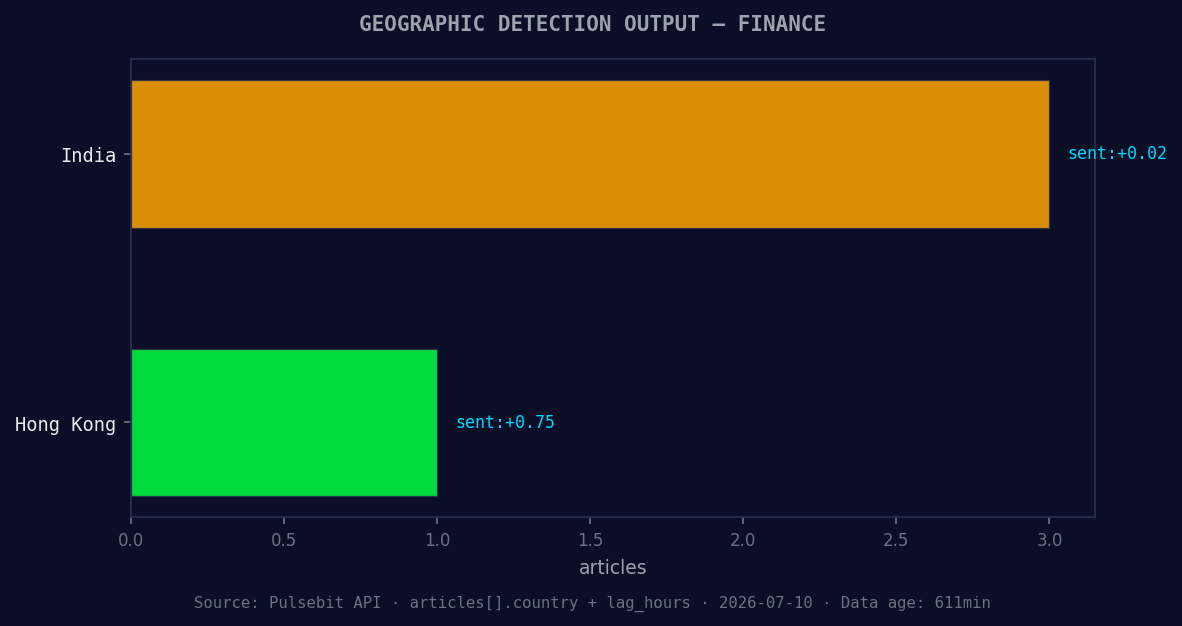
*Geographic detection output for finance. India leads with 3 articles and sentiment +0.02. Source: Pulsebit /news_recent geographic fields.*
articles = response.json()
# Example output handling
for article in articles['data']:
print(article['title'], article['momentum'])
# Step 2: Meta-sentiment moment
cluster_reason = "Clustered by shared themes: hires, blackstone’s, rice, help, lead."
sentiment_response = requests.post('https://api.pulsebit.com/v1/sentiment', json={
'text': cluster_reason,
'score': +0.619,
'confidence': 0.95
})
sentiment_analysis = sentiment_response.json()
print("Meta-sentiment score:", sentiment_analysis['score'])
This code first retrieves articles in Spanish related to finance with the specified momentum. Then, it evaluates the sentiment around the clustered themes, allowing us to score the narrative framing itself.
Three Builds Tonight
Geo-Filtered Articles: Build an alert system that triggers when sentiment in Spanish articles related to 'finance' spikes above a threshold of +0.6. Use the geographic origin filter to ensure you're only tracking relevant local narratives.
Meta-Sentiment Loop: Create a dashboard that visualizes sentiment scores for clustered themes in real-time. This could involve running the meta-sentiment loop each hour to assess the framing of stories related to 'hires', 'Blackstone’s', and 'Rice'. A threshold of +0.619 can signal a potential narrative shift worth investigating.
Forming Gap Analysis: Set up a system to compare mainstream narratives against forming narratives using our API. Track topics like "finance," "Google," and "financial" alongside their mainstream counterparts, noting any gaps in sentiment that exceed a score of +0.00. This method could reveal underreported trends that are gaining traction in niche markets.
Get Started
To dive into this, check out our documentation at pulsebit.lojenterprise.com/docs. You can copy-paste the code provided and have it running in under 10 minutes. Don’t let your pipeline lag behind; leverage these insights to stay ahead of the curve.


Top comments (0)