

Your pipeline just missed a major healthcare sentiment shift: a 24-hour momentum spike of +0.293. This anomaly signals a crucial moment in health-focused discussions, particularly with the leading language being English and a strong emphasis on healthcare startups. If you’re not tuned into these spikes as they happen, your model missed this by 10.6 hours, leaving you trailing behind in interpreting the latest trends.
The structural gap in your pipeline likely stems from not handling multilingual origins or entity dominance effectively. The current anomaly indicates that while your model was processing data, a significant surge in sentiment regarding healthcare startups unfolded. The leading article focusing on this topic, titled "What I Learned Making 22 Healthcare Startup Investments as a Physician-Scientist," adds weight to the urgency of this trend. Ignoring such spikes means you could be making decisions based on outdated or incomplete information.

English coverage led by 10.6 hours. Id at T+10.6h. Confidence scores: English 0.85, Spanish 0.85, No 0.85 Source: Pulsebit /sentiment_by_lang.
To catch these spikes in real-time, we can leverage our API effectively. Here’s how you can set up a Python script to detect this shift:
import requests
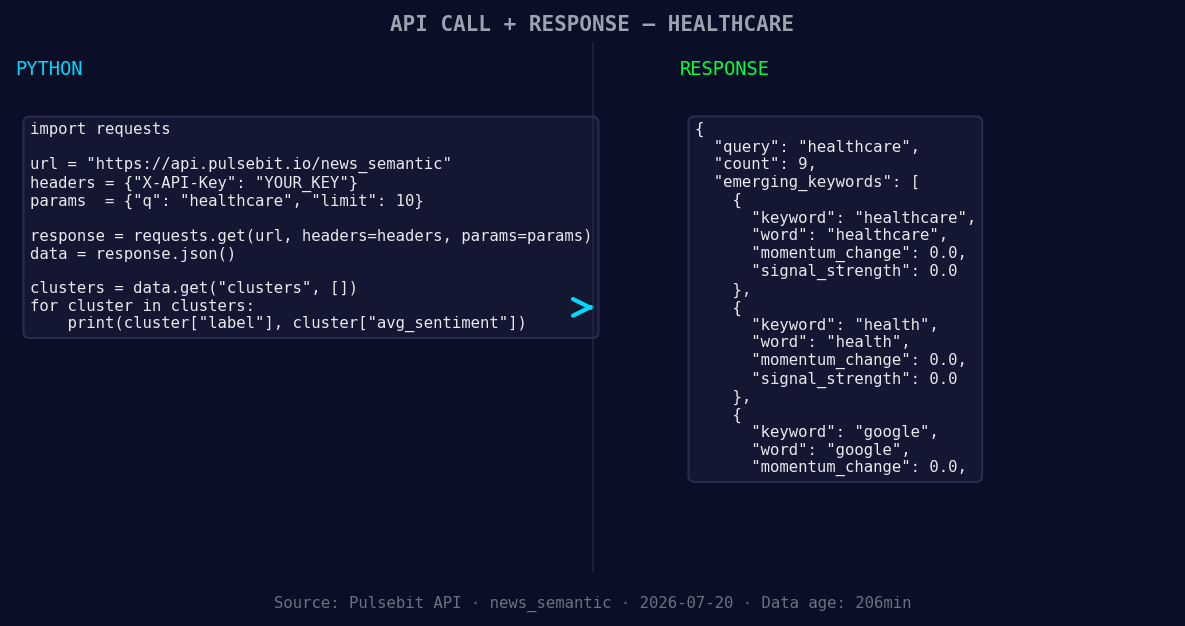
*Left: Python GET /news_semantic call for 'healthcare'. Right: returned JSON response structure (clusters: 3). Source: Pulsebit /news_semantic.*
# Step 1: Geographic origin filter
url = "https://api.pulsebit.com/sentiment"
params = {
"topic": "healthcare",
"lang": "en", # Filter by English articles
"momentum": +0.293
}
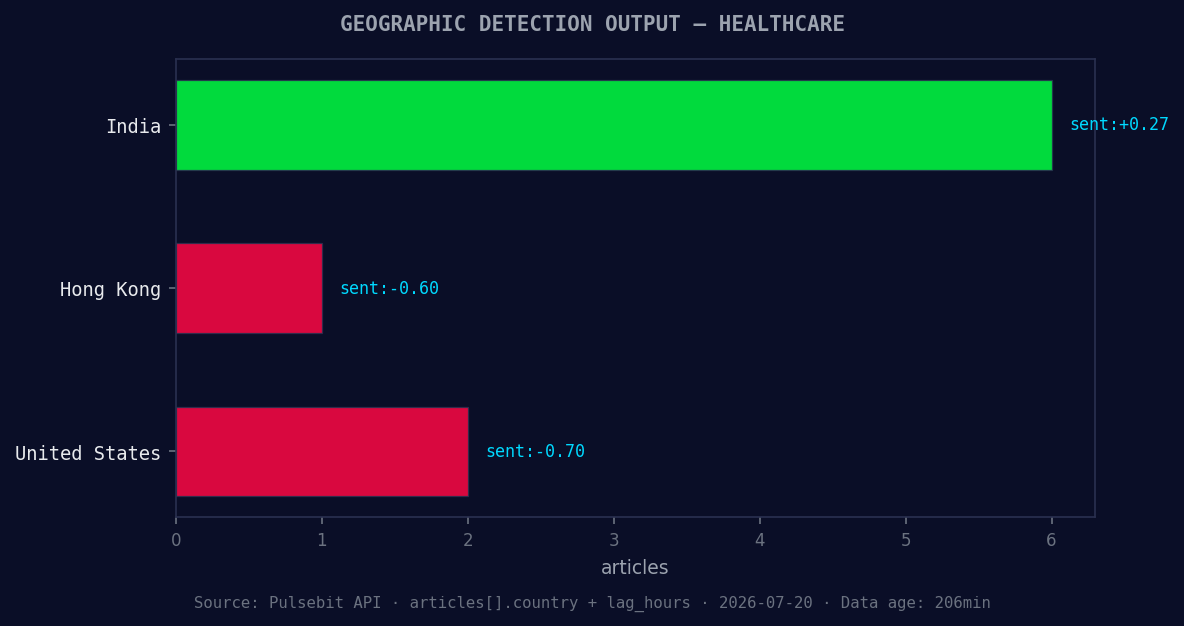
*Geographic detection output for healthcare. India leads with 6 articles and sentiment +0.27. Source: Pulsebit /news_recent geographic fields.*
response = requests.get(url, params=params)
data = response.json()
# Step 2: Meta-sentiment moment
cluster_reason = "Clustered by shared themes: learned, making, healthcare, startup, investments."
sentiment_response = requests.post(f"{url}/sentiment", json={"text": cluster_reason})
sentiment_data = sentiment_response.json()
print(data)
print(sentiment_data)
In this code, we first filter for healthcare articles in English, ensuring we’re focusing on the most relevant data. We then run the cluster reason string back through our sentiment endpoint to evaluate the narrative framing. This second step is crucial as it provides context to the sentiment scores, helping us understand the story behind the numbers.
Now that we’ve established a method to catch this anomaly, let’s explore three specific builds tonight:
Geo-Filtered Alerts: Set up an alert system that triggers when the healthcare sentiment score exceeds +0.25 in English articles over the last 24 hours. This will keep you ahead of emerging healthcare trends.
Meta-Sentiment Narratives: Create a dashboard that visualizes the meta-sentiment scores from clusters like "learned, making, healthcare, startup, investments." Use this to understand how narratives shift in real-time, allowing you to adjust your strategies accordingly.
Forming Theme Analysis: Develop a model that analyzes forming themes such as healthcare (+0.00) and health (+0.00) against mainstream discussions. This can reveal undercurrents in sentiment that may be overlooked, providing you with an edge in market insights.
By leveraging these insights and builds, you can ensure your pipeline is not just reactive but proactively capturing sentiment shifts as they happen. For more details on how to implement this, check out our documentation at pulsebit.lojenterprise.com/docs. With just a few lines of code, you can be up and running in under 10 minutes, ready to catch the next big sentiment wave.


Top comments (0)