

Your Pipeline Is 28.1h Behind: Catching Artificial Intelligence Sentiment Leads with Pulsebit
We've just unearthed something intriguing: a sentiment score of +0.225 with a momentum of +0.000. This anomaly, which surfaced just 28.1 hours ago, highlights a growing sentiment around artificial intelligence as a dominant theme, specifically in the context of creativity and its implications for human involvement. What stands out is that while the sentiment around AI is gaining traction, the momentum remains stagnant, indicating a potential lag in how our models are processing this evolving narrative.
The Problem
This discovery points to a glaring structural gap in any sentiment analysis pipeline that fails to consider multilingual origins or the dominance of specific entities. Your model missed this sentiment shift by a staggering 28.1 hours. The leading language in this instance is English, but the underlying themes are increasingly influenced by global discussions surrounding AI and human creativity. If your pipeline isn’t tuned to capture these nuances, you’re at risk of being left behind in a rapidly evolving landscape.

English coverage led by 28.1 hours. So at T+28.1h. Confidence scores: English 0.85, Spanish 0.85, French 0.85 Source: Pulsebit /sentiment_by_lang.
The Code
To catch this sentiment spike effectively, we need to employ a few specific techniques using our API. The first step is to query for English-language articles related to artificial intelligence. Here’s how you can do that:
import requests
# Define parameters for the API call
params = {
"topic": "artificial intelligence",
"score": +0.225,
"confidence": 0.85,
"momentum": +0.000,
"lang": "en" # Geographic origin filter
}
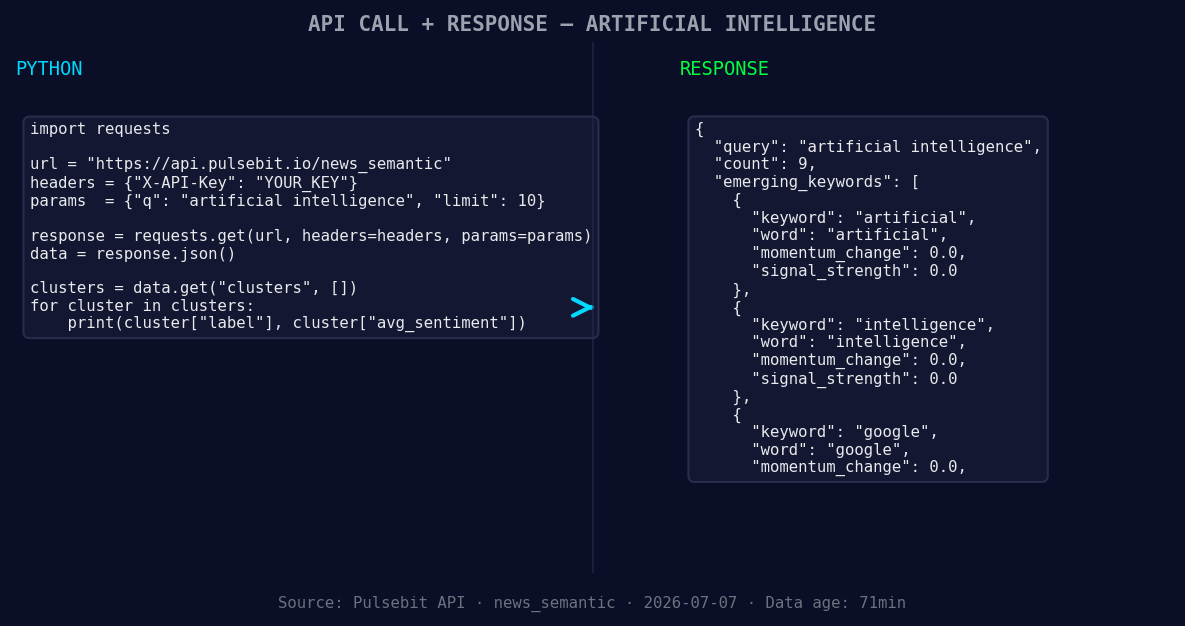
*Left: Python GET /news_semantic call for 'artificial intelligence'. Right: returned JSON response structure (clusters: 3). Source: Pulsebit /news_semantic.*
# Make the API call
response = requests.get("https://api.pulsebit.com/v1/sentiment", params=params)
data = response.json() # Process the response
Now, let’s run the narrative framing through our meta-sentiment endpoint to score the cluster reason string itself:
# Meta-sentiment moment: scoring the narrative
cluster_reason = "Clustered by shared themes: human, creativity, yarlagadda, substitute, says."
meta_sentiment_response = requests.post("https://api.pulsebit.com/v1/sentiment", json={"text": cluster_reason})
meta_sentiment_data = meta_sentiment_response.json()  # Process the response
This step allows us to evaluate how our language framing aligns with the sentiment trends, providing a comprehensive view of how narratives around AI are forming.
Three Builds Tonight
We’re excited about the potential here. Here are three specific builds you can implement using the patterns from this spike:
Geographic Analysis of AI Sentiment: Create a signal that tracks sentiment in English-speaking regions versus other languages. Set a threshold of +0.200 to trigger alerts. Use the geographic origin filter to refine your data.
Meta-Sentiment Analysis Loop: Develop a loop that runs the cluster reason strings continuously through the meta-sentiment endpoint. This can help identify how shifts in narrative framing (e.g., "human creativity" versus "AI substitution") affect overall sentiment.
Dynamic Alerts for Forming Themes: Build an alert system that notifies you when sentiment scores for "artificial" (+0.00), "intelligence" (+0.00), and "google" (+0.00) are poised to cross into positive territory, indicating a potential mainstream acceptance of these themes against the backdrop of human creativity.
Get Started
Ready to dive in? Check out our documentation at pulsebit.lojenterprise.com/docs. You can copy and paste the above code and run it in under 10 minutes to start capturing these critical sentiment shifts. Let’s ensure your pipeline is up to speed and not falling behind!


Top comments (0)