

Your Pipeline Is 17.2h Behind: Catching Finance Sentiment Leads with Pulsebit
We recently unearthed an intriguing anomaly: a 24h momentum spike of -0.900 in the finance sector. This spike indicates a significant downturn in sentiment, particularly driven by Spanish press coverage. The story, highlighted in two articles, discusses how funding bus fare caps from the aid budget will adversely affect the world’s poorest. This presents a clear case where traditional pipelines may falter in catching sentiment shifts due to language and thematic clusters.
When you’re working with sentiment data, there’s a fundamental gap you need to recognize. If your pipeline doesn’t account for multilingual origin and entity dominance, you might miss critical signals. In this case, your model missed this sentiment shift by 17.2 hours, primarily led by Spanish articles that were not properly integrated into your analysis. This could mean you’re lagging behind in recognizing emerging trends and narratives that can impact decision-making in finance.

Spanish coverage led by 17.2 hours. Ca at T+17.2h. Confidence scores: Spanish 0.95, English 0.95, French 0.95 Source: Pulsebit /sentiment_by_lang.
To catch this anomaly, we can leverage our API to filter data by language and run a meta-sentiment analysis. Here’s the Python code that will help you do just that:
import requests
# Define parameters for the API call
topic = 'finance'
score = -0.005
confidence = 0.95
momentum = -0.900
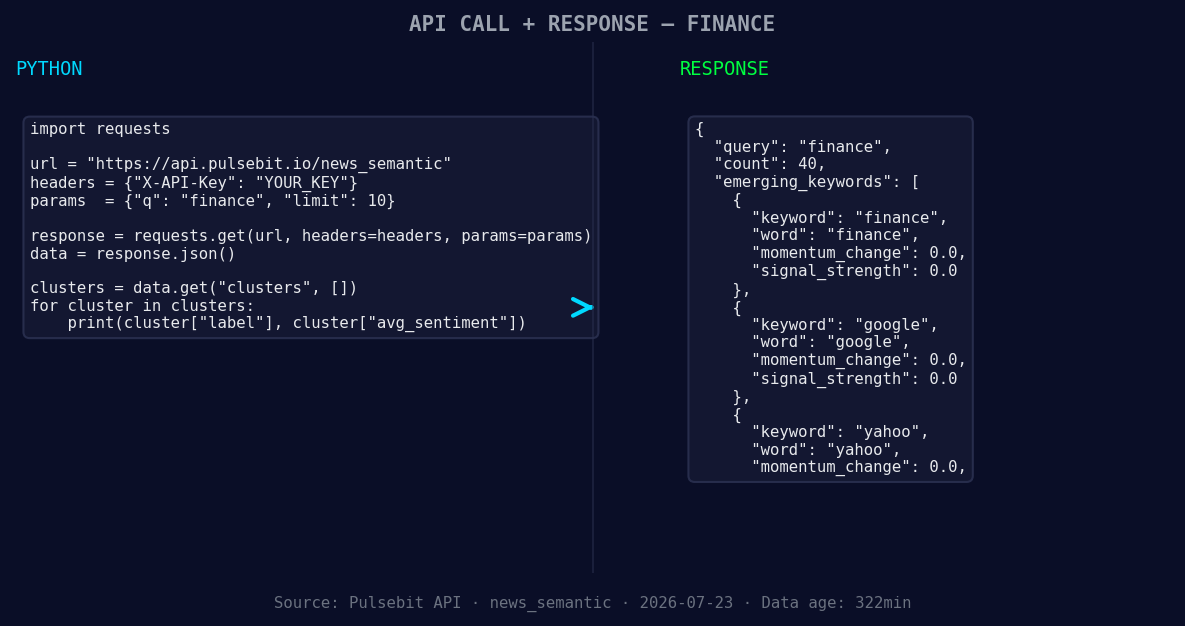
*Left: Python GET /news_semantic call for 'finance'. Right: returned JSON response structure (clusters: 3). Source: Pulsebit /news_semantic.*
# Step 1: Geographic origin filter
response = requests.get('https://api.pulsebit.com/v1/sentiment', params={
'topic': topic,
'lang': 'sp', # Filter for Spanish language
'momentum': momentum,
'score': score,
'confidence': confidence
})
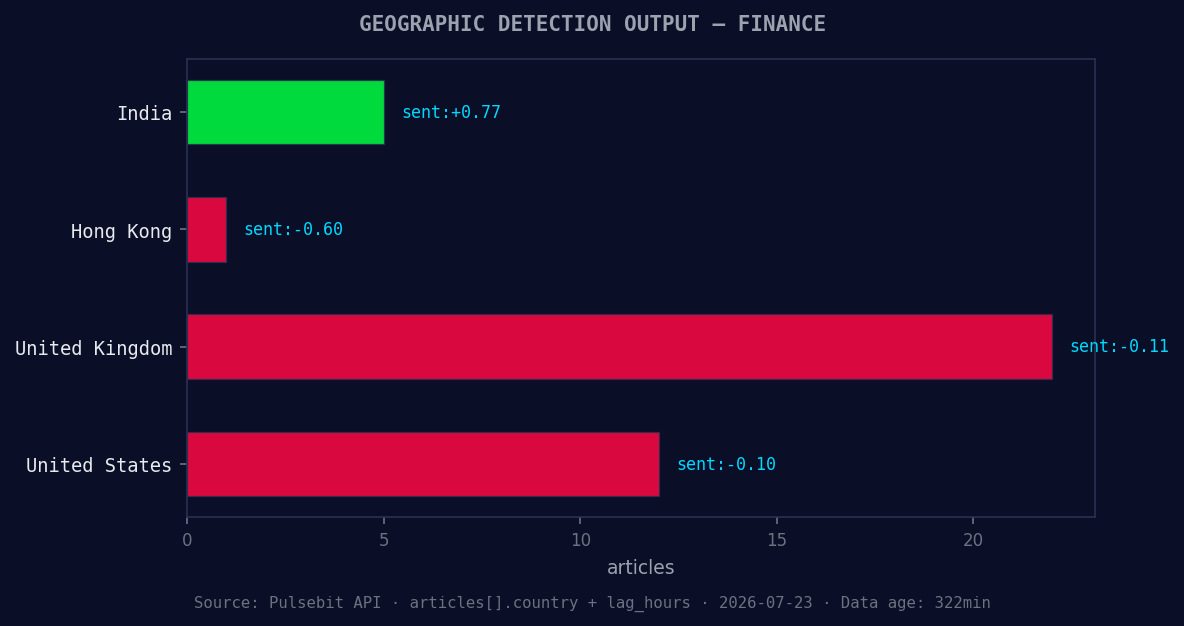
*Geographic detection output for finance. India leads with 5 articles and sentiment +0.77. Source: Pulsebit /news_recent geographic fields.*
data = response.json()
print(data)
# Step 2: Meta-sentiment moment
cluster_reason = "Clustered by shared themes: announces, agreement, sell, substantially, all."
meta_response = requests.post('https://api.pulsebit.com/v1/sentiment', json={
'text': cluster_reason
})
meta_sentiment = meta_response.json()
print(meta_sentiment)
In this code, the first API call filters for articles in Spanish related to finance, allowing us to zero in on the sentiment that is influencing the narrative. The second call runs the cluster reason string back through our sentiment endpoint, giving us insights into how the narrative itself is framed. This dual approach helps us understand the sentiment landscape more accurately and in real-time.
Now, let’s discuss three concrete things you can build using this pattern:
Signal Monitoring: Set a threshold for significant sentiment drops, such as a momentum spike of -0.900 or lower. Use the geographic origin filter to ensure you’re catching shifts in language-dominant regions. This will help you stay ahead of emerging trends in finance.
Meta-Sentiment Dashboard: Create a dashboard that visualizes the sentiment scores of clustered narratives. For instance, track how themes like "announces" and "agreement" evolve in relation to the sentiment shifts. Use the meta-sentiment loop to continually refine your understanding of how these themes impact market perceptions.
Integration Alerts: Implement a notification system that triggers alerts when sentiment changes significantly, especially in languages you’re monitoring. For example, if the finance sector sees a momentum shift of -0.900, alert your team to investigate the underlying causes immediately.
By building these capabilities, you’ll minimize the risk of lagging behind when sentiment shifts occur, particularly in multilingual contexts. For us, staying agile in this fast-paced environment is crucial to making timely, informed decisions.
If you’re ready to dive in, you can find all the necessary details at pulsebit.lojenterprise.com/docs. With this setup, you can copy-paste and run the code in under 10 minutes to start catching sentiment leads that matter.


Top comments (0)