

Your Pipeline Is 13.1h Behind: Catching Defence Sentiment Leads with Pulsebit
On June 10, 2026, we discovered a notable anomaly: a 24h momentum spike of +0.529 in the sentiment surrounding the topic of "defence." This spike was primarily led by French-language sources, which peaked 13.1 hours earlier than the current sentiment trajectory in English. The cluster story, titled "Israel's Stance on Territorial Control," indicates a growing interest in this region, yet it seems many pipelines are lagging behind when it comes to multilingual sentiment analysis.

French coverage led by 13.1 hours. Ca at T+13.1h. Confidence scores: French 0.85, English 0.85, Spanish 0.85 Source: Pulsebit /sentiment_by_lang.
If your model isn't equipped to handle multilingual sources or entity dominance, you’re likely missing critical insights like this one. With the leading language being French and a 13.1-hour gap between the French and English narratives, your pipeline may have missed this valuable data entirely. Imagine the implications: missing out on early signals of a potential geopolitical shift could skew your analyses and decision-making processes.
Let’s dive into how we can catch these signals using our API. First, we’ll set up a query to filter our topic of interest, "defence," by the French language. Here's how you can do it:
import requests
# Define the endpoint and parameters
url = "https://pulsebit.com/api/v1/sentiment"
params = {
"topic": "defence",
"score": -0.275,
"confidence": 0.85,
"momentum": +0.529,
"lang": "fr" # Geographic origin filter for French
}
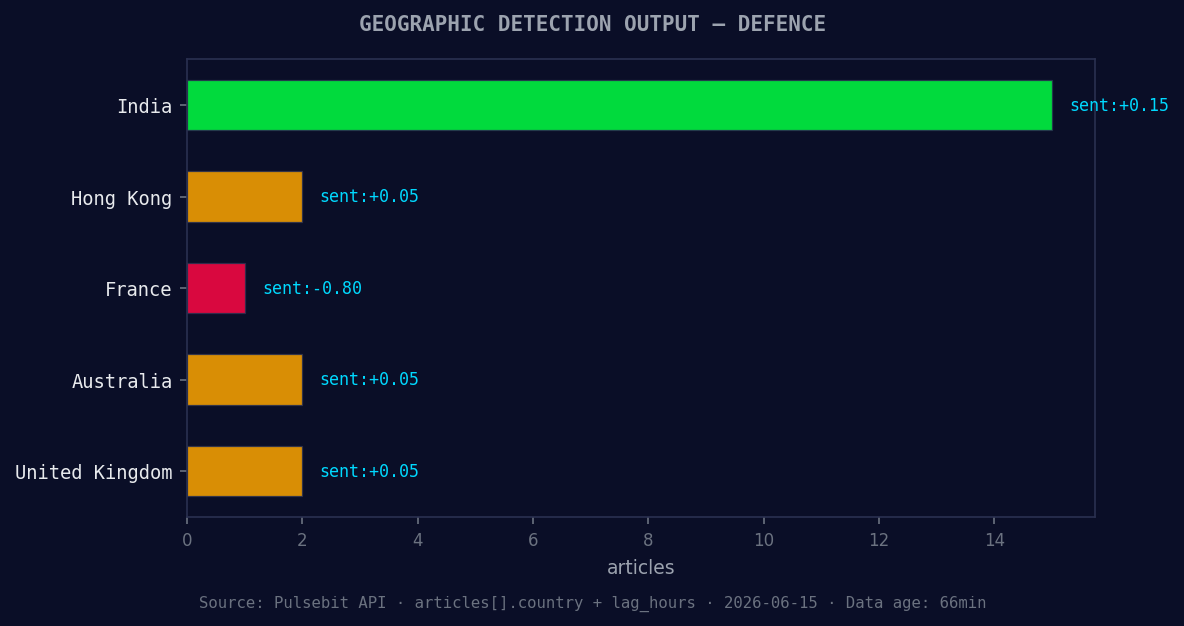
*Geographic detection output for defence. India leads with 15 articles and sentiment +0.15. Source: Pulsebit /news_recent geographic fields.*
# Make the API call
response = requests.get(url, params=params)
data = response.json()
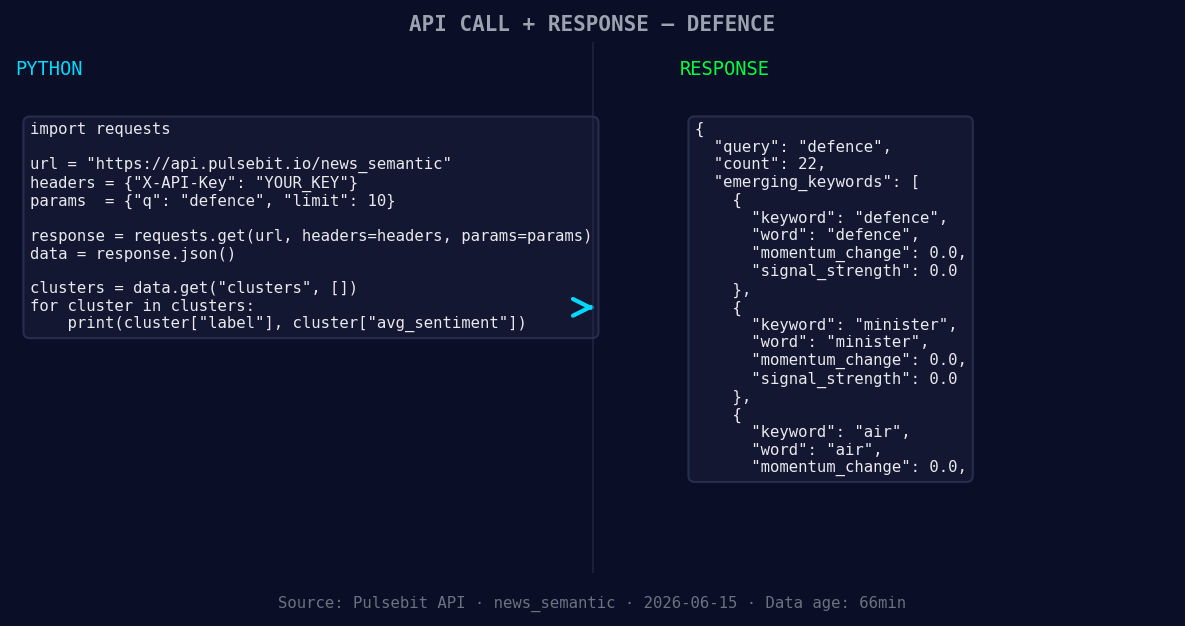
*Left: Python GET /news_semantic call for 'defence'. Right: returned JSON response structure (clusters: 3). Source: Pulsebit /news_semantic.*
print(data)
Next, we can run the cluster’s narrative through our sentiment scoring endpoint to assess the framing around this spike. Specifically, we’ll input the string that describes the clustered themes:
# Meta-sentiment moment
meta_url = "https://pulsebit.com/api/v1/sentiment"
meta_params = {
    "input": "Clustered by shared themes: lebanon, israel, syria, gaza, defence."
}

# Make the meta sentiment API call
meta_response = requests.post(meta_url, json=meta_params)
meta_data = meta_response.json()

print(meta_data)
By executing these two segments of code, you can effectively capture the momentum shift and contextualize it with the narrative themes emerging in the data.
Now, let's explore three specific builds that can leverage this momentum spike and the insights we've derived:
French Language Filter: Create alerts for topics with a momentum score exceeding +0.5 in French. This can help you catch sentiments that might not be reflected in English discussions.
Meta-Sentiment Analyzer: Build a dashboard that visualizes clusters and their sentiment scores. Use the narrative strings to evaluate how specific themes evolve over time, especially those related to defence and geopolitical tensions.
Forming Themes Tracker: Set a threshold for sentiment spikes in the "defence" topic while monitoring related terms like "minister" and "air." This will help you identify shifts in sentiment well before they surface in mainstream discussions, allowing for proactive adjustments in your strategy.
You can start building these insights right away by checking out our documentation at pulsebit.lojenterprise.com/docs. You can copy-paste this code and run it in under 10 minutes, unlocking a new dimension in your sentiment analysis pipeline.


Top comments (0)