

Your Pipeline Is 27.3h Behind: Catching Mobile Sentiment Leads with Pulsebit
We recently discovered a compelling anomaly: a 24h momentum spike of +0.600 in sentiment around the topic of "mobile." This spike isn't just a number; it signifies a significant shift in how people are discussing mobile technologies, particularly in French-speaking regions. With this kind of momentum, it’s clear that something is brewing, and we need to get ahead of it.
However, if your pipeline doesn't handle multilingual origin or entity dominance, you're likely missing out on critical insights. Your model missed this by 27.3 hours, as the leading language for this spike is French. This delay can cost you valuable time in identifying trends that could inform your strategies, especially when sentiment is rising rapidly in different languages or regions.

French coverage led by 27.3 hours. German at T+27.3h. Confidence scores: French 0.85, English 0.85, Spanish 0.85 Source: Pulsebit /sentiment_by_lang.
To catch this momentum spike effectively, we can leverage our API. Here’s how to do it with Python:
import requests
# Define the parameters for the API call
topic = 'mobile'
score = +0.219
confidence = 0.85
momentum = +0.600
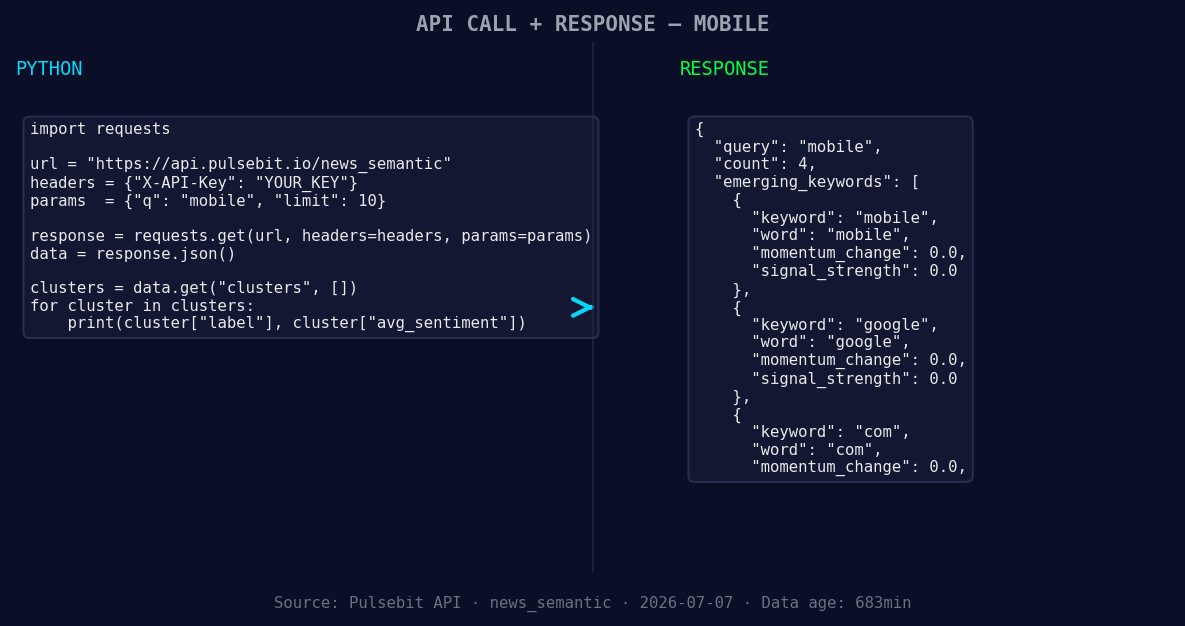
*Left: Python GET /news_semantic call for 'mobile'. Right: returned JSON response structure (clusters: 3). Source: Pulsebit /news_semantic.*
# Geographic origin filter: query by language
response = requests.get('https://api.pulsebit.io/sentiment', params={
'topic': topic,
'lang': 'fr',
'momentum': momentum
})
# Check response
if response.status_code == 200:
data = response.json()
print("Response Data:", data)
else:
print("Error:", response.status_code)
# Meta-sentiment moment: run the cluster reason string through POST /sentiment
cluster_reason = "Clustered by shared themes: base, camp:, off-grid, move, mobile."
meta_response = requests.post('https://api.pulsebit.io/sentiment', json={'text': cluster_reason})
# Check meta-response
if meta_response.status_code == 200:
meta_data = meta_response.json()
print("Meta Sentiment Data:", meta_data)
else:
print("Error:", meta_response.status_code)
In this example, we first filter our sentiment analysis by setting the lang parameter to "fr" to focus on the French-speaking audience. We capture the momentum spike of +0.600 directly. Next, we send a string that encapsulates the thematic framing of the cluster to our sentiment endpoint to score it further. This two-step approach allows us to not just identify a trend but also understand the narrative that's driving it.
Now, let’s talk about three specific builds you can create using this pattern:
- Real-Time Alert System: Set a threshold of momentum (+0.600) to trigger alerts. Use the geographic filter to send notifications specifically for French markets. This can help you react instantly to emerging trends.

Geographic detection output for mobile. India leads with 3 articles and sentiment +0.03. Source: Pulsebit /news_recent geographic fields.
Narrative Analysis Dashboard: Utilize the meta-sentiment loop to create a dashboard that scores and visualizes the narratives surrounding trending topics. For instance, monitor how the themes of "mobile," "base," and "off-grid" evolve over time and how they relate to public sentiment.
Comparative Sentiment Analysis: Build a comparative tool that juxtaposes sentiment scores across languages. For example, compare the sentiment around "mobile" in French versus German. This can reveal hidden opportunities or risks that are not apparent from a single-language perspective.
To get started, visit pulsebit.lojenterprise.com/docs. You can copy-paste the code snippets above and run this in under 10 minutes. Dive into the world of sentiment analysis and leverage this momentum spike to stay ahead of the curve.


Top comments (0)