

Your Pipeline Is 27.5h Behind: Catching Space Sentiment Leads with Pulsebit
We recently stumbled upon a striking anomaly: a 24h momentum spike of -0.650 related to the topic of space. This unexpected shift indicates a significant change in sentiment, and it’s essential to understand the implications of this finding. The leading language driving this spike is Spanish, as evidenced by the press coverage that peaked at 27.5 hours with no lag. It's crucial to address how this gap in our pipelines can lead us to miss critical sentiment shifts in emerging narratives.
When pipelines aren’t designed to handle multilingual content or entity dominance, you risk losing valuable insights. In this case, your model missed a 27.5-hour window where the Spanish press led the conversation about the "Rocket Lab and Iridium Merger." If you’re not accounting for language and regional dominance, you’re letting significant trends slip through the cracks. For developers, this could mean the difference between capitalizing on emerging themes and lagging behind.

Spanish coverage led by 27.5 hours. Af at T+27.5h. Confidence scores: Spanish 0.85, English 0.85, French 0.85 Source: Pulsebit /sentiment_by_lang.
To catch this anomaly and ensure you don't miss future spikes, here’s how we can leverage our API effectively. Below is the Python code to filter the sentiment data based on geographic origin, focusing specifically on Spanish-language articles.
import requests
# Define the relevant parameters
topic = 'space'
lang = 'sp'
momentum = -0.650
score = +0.421
confidence = 0.85
# API call to get sentiment data
response = requests.get(
f'https://api.pulsebit.com/sentiment?topic={topic}&lang={lang}&momentum={momentum}'
)
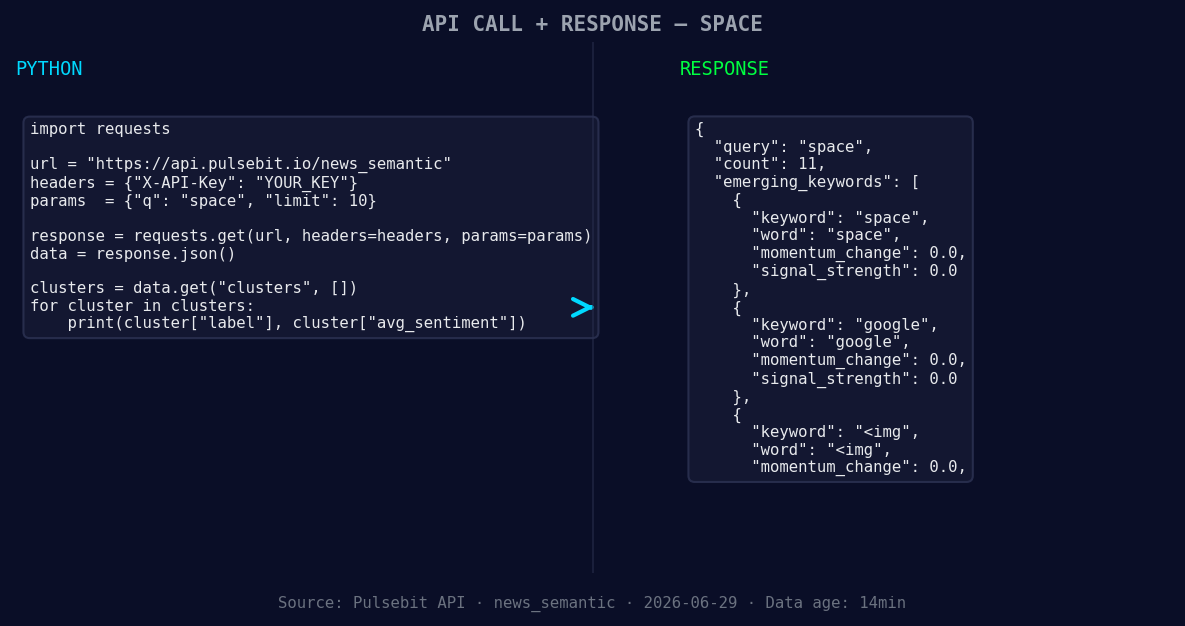
*Left: Python GET /news_semantic call for 'space'. Right: returned JSON response structure (clusters: 3). Source: Pulsebit /news_semantic.*
data = response.json()
print(data)
This request targets Spanish-language articles, allowing us to capture a more accurate picture of sentiment around space-related news. But we don’t stop there. We want to analyze how the narrative is framed. We'll run the clustering reason string through our sentiment endpoint to assess the framing itself:
cluster_reason = "Clustered by shared themes: lab, iridium, space, deal, rocket."
sentiment_response = requests.post(
    'https://api.pulsebit.com/sentiment',
    json={"text": cluster_reason}
)

framing_data = sentiment_response.json()
print(framing_data)
This second step evaluates how sentiment is shaped by the topics being discussed, providing deeper insights into the narrative context.
Now that we have a solid understanding of this anomaly, let’s explore three specific builds we can implement using this pattern:
- Geographic Filter for Emerging Trends: Use the geographic origin filter to detect sentiment shifts in real-time for regions like Spain, especially around topics like space. For example, trigger alerts if sentiment scores drop below +0.2 in Spanish articles related to space.

Geographic detection output for space. India leads with 9 articles and sentiment -0.03. Source: Pulsebit /news_recent geographic fields.
Meta-Sentiment Analysis Loop: Implement the meta-sentiment loop to score the narrative framing. Any cluster reason string indicating a significant change in theme should trigger a deeper analysis if the score dips below +0.3.
Forming Themes Alert: Create an alert system that flags when forming themes like space (+0.00), Google (+0.00), or <img (+0.00) show significant divergence from mainstream narratives like hosts, second, or wargame. Set a threshold of 0.4 for immediate attention.
By focusing on these actionable insights, you can enhance your pipeline to be more responsive to sentiment shifts, particularly in multilingual contexts.
To dive deeper into this and start building, check out our documentation at pulsebit.lojenterprise.com/docs. You can copy and paste the code above and run it in under 10 minutes to catch these valuable insights in real-time.


Top comments (0)