

Your Pipeline Is 21.9h Behind: Catching Sustainability Sentiment Leads with Pulsebit
We recently uncovered an intriguing anomaly: a 24h momentum spike of -0.258 in sentiment surrounding sustainability. This finding stood out starkly against the backdrop of typical sentiment trends, particularly as we noted that the leading language driving this sentiment was English, with a notable 21.9-hour lead time compared to Dutch. It’s a clear signal that something significant is happening, and it’s crucial we don’t overlook it.
When your pipeline doesn’t account for multilingual origins or fails to recognize entity dominance, you risk missing key sentiment shifts. In this case, your model missed a pivotal movement in sustainability by 21.9 hours. The English press, with its focus on sustainability in Africa, was significantly ahead of other languages. This lag could mean the difference between capitalizing on emerging trends and being left in the dust, especially given the importance of timely data in our field.

English coverage led by 21.9 hours. Nl at T+21.9h. Confidence scores: English 0.75, Spanish 0.75, French 0.75 Source: Pulsebit /sentiment_by_lang.
Here’s how we can catch this anomaly using our API. Below is a Python snippet that demonstrates how to filter for English language articles on sustainability and capture the relevant sentiment.
import requests
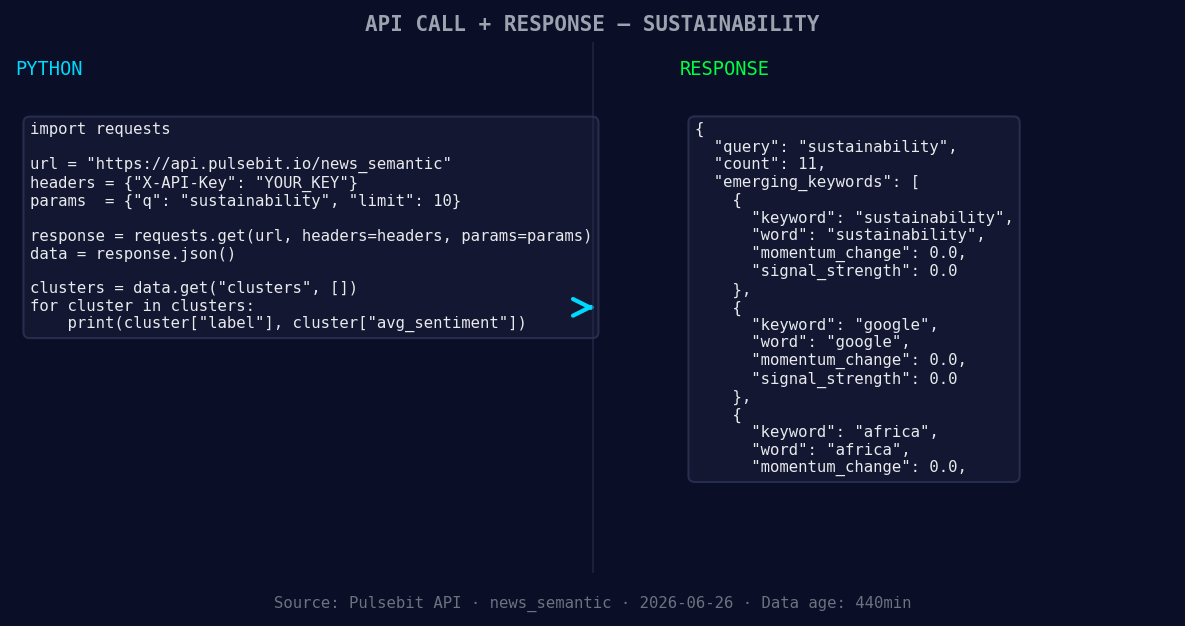
*Left: Python GET /news_semantic call for 'sustainability'. Right: returned JSON response structure (clusters: 3). Source: Pulsebit /news_semantic.*
# Geographic origin filter: pulling articles in English
topic = 'sustainability'
url = "https://api.pulsebit.com/articles"
params = {
"topic": topic,
"lang": "en",
"limit": 50
}
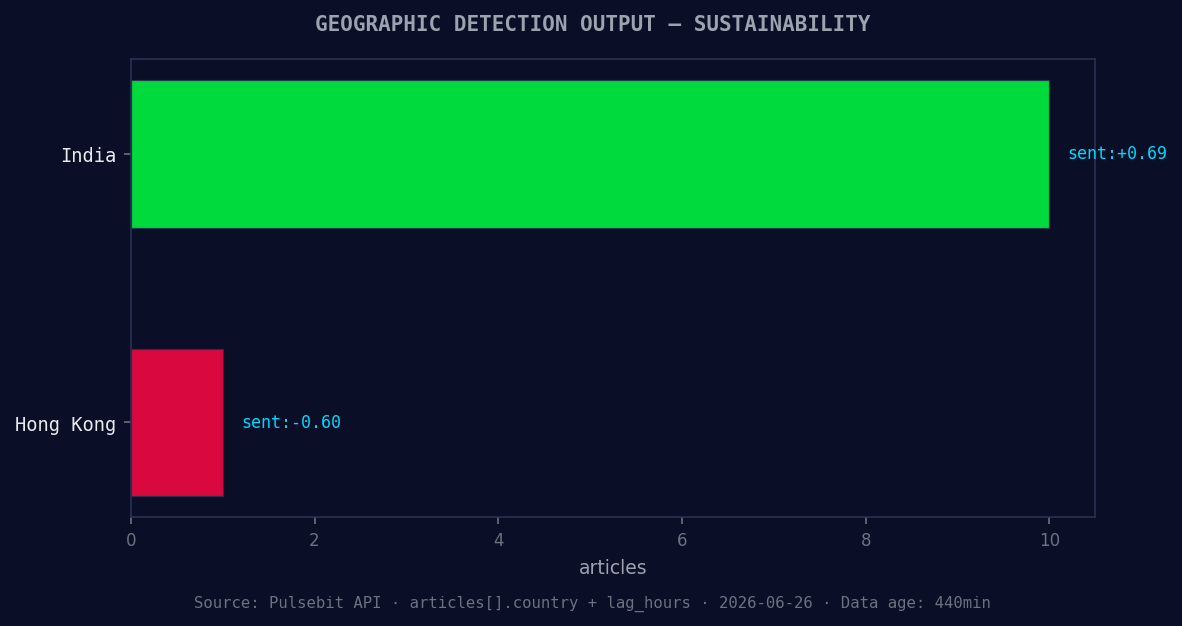
*Geographic detection output for sustainability. India leads with 10 articles and sentiment +0.69. Source: Pulsebit /news_recent geographic fields.*
response = requests.get(url, params=params)
data = response.json()
# Check the response for the articles processed
articles_processed = data['articles_processed']
print(f"Articles Processed: {articles_processed}")
# Meta-sentiment moment: scoring the cluster reason narrative
cluster_reason = "Clustered by shared themes: sustainability, must, beyond, climate, action."
sentiment_url = "https://api.pulsebit.com/sentiment"
sentiment_payload = {
"text": cluster_reason
}
sentiment_response = requests.post(sentiment_url, json=sentiment_payload)
sentiment_data = sentiment_response.json()
sentiment_score = sentiment_data['score']
confidence = sentiment_data['confidence']
print(f"Sentiment Score: {sentiment_score}, Confidence: {confidence}")
This code first retrieves articles related to sustainability in English, ensuring we’re capturing the most relevant data. Then, it sends the cluster reason string back through the sentiment endpoint to analyze how the narrative is being framed. This dual approach allows us to pinpoint the sentiment that’s emerging and understand the context shaping it.
Now, as we dig deeper into this anomaly, here are three specific builds that we can implement immediately:
Geo Filter for Sustainability Trends: Create a signal that triggers alerts when sustainability articles in English show a momentum drop below -0.2. This ensures you’re always on the lookout for negative sentiment trends that could impact your strategy.
Meta-Sentiment Loop Integration: Build a routine that scores the sentiment of cluster narratives every hour. Use the input of “sustainability, must, beyond” to keep track of evolving themes. If the sentiment score falls below +0.25, consider adjusting your strategies accordingly.
Comparative Analysis Dashboard: Develop a dashboard that compares sentiment scores in English against other leading languages like Dutch. This will help visualize the 21.9-hour gap and allow you to act before trends become mainstream, particularly with terms like “sustainability” and “Africa” gaining traction.
We invite you to explore our API at pulsebit.lojenterprise.com/docs. You can copy, paste, and run the above code in under 10 minutes to see these insights for yourself. Don’t let your pipeline lag behind; stay ahead of the curve!


Top comments (0)