

Your pipeline is indicating a 24h momentum spike of +0.217, which suggests something significant is happening in the realm of defence sentiment. This spike caught our attention due to its unusual weight, especially when considering the leading language is French, with a time lag of just 28.0 hours. The cluster story around this spike revolves around an “Israeli Gunfire Incident in Lebanon,” with themes clustered around terms like “israeli,” “lebanon,” “gunfire,” and “kills.” This sudden surge in sentiment could have major implications for decision-making, and we believe it’s crucial to recognize when and why these anomalies occur.
The problem here is clear: if your pipeline doesn't accommodate multilingual origins or recognize entity dominance, your model might miss these critical shifts in sentiment by 28 hours. In this case, the leading language being French means that any analysis relying solely on English data would lag significantly. If you’re not processing the data in real-time from various languages, you risk making decisions based on outdated or incomplete information. This isn’t just a minor inconvenience; it could lead to misguided strategies or missed opportunities.

French coverage led by 28.0 hours. Sw at T+28.0h. Confidence scores: French 0.85, English 0.85, Spanish 0.85 Source: Pulsebit /sentiment_by_lang.
Here’s how to catch this anomaly programmatically using our API. First, we’ll filter for the geographic origin, querying the sentiment based on the French language:

Geographic detection output for defence. India leads with 3 articles and sentiment +0.00. Source: Pulsebit /news_recent geographic fields.
import requests
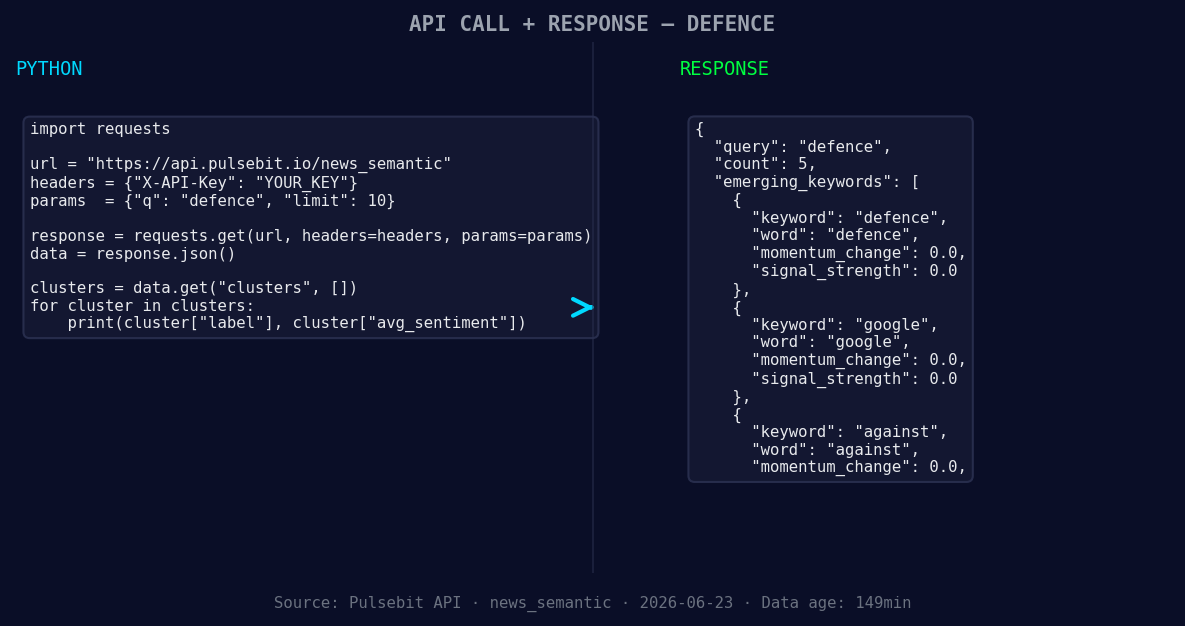
*Left: Python GET /news_semantic call for 'defence'. Right: returned JSON response structure (clusters: 3). Source: Pulsebit /news_semantic.*
# Define parameters for the query
params = {
"topic": "defence",
"lang": "fr",
}
# Call the API
response = requests.get("https://api.pulsebit.com/sentiment", params=params)
data = response.json()
print(data)
Next, we’ll run a meta-sentiment analysis on the reason string. This step is crucial as it helps us evaluate the narrative framing of the incident itself:
# Meta-sentiment analysis on the cluster reason string
reason_string = "Clustered by shared themes: israeli, lebanon, gunfire, kills, two."
sentiment_response = requests.post("https://api.pulsebit.com/sentiment", json={"text": reason_string})
sentiment_data = sentiment_response.json()
print(sentiment_data)
Incorporating these two methods, we can ensure our pipeline is not only catching the emerging trends but also understanding the context surrounding them.
Now let’s think about three specific things you can build using this pattern. First, consider setting a signal threshold based on momentum spikes. If momentum exceeds +0.2, trigger an alert. This could help you catch significant shifts earlier.
Second, utilize the geo filter to monitor sentiments related to specific topics. For instance, you could track defence sentiment across French sources, allowing you to gauge the public's reaction to geopolitical events without delay.
Lastly, feed the meta-sentiment results back into your decision-making process. If the sentiment around the cluster reason indicates a strong negative score, like -0.035 with a confidence of 0.85, it might suggest a need for caution or a change in strategy regarding defence communications or actions.
Ready to get started? Head over to pulsebit.lojenterprise.com/docs. You can copy-paste and run this code in under 10 minutes, setting you up to catch these critical sentiment shifts in real-time.


Top comments (0)