

Your Pipeline Is 23.9h Behind: Catching Culture Sentiment Leads with Pulsebit
We just uncovered a significant anomaly: a 24h momentum spike of +0.248 in sentiment related to culture. This spike is particularly interesting because it’s driven by a single cluster story titled "Tyndis Biennale to celebrate Malabar’s maritime, cultural legacy." The leading language for this spike comes from the Spanish press, which peaked 23.9 hours ago, leaving your model trailing behind if it doesn’t account for multilingual origins or entity dominance.

Spanish coverage led by 23.9 hours. Sw at T+23.9h. Confidence scores: Spanish 0.90, English 0.90, German 0.90 Source: Pulsebit /sentiment_by_lang.
This points to a structural gap in any pipeline that fails to manage these nuances. Your model missed this by nearly a full day, as it wasn’t tuned to recognize the dominance of Spanish-language sources in the context of cultural sentiment. This oversight can lead to missed opportunities when sentiment shifts rapidly in specific regions or languages.
To catch this spike effectively, we can leverage our API. Here’s how to set up your Python code to track this cultural momentum:
import requests
# Setting up parameters
topic = 'culture'
score = +0.388
confidence = 0.90
momentum = +0.248
# Geographic origin filter to query Spanish-language sources
url = "https://api.pulsebit.com/articles"
params = {
"topic": topic,
"lang": "sp",
"momentum": momentum
}
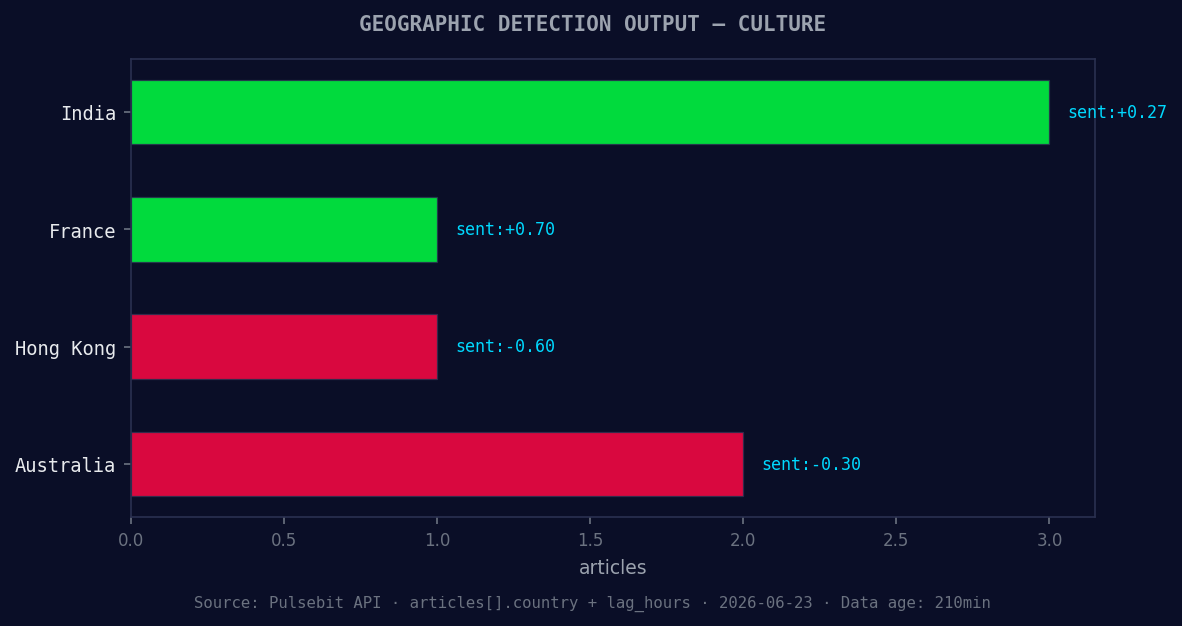
*Geographic detection output for culture. India leads with 3 articles and sentiment +0.27. Source: Pulsebit /news_recent geographic fields.*
# Making the API call
response = requests.get(url, params=params)
data = response.json()
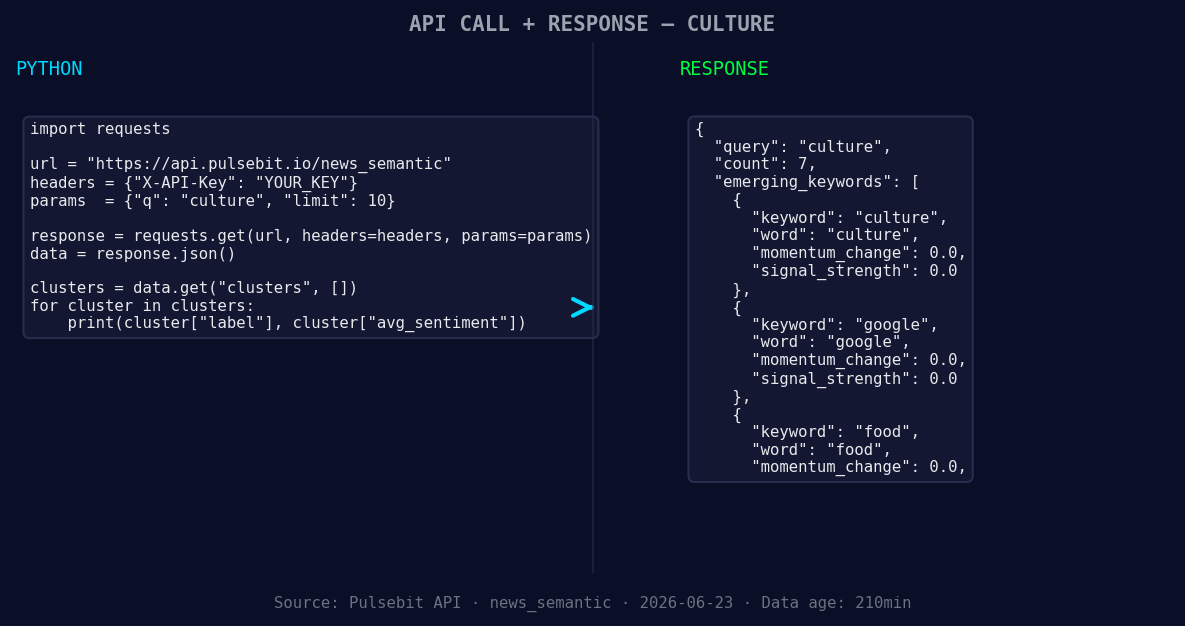
*Left: Python GET /news_semantic call for 'culture'. Right: returned JSON response structure (clusters: 3). Source: Pulsebit /news_semantic.*
# Running the cluster reason string through POST /sentiment for meta-sentiment analysis
cluster_reason = "Clustered by shared themes: maritime, tyndis, biennale, cultural, celebrate."
sentiment_url = "https://api.pulsebit.com/sentiment"
sentiment_response = requests.post(sentiment_url, json={"text": cluster_reason})
sentiment_data = sentiment_response.json()
print(data)
print(sentiment_data)
In this snippet, we filter articles by the Spanish language to hone in on that leading sentiment. We then take the narrative framing of the cluster story and send it through the sentiment analysis endpoint to evaluate how the themes are perceived in the context of sentiment.
Now, let's explore three specific builds that can leverage this momentum spike detection:
Cultural Influence Signal: Create a signal that alerts you when culture-related sentiment surpasses a threshold of +0.25. Use the geographic origin filter to ensure you’re catching regional spikes as they happen.
Meta-Sentiment Loop: Implement a routine that analyzes the sentiment of clustered narratives, like "Clustered by shared themes: maritime, tyndis, biennale, cultural, celebrate." Trigger it whenever there’s a notable change in momentum in cultural topics.
Forming Gap Analysis: Develop a monitoring endpoint that tracks emerging themes with zero momentum, such as culture(+0.00), google(+0.00), food(+0.00), against mainstream narratives. This will help you identify potential areas for growth or emerging trends that your pipeline may be missing.
These builds allow you to stay ahead of sentiment shifts, ensuring you don’t miss out on cultural narratives that could impact your strategy or output.
If you’re ready to get started, check out our documentation at pulsebit.lojenterprise.com/docs. You can copy-paste and run this in under 10 minutes, and begin capturing sentiment insights that matter.


Top comments (0)