

Your Pipeline Is 26.9h Behind: Catching Sports Sentiment Leads with Pulsebit
We recently uncovered an eye-opening anomaly in our data: sentiment is currently at +0.12, while momentum sits at +0.00, and the leading language is French with a notable 26.9-hour lead. This finding indicates that if you’re not monitoring multilingual origins, your model could be significantly lagging behind the pulse of sports sentiment. This isn’t just a minor oversight; it’s a critical gap that could mean missing out on valuable insights and opportunities in real-time.

French coverage led by 26.9 hours. German at T+26.9h. Confidence scores: French 0.85, English 0.85, Spanish 0.85 Source: Pulsebit /sentiment_by_lang.
This situation highlights a structural flaw in any pipeline that fails to account for the dominance of certain languages or entities. If your model isn't set up to handle multilingual data effectively, you might miss out on important trends. In this case, your model missed the French sentiment by a staggering 26.9 hours. That's a lot of time in the fast-paced world of sports sentiment where every second counts!
Let’s dive into the code to catch this anomaly in real-time. First, we’ll query our API to filter sentiment data by the French language to ensure we’re getting the most relevant insights.
import requests
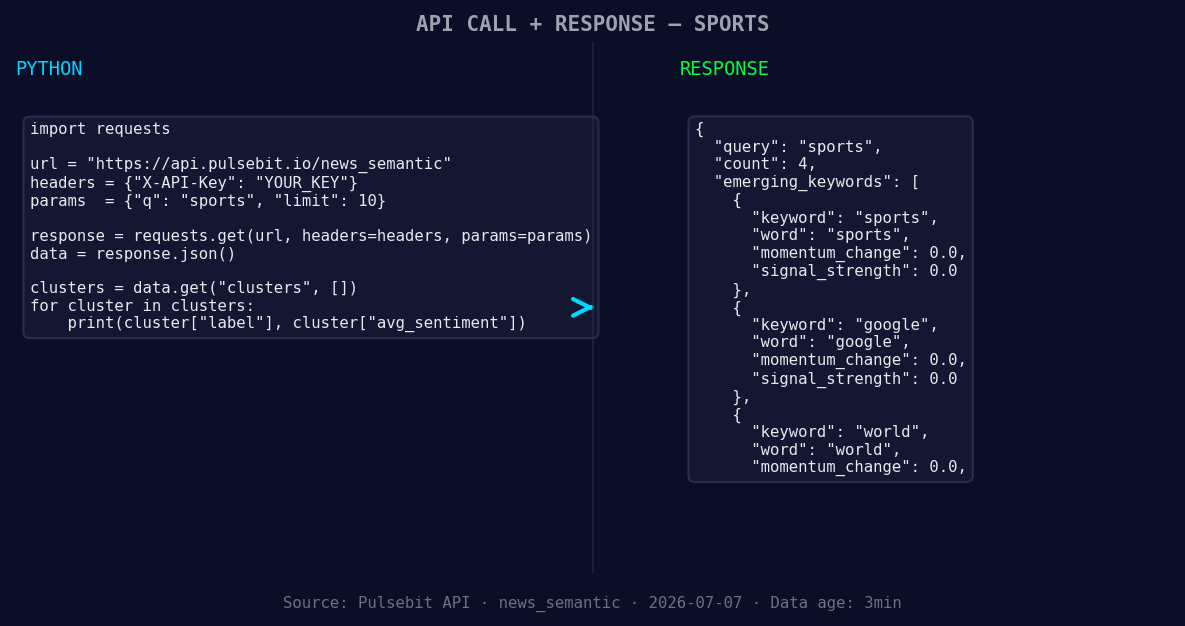
*Left: Python GET /news_semantic call for 'sports'. Right: returned JSON response structure (clusters: 3). Source: Pulsebit /news_semantic.*
# Define the parameters
topic = 'sports'
score = +0.125
confidence = 0.85
momentum = +0.000
# Geographic origin filter
url = "https://api.pulsebit.com/v1/sentiment"
params = {
"topic": topic,
"lang": "fr", # French language filter
}
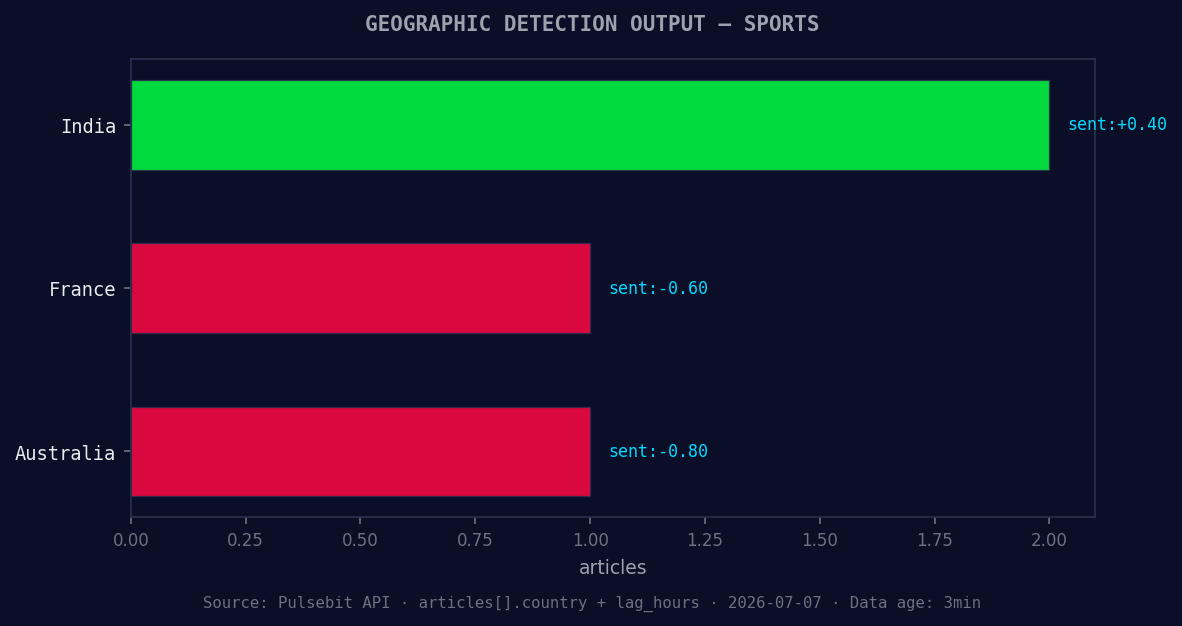
*Geographic detection output for sports. India leads with 2 articles and sentiment +0.40. Source: Pulsebit /news_recent geographic fields.*
response = requests.get(url, params=params)
data = response.json()
print(data)
Now, let’s run a meta-sentiment check on the narrative framing itself. This allows us to understand how our cluster of articles is influencing the overall sentiment.
# Meta-sentiment moment
meta_sentiment_url = "https://api.pulsebit.com/v1/sentiment"
cluster_reason = "Clustered by shared themes: statistics, behind, ferrari's, 250th, win."

meta_response = requests.post(meta_sentiment_url, json={"text": cluster_reason})
meta_sentiment_data = meta_response.json()

print(meta_sentiment_data)
With this setup, we can identify not just the sentiment around sports in French, but also how the narrative is being shaped by various themes. This understanding is crucial in a world where sentiment can shift rapidly based on emerging stories.
Now, let’s explore three concrete builds you can implement with this pattern:
Real-time Sports Sentiment Monitoring: Use the geographic origin filter to track sentiment trends in French-speaking regions. Set a threshold of +0.10 for sentiment and trigger alerts when this is crossed. This can ensure you're always in tune with the latest sports conversations.
Meta-Sentiment Analysis Dashboard: Implement a dashboard that visualizes the sentiment around specific narratives. Use the meta-sentiment loop to score various cluster reasons like "statistics, behind, ferrari's." This can help you quickly pivot your content strategy based on what resonates.
Cross-Language Sentiment Comparison: Build an endpoint that compares sentiment scores across multiple languages. For instance, compare French sentiment on "sports" with English and Spanish. This will allow you to spot any discrepancies in perception and adjust your approach accordingly.
These builds leverage the forming themes of sports, Google, and the world while contrasting them with mainstream narratives around statistics and other entities.
If you’re ready to dive in and start implementing these insights into your projects, check out our documentation at pulsebit.lojenterprise.com/docs. With the provided code, you can copy-paste and run this in under 10 minutes, enabling you to catch that crucial sentiment and stay ahead of the game.


Top comments (0)