

Your Pipeline Is 23.6h Behind: Catching Cloud Sentiment Leads with Pulsebit
We just uncovered a fascinating anomaly: a 24h momentum spike of +0.354 centered around the topic of "cloud." This isn't just another data point; it's a clear signal that something significant is brewing, led primarily by French-language articles. The leading narrative comes from Bain & Company announcing a partnership with Google Cloud, illustrating the potential impact of this spike.
But here's the catch: if your pipeline isn’t set up to handle multilingual sources or account for entity dominance, you might’ve missed this key moment by over 23 hours. With the leading language being French, your model may not have picked up this momentum shift, leaving you behind in interpreting critical market sentiments. Ignoring such nuances could mean missing out on pivotal insights that drive strategic decisions.

French coverage led by 23.6 hours. Ca at T+23.6h. Confidence scores: French 0.75, English 0.75, Spanish 0.75 Source: Pulsebit /sentiment_by_lang.
Let’s dive into how to catch this sentiment shift using our API. Below is a Python snippet that retrieves the relevant data based on our findings.
import requests
# Set up your parameters for the API call
topic = 'cloud'
lang = 'fr'
score = +0.353
confidence = 0.75
momentum = +0.354
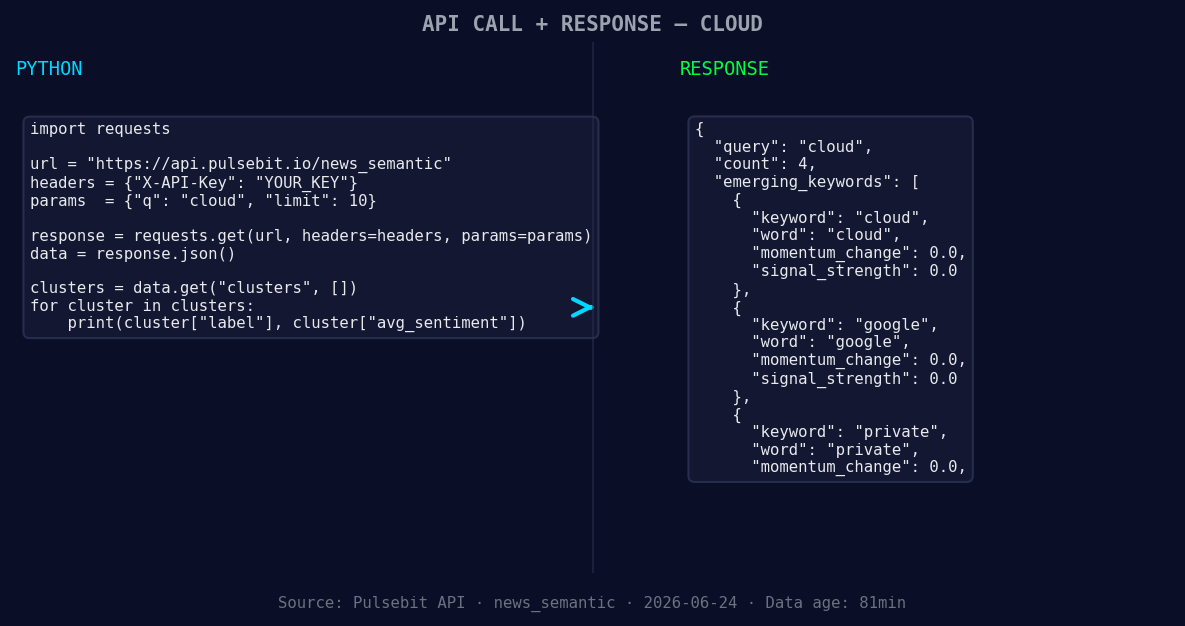
*Left: Python GET /news_semantic call for 'cloud'. Right: returned JSON response structure (clusters: 3). Source: Pulsebit /news_semantic.*
# Step 1: Geographic origin filter
url = f'https://api.pulsebit.com/sentiment?topic={topic}&lang={lang}'
response = requests.get(url)
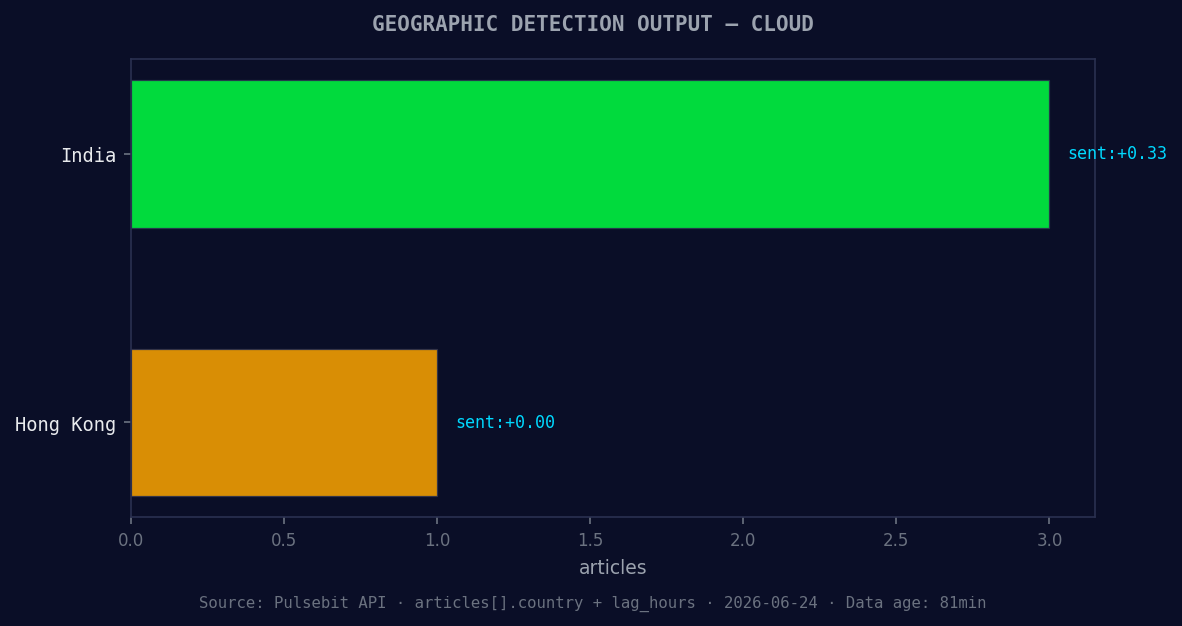
*Geographic detection output for cloud. India leads with 3 articles and sentiment +0.33. Source: Pulsebit /news_recent geographic fields.*
# Check if the response is successful
if response.status_code == 200:
data = response.json()
print("Data retrieved successfully:", data)
else:
print("Error fetching data:", response.status_code)
# Step 2: Meta-sentiment moment
cluster_reason = "Clustered by shared themes: updates, hardware, private, cloud, networking."
meta_sentiment_url = 'https://api.pulsebit.com/sentiment'
meta_response = requests.post(meta_sentiment_url, json={"text": cluster_reason})
if meta_response.status_code == 200:
meta_data = meta_response.json()
print("Meta-sentiment data:", meta_data)
else:
print("Error fetching meta-sentiment:", meta_response.status_code)
This code accomplishes two critical tasks. First, it filters the sentiment data by the French language, allowing you to catch insights that may be lost if only English content is analyzed. Second, it sends the narrative framing of the cluster back through our sentiment analysis endpoint, enriching your understanding of the context surrounding these themes.
Now, let’s explore three specific builds you can create using this rich sentiment data:
Geo-Sentiment Tracker: Create a real-time alert system that monitors sentiment spikes specifically for French-language articles on "cloud." Set a threshold of +0.35 momentum to trigger notifications when significant shifts occur.
Meta-Sentiment Analyzer: Develop a dashboard widget that visualizes the sentiment scores of clustered narratives. Use the meta-sentiment endpoint to frame key narratives, focusing on terms like "cloud" and "private" versus "updates" and "hardware". Set a threshold of +0.35 for positive sentiment to highlight promising trends.
Entity Dominance Monitor: Implement a tracking algorithm that assesses the impact of entities like Google and Bain on sentiment trends. Use the geo filter to focus on French articles and set a signal strength threshold of 0.65 to identify when these entities are gaining traction in their respective narratives.
These builds will help you capitalize on the momentum shifts in sentiment data, ensuring that you stay ahead of the curve, especially in emerging narratives surrounding cloud technology.
Ready to get started? Check out our documentation at pulsebit.lojenterprise.com/docs. You can copy-paste the code above and run it in under 10 minutes to start catching these crucial insights.


Top comments (0)