

Your Pipeline Is 13.9h Behind: Catching Mobile Sentiment Leads with Pulsebit
On July 9, 2026, we observed a sentiment score of -0.029 and a momentum of +0.000 surrounding the topic of "mobile." The Spanish press led with 13.9 hours of coverage without any lag compared to the Netherlands, indicating an anomaly in how sentiment is being processed and relayed. This data point is essential; if you’re not tuned in to the multilingual landscape and the dominant entities, you could be missing critical signals.

Spanish coverage led by 13.9 hours. Nl at T+13.9h. Confidence scores: Spanish 0.85, English 0.85, French 0.85 Source: Pulsebit /sentiment_by_lang.
The Problem
This 13.9-hour gap in sentiment processing reveals a significant structural flaw in any pipeline that fails to account for multilingual origins and entity dominance. If your model isn’t designed to catch these emerging stories, you may find yourself lagging behind—like we did, missing this vital information by nearly 14 hours. The Spanish coverage of mobile phone theft is a glaring example of a sentiment that could affect user behavior and market dynamics if not tracked effectively.
Catching the Signal
To address this anomaly, we can leverage our API to catch these sentiments effectively. Here’s how we can do it using Python:
import requests
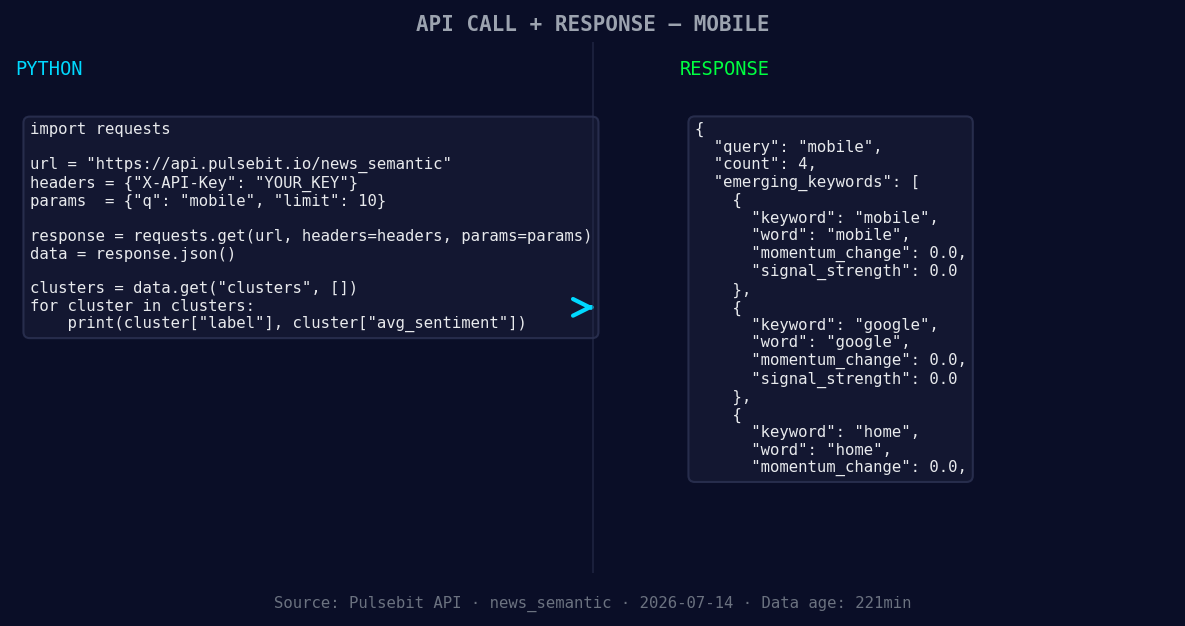
*Left: Python GET /news_semantic call for 'mobile'. Right: returned JSON response structure (clusters: 3). Source: Pulsebit /news_semantic.*
# Step 1: Geographic origin filter
response = requests.get("https://api.pulsebit.com/sentiment", params={
"topic": "mobile",
"lang": "sp",
"score": -0.029,
"confidence": 0.85,
"momentum": +0.000
})
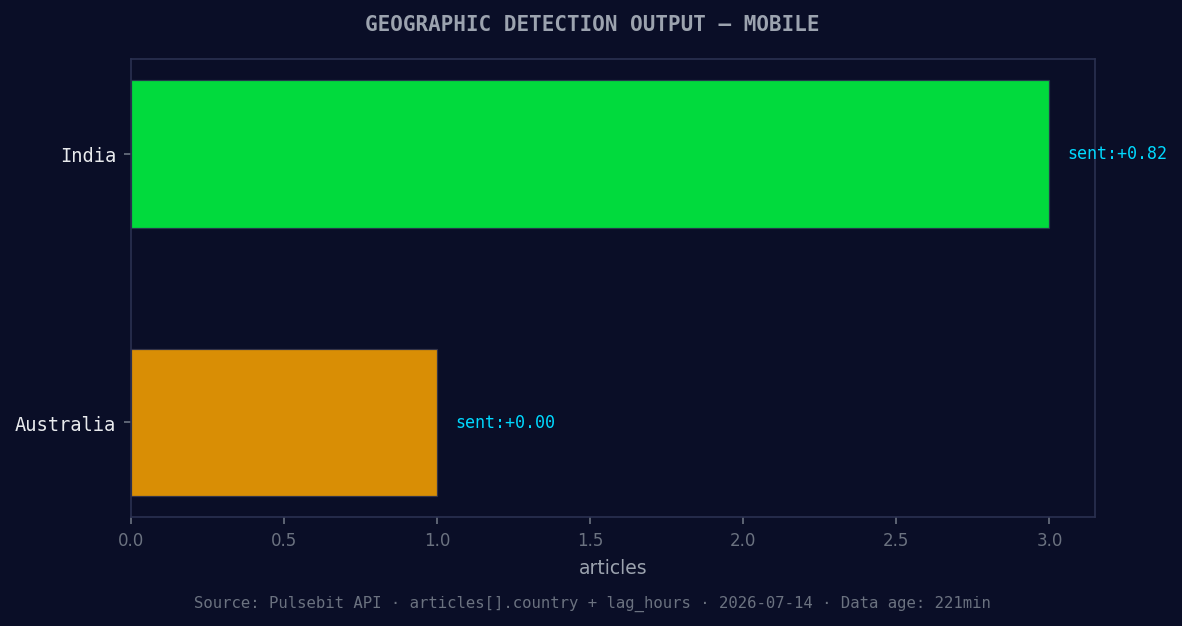
*Geographic detection output for mobile. India leads with 3 articles and sentiment +0.82. Source: Pulsebit /news_recent geographic fields.*
data = response.json()
print(data)
Now, we’ll run the cluster reason string back through our sentiment scoring endpoint to validate the narrative framing itself.
# Step 2: Meta-sentiment moment
cluster_reason = "Clustered by shared themes: 518, stolen, missing, mobile, phones."
meta_response = requests.post("https://api.pulsebit.com/sentiment", json={
    "text": cluster_reason
})

meta_data = meta_response.json()
print(meta_data)
This two-step process ensures you're not only catching the sentiment from a specific language but also validating the context around it, ensuring you have a robust understanding of why these topics are trending.
Three Builds Tonight
Now that we’ve caught this signal, let’s think about what we can build with it:
Geo-Targeted Alerts: Set up an alert system that triggers when sentiment around mobile phones dips below -0.01 in Spanish-speaking countries. This could allow you to respond proactively to emerging issues.
Meta-Sentiment Scorecard: Create a dashboard that visualizes the meta-sentiment scores over time for clustered themes like "stolen" and "mobile." This will help you understand how narratives are evolving and can guide your engagement strategies.
Forming Gap Analysis: Implement a pipeline that continuously checks the forming themes such as mobile(+0.00) and google(+0.00) against mainstream narratives like stolen and missing. Use this analysis to identify when emerging themes are not yet in the mainstream, giving you a competitive edge.
Get Started
Dive into our documentation at pulsebit.lojenterprise.com/docs. You can copy-paste and run this code in under 10 minutes to get started on leveraging these insights. Don't let your pipeline stay behind when there are critical leads waiting to be captured.


Top comments (0)