

Your pipeline is 21.3h behind: catching world sentiment leads with Pulsebit
We just observed a striking anomaly: a 24h momentum spike of +0.459. This is not just a minor fluctuation; it indicates a significant shift in sentiment on a global scale. The leading language in this surge is English, which has maintained a steady 21.3-hour lead over other languages. The cluster story revolves around “China's Rare Earth Challenges and SpaceX Rivalry.” If you’re not tuned into this, your models may be lagging, and missing such trends could cost you critical insights.
The Problem
This data reveals a glaring structural gap in any pipeline that doesn’t account for multilingual origin or entity dominance. If you’re relying solely on sentiment data without considering these factors, your model missed a vital trend by 21.3 hours. In this case, the dominant entity is China, and the topics at hand are evolving rapidly. If you’re not processing this information in real-time, your insights risk becoming outdated, irrelevant, or worse, misleading.

English coverage led by 21.3 hours. Nl at T+21.3h. Confidence scores: English 0.85, Spanish 0.85, French 0.85 Source: Pulsebit /sentiment_by_lang.
The Code
To catch this momentum spike effectively, we can use the following Python snippet. This code will filter the data based on language and then analyze the sentiment of the clustered themes:
import requests
# Geographic origin filter
url = "https://api.pulsebit.com/sentiment"
params = {
"topic": "world",
"lang": "en",
"score": +0.118,
"confidence": 0.85,
"momentum": +0.459
}
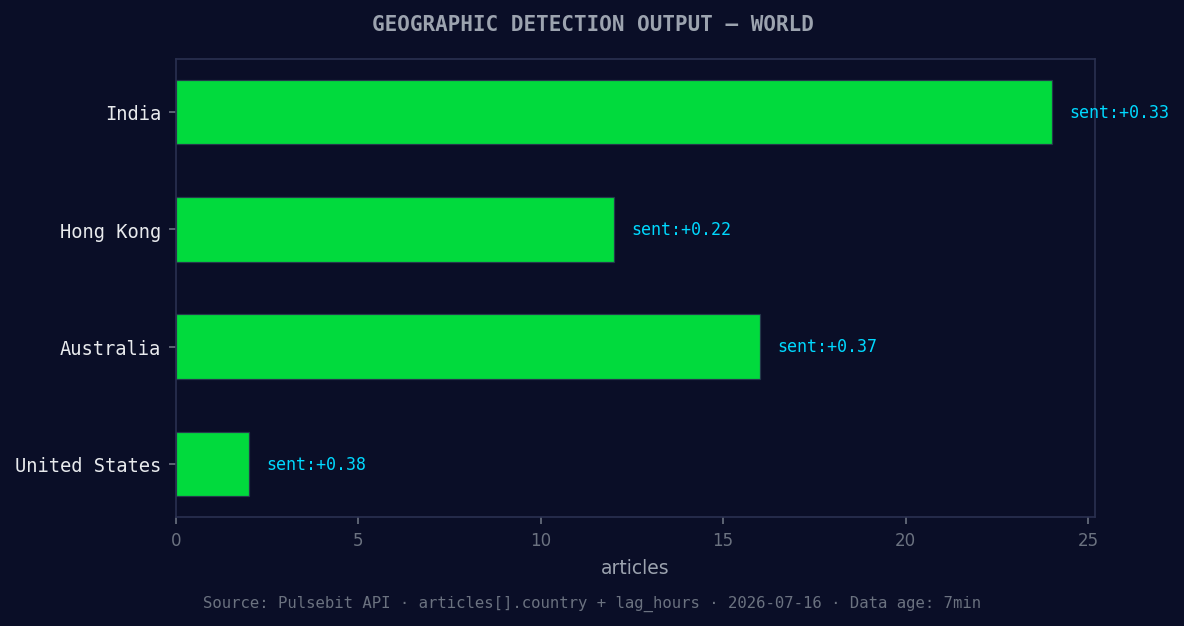
*Geographic detection output for world. India leads with 24 articles and sentiment +0.33. Source: Pulsebit /news_recent geographic fields.*
# API call to fetch sentiment data
response = requests.get(url, params=params)
data = response.json()
print(data)

Left: Python GET /news_semantic call for 'world'. Right: returned JSON response structure (clusters: 3). Source: Pulsebit /news_semantic.
Now, let’s run the cluster reason string back through our endpoint to score the narrative framing itself. This is crucial for contextualizing the sentiment:
# Meta-sentiment moment
meta_sentiment_url = "https://api.pulsebit.com/sentiment"
meta_input = "Clustered by shared themes: china’s, rival, science, our, help."

meta_sentiment_response = requests.post(meta_sentiment_url, json={"input": meta_input})
meta_sentiment_data = meta_sentiment_response.json()
print(meta_sentiment_data)
Three Builds Tonight
Here are three specific builds you can create with this pattern:
Geographic Sentiment Monitor: Set a threshold for sentiment spikes by geographic origin. For example, if the momentum score exceeds +0.4 for topics concerning "world," trigger alerts for regional analysts. Use the geo filter to refine your data by language, ensuring you capture the nuances of sentiment in each region.
Meta-Sentiment Analysis Dashboard: Create a dashboard that visualizes the meta-sentiment scores generated from your cluster themes. This can help identify how framing impacts overall sentiment. For instance, track how the narrative surrounding "China's Rare Earth Challenges" evolves over time, especially in relation to sentiment scores.
Anomaly Detection Alerting System: Use the momentum score to set up an alerting system. If the momentum for any clustered topic exceeds +0.4, send notifications to your team. This will ensure that you’re always on top of emerging trends, like the rivalry between China and SpaceX.
Get Started
Dive into our documentation at pulsebit.lojenterprise.com/docs. You can copy, paste, and run this code in under 10 minutes to start catching sentiment shifts in real-time. Don't let your pipeline lag behind; be proactive and stay informed!


Top comments (0)