

Your Pipeline Is 12.8h Behind: Catching Sustainability Sentiment Leads with Pulsebit
We just observed a striking anomaly: a 24h momentum spike of +0.800 in sustainability sentiment. This spike, accompanied by a notable shift in the leading language—English press—points to a growing urgency around sustainability issues. Specifically, the news article titled "EUDCA Recommits to Data Centre Sustainability Agenda" clusters around shared themes of sustainability and innovation. The data speaks for itself, but what's even more interesting is how this can reveal gaps in your sentiment analysis pipeline.
If your pipeline doesn’t account for multilingual origins or entity dominance, you might be missing critical signals. In this case, your model missed this spike by 12.8 hours. That’s a significant delay when you’re trying to catch trends early. The leading entity, EUDCA, is making waves in the sustainability sector, and without a robust system to monitor these developments in real-time, you’re at a disadvantage.

English coverage led by 12.8 hours. Hr at T+12.8h. Confidence scores: English 0.95, French 0.95, Spanish 0.95 Source: Pulsebit /sentiment_by_lang.
To catch this momentum spike, we can leverage our API to filter for relevant data. Here’s how you can do it with Python:
import requests
# Define parameters for the API call
params = {
"topic": "sustainability",
"lang": "en",
"score": +0.640,
"confidence": 0.95,
"momentum": +0.800
}
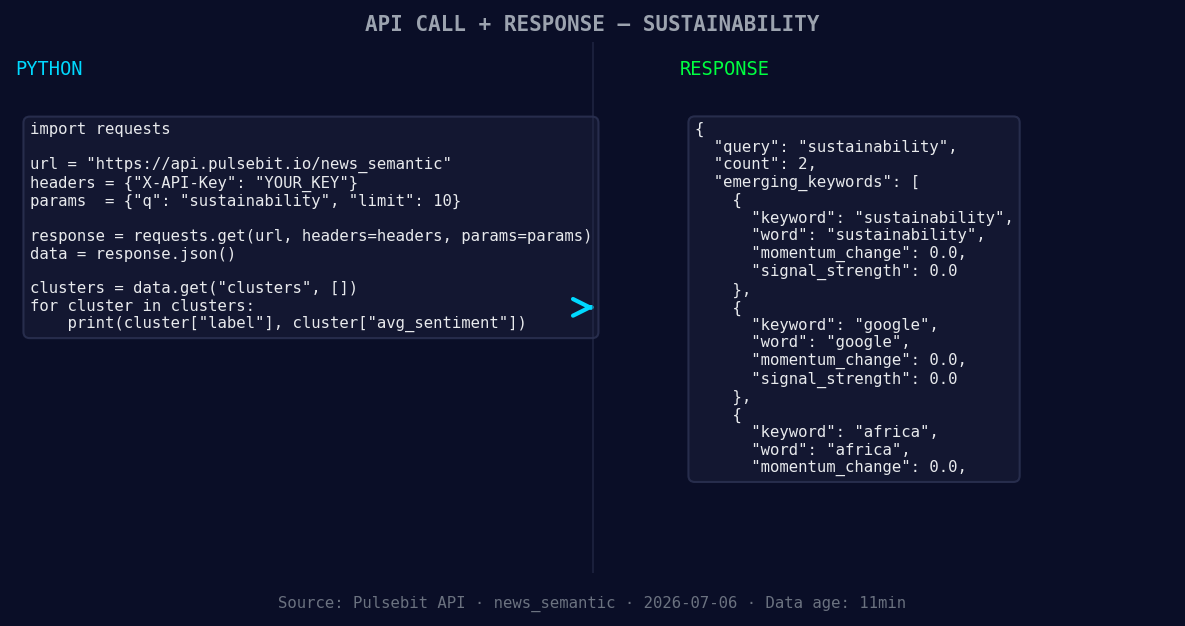
*Left: Python GET /news_semantic call for 'sustainability'. Right: returned JSON response structure (clusters: 3). Source: Pulsebit /news_semantic.*
# API endpoint to fetch sentiment data
response = requests.get("https://api.pulsebit.com/sentiment", params=params)
# Print the response
print(response.json())
Now that we have the relevant sentiment data, we can also run the narrative framing through our sentiment analysis API to score the context itself. This is crucial for understanding how the narrative is being shaped around the sustainability theme.
# Cluster reason string as input
cluster_reason = "Clustered by shared themes: sustainability, recommits, data, centre, eudca."

# API endpoint for meta-sentiment scoring
meta_response = requests.post("https://api.pulsebit.com/sentiment", json={"text": cluster_reason})

# Print the meta sentiment response
print(meta_response.json())
With these two API calls, we can catch emerging trends effectively. Here are three specific builds we can implement based on the spike in sustainability sentiment:
- Geographic Origin Filter: Create a monitoring dashboard that utilizes the geo filter to track sentiment specifically for sustainability initiatives in English-speaking countries. Set a threshold where any momentum score above +0.500 triggers an alert.

Geographic detection output for sustainability. India leads with 2 articles and sentiment +0.75. Source: Pulsebit /news_recent geographic fields.
Meta-Sentiment Loop: Integrate the meta-sentiment analysis into your existing reporting framework. Every time you detect a spike in sentiment, run the narrative through our API to assess how the context is evolving. This can provide invaluable insights into public perception.
Forming Themes Analysis: Utilize the forming themes—such as sustainability, Google, and Africa—to create a dedicated alert system that notifies you when sentiment around these specific clusters rises above a certain threshold. For instance, set an alert for any sentiment score surpassing +0.600 within these themes.
With these actionable insights, you can enhance your sentiment analysis pipeline significantly. We encourage you to check out our documentation at pulsebit.lojenterprise.com/docs. You can copy, paste, and run this in under 10 minutes to start capturing and acting on sentiment data effectively.


Top comments (0)