

Your Pipeline Is 12.9h Behind: Catching Artificial Intelligence Sentiment Leads with Pulsebit
We recently stumbled upon a striking anomaly: a 24h momentum spike of -1.350 surrounding the topic of artificial intelligence. This shift indicates a significant negativity in sentiment, especially considering the leading language is English, with a 12.9-hour lead over sentiment from the rest of the world. The articles clustered around the theme "AI Firms and Manhattan Office Space" hint at emerging narratives that could shape market perspectives. If you aren't tuned into this, you might find your insights lagging behind the curve.
The problem here is clear. Your model missed a critical shift by 12.9 hours. This is especially relevant as the leading sentiment is tied to English-language content, which dominates the narrative landscape. If your pipeline doesn’t accommodate multilingual origins or prioritize dominant entities, you risk a significant blind spot. Not only does this gap hinder your ability to respond rapidly, but it can leave you reacting rather than acting on critical insights.

English coverage led by 12.9 hours. Sw at T+12.9h. Confidence scores: English 0.85, Spanish 0.85, French 0.85 Source: Pulsebit /sentiment_by_lang.
To catch this momentum shift in real-time, we can leverage our API. Here’s how you can extract the necessary data:
import requests
# Set the parameters for the API call
topic = 'artificial intelligence'
score = +0.075
confidence = 0.85
momentum = -1.350
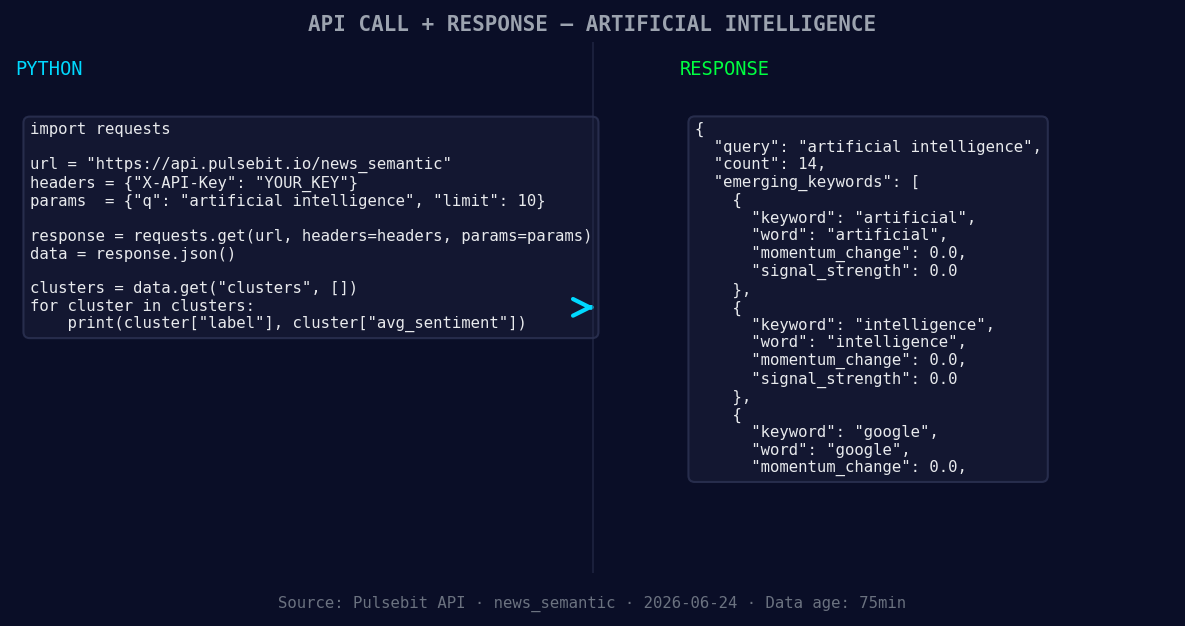
*Left: Python GET /news_semantic call for 'artificial intelligence'. Right: returned JSON response structure (clusters: 3). Source: Pulsebit /news_semantic.*
# Geographic origin filter: query by language/country
url = "https://api.pulsebit.com/sentiment"
params = {
"topic": topic,
"lang": "en",
}
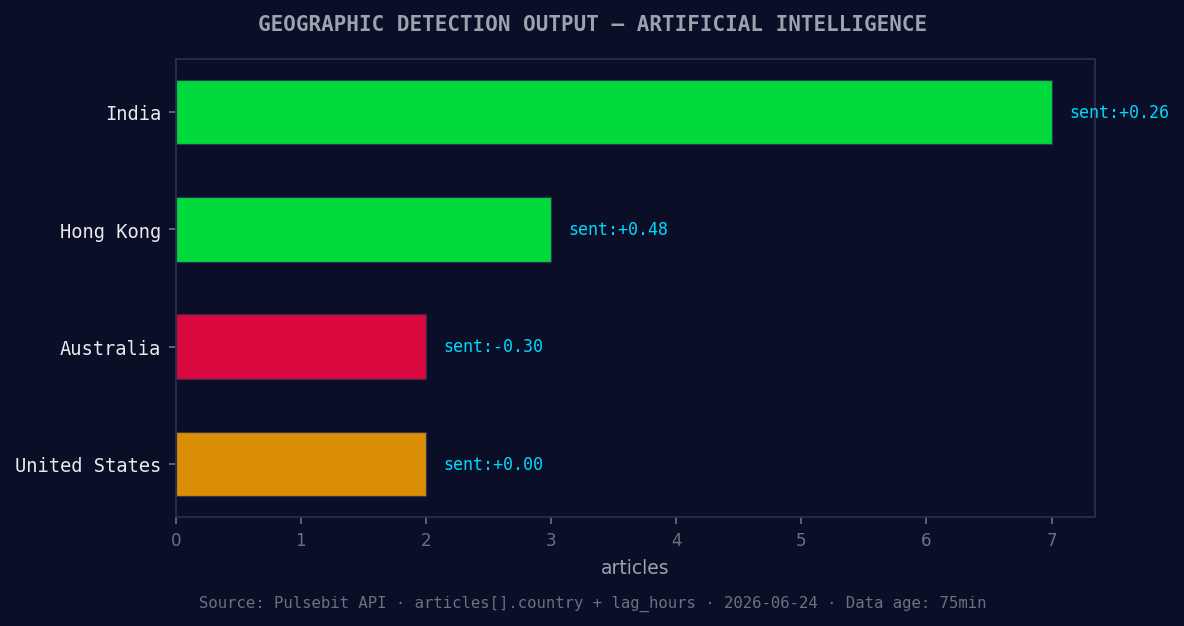
*Geographic detection output for artificial intelligence. India leads with 7 articles and sentiment +0.26. Source: Pulsebit /news_recent geographic fields.*
# Perform the API call
response = requests.get(url, params=params)
data = response.json()
# Meta-sentiment moment
cluster_reason = "Clustered by shared themes: how, jobs, india, research, robot."
meta_sentiment_response = requests.post(url, json={"input": cluster_reason})
meta_sentiment_data = meta_sentiment_response.json()
print(meta_sentiment_data)
In this code:
- We first query the sentiment for the topic of "artificial intelligence," applying a geographic origin filter to ensure we focus on English-language articles.
- Then, we run the meta-sentiment loop to evaluate the narrative framing around the cluster reason, which combines various themes relevant to the current discussion.
Now, let’s consider three builds you might create with this pattern. First, set up a real-time alert for sentiment drops below a threshold of -1.0. This will help catch negative shifts before they impact your operations. Next, build a dashboard that visualizes sentiment trends over the last 24 hours, utilizing the geo filter to focus on dominant English-speaking regions. Finally, incorporate the meta-sentiment output to refine your content strategy: if the sentiment score for “Clustered by shared themes: how, jobs, india” is negative, you might want to reconsider how you frame AI discussions in your communications.
This approach not only keeps you ahead of sentiment trends but also helps in shaping narratives that resonate with your audience.
To get started, check out our API documentation at pulsebit.lojenterprise.com/docs. With the right setup, you can copy-paste and run this in under 10 minutes. Let’s ensure your models are as sharp as possible, capturing sentiment shifts before they become widespread.


Top comments (0)