

Your Pipeline Is 24.6h Behind: Catching Finance Sentiment Leads with Pulsebit
We just uncovered a significant anomaly: a 24h momentum spike of +0.547 in finance-related sentiment. This spike indicates a notable change in the narrative surrounding financial decisions, particularly regarding the Federal Reserve's latest rate decision. Such a rapid shift in sentiment can have profound implications for decision-making, and we believe it’s critical for developers like us to be aware of these changes — especially when they are happening in real-time.
Yet, here’s the kicker: your model missed this by 24.6 hours. That’s nearly a full day lagging behind the leading English press coverage. Without proper handling of multilingual origin or entity dominance, your pipeline is not just outdated; it’s fundamentally flawed. If you’re relying solely on traditional sentiment analysis methods, you’re likely missing key insights from dominant entities like the Fed that could impact financial strategies and actions.

English coverage led by 24.6 hours. Et at T+24.6h. Confidence scores: English 0.85, Spanish 0.85, No 0.85 Source: Pulsebit /sentiment_by_lang.
Let’s take a look at how we can catch this spike programmatically. We'll start by querying our dataset with a specific focus on the topic of finance, filtering for English language articles. Here’s the code to do just that:
import requests
# Define parameters for the API call
params = {
"topic": "finance",
"lang": "en",
"score": -0.099,
"confidence": 0.85,
"momentum": +0.547
}
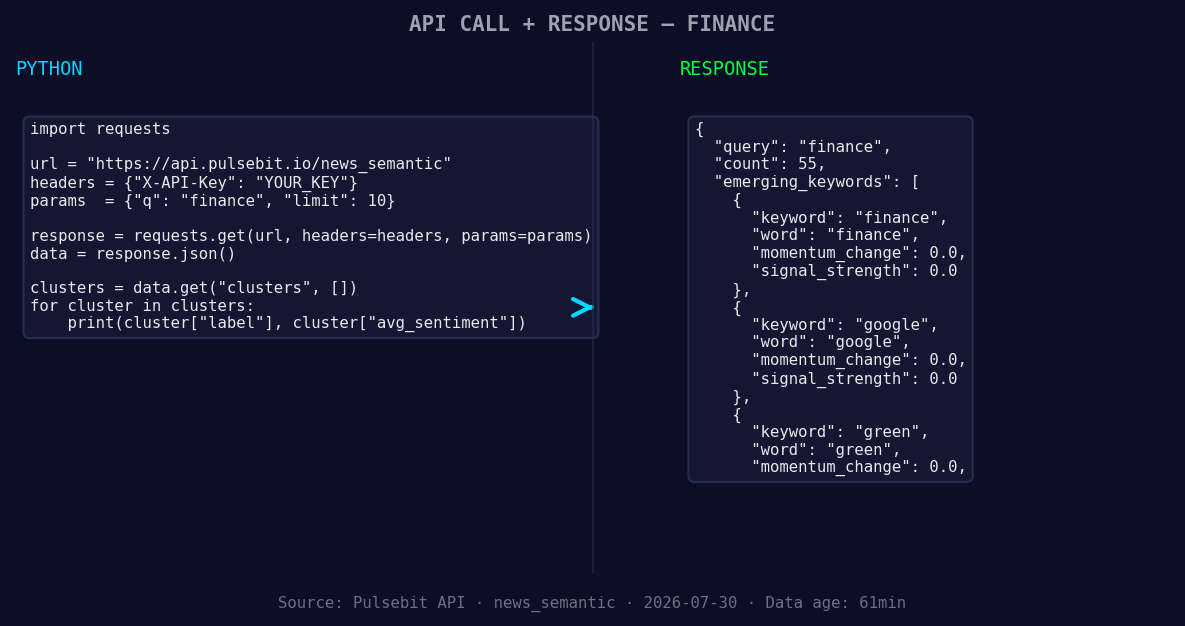
*Left: Python GET /news_semantic call for 'finance'. Right: returned JSON response structure (clusters: 3). Source: Pulsebit /news_semantic.*
# Make the API call to fetch sentiment data
response = requests.get("https://api.pulsebit.com/sentiment", params=params)
data = response.json()
# Print the response
print(data)
Now, we need to take the narrative framing itself and run it back through our sentiment analysis to score it. This is crucial because it helps us understand what’s driving the spike. Here’s how to implement that:
# Define the cluster reason string
cluster_reason = "Clustered by shared themes: what, fed’s, rate, decision, means."

# Make the POST request for meta-sentiment
meta_response = requests.post("https://api.pulsebit.com/sentiment", json={"text": cluster_reason})
meta_data = meta_response.json()

# Print the meta-sentiment response
print(meta_data)
Through these two API calls, we can not only pull in relevant sentiment data but also assess the narrative framing that is driving the current spike.
Now that we’ve set the foundation, let’s explore three specific builds we can create from this momentum spike:
Geo-Filtered Sentiment Tracking: Set a threshold of momentum greater than +0.5, and filter for English articles. This will help pinpoint significant sentiment shifts within finance regions that matter most. Use the geo filter to target your audience accurately.
Meta-Sentiment Analyzer: Build a service that continuously runs the cluster reason strings through our sentiment endpoint whenever a new spike is detected. If the cluster reason shows significant positive or negative sentiment, alert users to potential shifts in narrative that could affect their strategies.
Dynamic Theme Monitor: Create a dashboard that dynamically tracks themes related to finance, Google, and green initiatives versus mainstream topics. Set alerts for when sentiment on these themes diverges by more than a predefined threshold, such as +0.2. This will help you stay ahead of the curve and understand emerging trends.
If you want to dive deeper into building these capabilities, check out our documentation at pulsebit.lojenterprise.com/docs. You can copy-paste the code above and run it in under 10 minutes. Don't let your pipeline lag behind — catch those sentiment leads before they become yesterday’s news!

Geographic detection output for finance. India leads with 3 articles and sentiment +0.78. Source: Pulsebit /news_recent geographic fields.


Top comments (0)