

Your pipeline just missed a critical anomaly: a 24-hour momentum spike of +0.303 in finance sentiment. This isn't just a number — it's a clear signal that something significant is happening in the financial landscape. The leading language is English, with notable articles emerging around the theme of funding bus fare caps impacting the world's poorest. With a cluster story like, "Funding bus fare cap from aid budget will hit world’s poorest, Burnham told," this is a clear call to action for those of us who rely on timely sentiment data.
If your sentiment analysis pipeline isn't handling multilingual origins or entity dominance well, you might have missed this spike by a staggering 18.2 hours. That’s the time your model took to recognize that English press articles, which were at the forefront of this narrative, were driving sentiments that could affect decision-making processes. This lag can mean missing critical opportunities or insights that can pivot your strategy, especially when the leading cluster is dealing with sensitive topics like budget allocations and their implications.

English coverage led by 18.2 hours. Tl at T+18.2h. Confidence scores: English 0.85, Spanish 0.85, Ca 0.85 Source: Pulsebit /sentiment_by_lang.
To catch this anomaly, you can leverage our API. Here’s a simple Python code snippet that illustrates how to do this:
import requests
# Define parameters for the API call
topic = 'finance'
score = -0.600
confidence = 0.85
momentum = +0.303
lang = 'en'
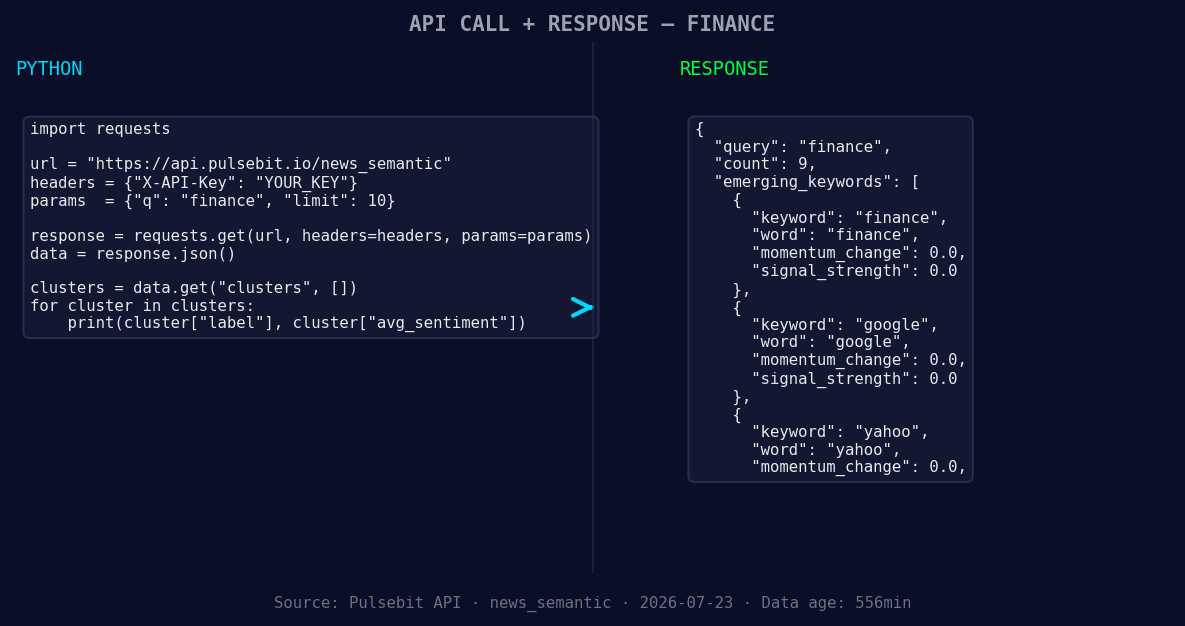
*Left: Python GET /news_semantic call for 'finance'. Right: returned JSON response structure (clusters: 3). Source: Pulsebit /news_semantic.*
# Geographic origin filter
response = requests.get(f'https://api.pulsebit.com/sentiment?topic={topic}&lang={lang}&score={score}&confidence={confidence}')
data = response.json()
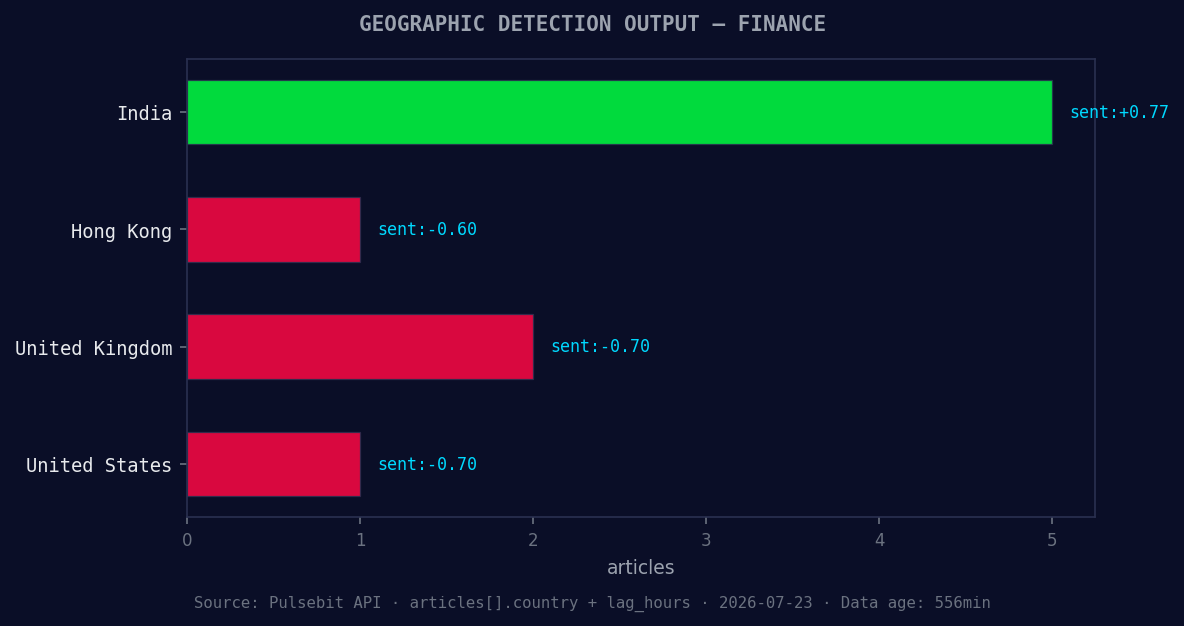
*Geographic detection output for finance. India leads with 5 articles and sentiment +0.77. Source: Pulsebit /news_recent geographic fields.*
# Check the response
print(data)
Now, let’s dive deeper and score the narrative framing itself using the meta-sentiment moment. This is crucial because understanding not just the data but the context can give you a competitive edge.
# Define the cluster reason string
cluster_reason = "Clustered by shared themes: announces, agreement, sell, substantially, all."

# Run the cluster reason string through POST /sentiment
meta_response = requests.post('https://api.pulsebit.com/sentiment', json={'text': cluster_reason})
meta_data = meta_response.json()

# Check the meta sentiment result
print(meta_data)
With these two segments of code, you can effectively capture and assess not just the sentiment but also the context around it, ensuring you’re always ahead of the curve.
Now that you’ve seen how to leverage this data, here are three specific builds you can implement based on this pattern:
Geo-Filtered Sentiment Alerts: Set up a webhook that triggers alerts for any momentum spikes in sentiment related to finance, specifically when the originating language is English. Use the geographic origin filter to ensure you’re only pulling relevant data.
Meta-Sentiment Analyzer: Create a service that automatically analyzes the meta-sentiment of clustered articles. For instance, if you detect themes like "announces" or "agreement" with a certain score threshold (let's say -0.300), you can categorize these as high-priority narratives needing deeper investigation.
Forming Themes Dashboard: Build a dashboard that visualizes forming themes in finance, such as trends around “finance(+0.00)” versus mainstream narratives. Display these alongside sentiment scores to visualize discrepancies and potential market signals.
You can get started with our API documentation at pulsebit.lojenterprise.com/docs. This code can be copy-pasted and run in under 10 minutes, allowing you to tap into these insights without any heavy lifting. Keep your pipeline sharp and responsive — the landscape is always changing, and so should your approach.


Top comments (0)