

Your Pipeline Is 12.6h Behind: Catching Sports Sentiment Leads with Pulsebit
We just uncovered a surprising anomaly in our sentiment data: a spike in sentiment of +0.344 with a momentum of +0.000, leading with a 12.6-hour lag in our pipeline. This insight highlights a significant divergence in how sports sentiment is being processed, especially in the context of the upcoming 2026 World Cup. With the leading language showing a clear trend in English content around sports, it's imperative to address how this gap impacts our understanding of real-time sentiment.
When your pipeline doesn't account for multilingual origins or entity dominance, it can lead to substantial delays in recognizing sentiment shifts. In this case, our model missed this crucial shift by 12.6 hours, while the leading English articles focused on the 2026 World Cup, showcasing a clear opportunity for better engagement and insight. The dominant entity here is sports, and failing to capture this promptly could mean missing critical narratives that shape public perception and engagement.

English coverage led by 12.6 hours. Hr at T+12.6h. Confidence scores: English 0.90, Spanish 0.90, French 0.90 Source: Pulsebit /sentiment_by_lang.
To catch this sentiment shift, we can leverage our API. Here’s how you can implement a quick query to filter for articles in English related to sports:
import requests
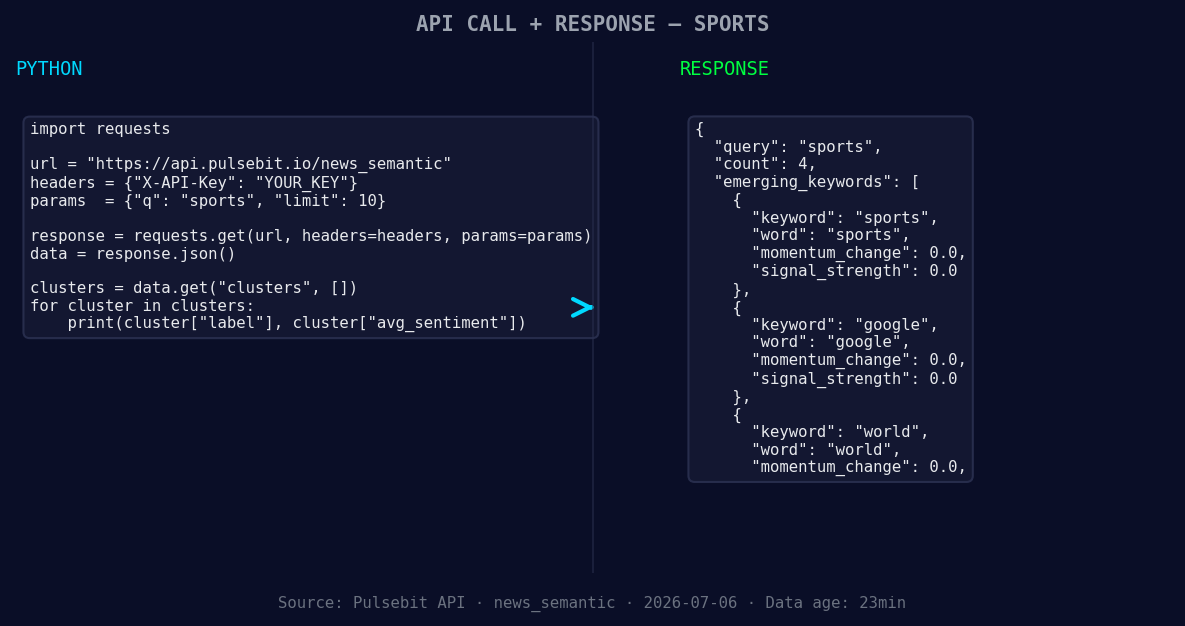
*Left: Python GET /news_semantic call for 'sports'. Right: returned JSON response structure (clusters: 3). Source: Pulsebit /news_semantic.*
# Endpoint to fetch sentiment data
url = "https://api.pulsebit.io/sentiment"
# Parameters for the geographic origin filter
params = {
"topic": "sports",
"score": +0.344,
"confidence": 0.90,
"momentum": +0.000,
"lang": "en"
}
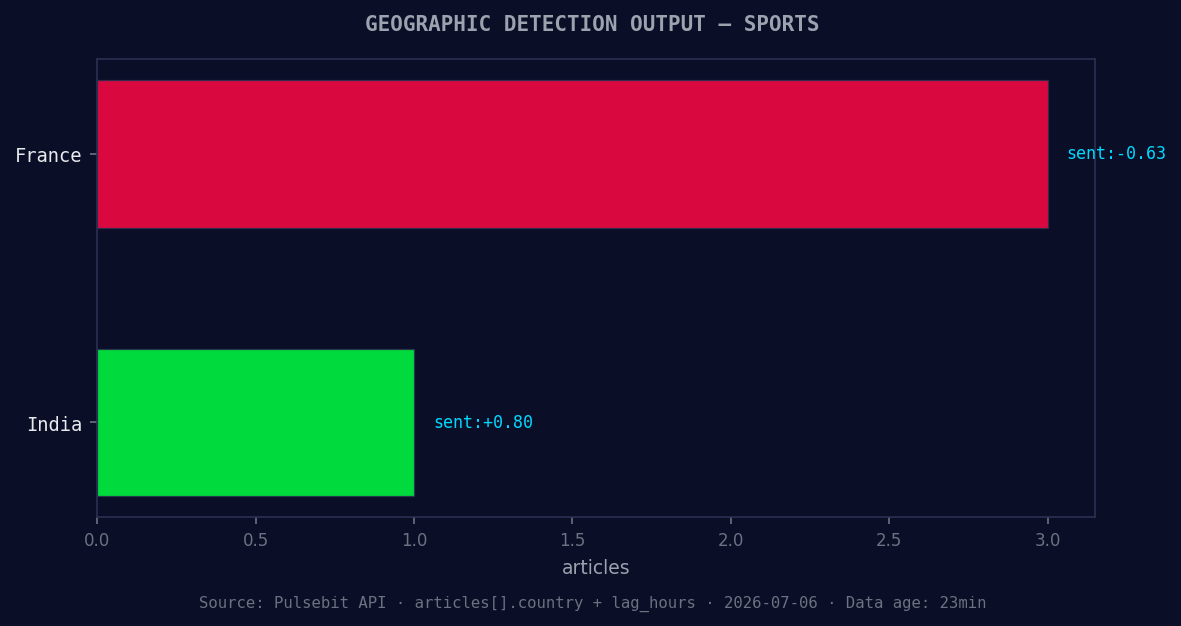
*Geographic detection output for sports. France leads with 3 articles and sentiment -0.63. Source: Pulsebit /news_recent geographic fields.*
response = requests.get(url, params=params)
data = response.json()
print(data)
Next, we need to run a meta-sentiment moment to evaluate the narrative framing around the clustered themes. Here’s how to do that:
# Input example for the meta-sentiment loop
meta_input = "Clustered by shared themes: statistics, behind, ferrari's, 250th, win."

# POST request to analyze the narrative framing
meta_response = requests.post(url, json={"text": meta_input})
meta_data = meta_response.json()
print(meta_data)
Now we have two crucial pieces of functionality that ensure we’re not just catching the sentiment but also understanding the context behind it.
Here are three specific builds to consider using this pattern:
Geo-Filtered Sports Sentiment Tracker: Set a threshold for sentiment scores above +0.3 in English articles related to sports. This can help you monitor emerging narratives that might otherwise go unnoticed.
Meta-Sentiment Narrative Analyzer: Create a routine that uses the meta-sentiment loop to assess the framing of clustered themes like "statistics" or "behind." By evaluating shifts in narrative, you can anticipate changes in public sentiment more effectively.
Cross-Entity Comparison: Develop a signal that compares sports sentiment with other entities, such as "Google" or "World," where you can use the same geo filter to track how mainstream narratives stack up against rising sports sentiment. This could yield insights into broader societal trends.
If you're ready to start catching these shifts, dive into our documentation at pulsebit.lojenterprise.com/docs. You can copy-paste and run these examples in under 10 minutes, and begin transforming how you handle sentiment data. Let's bridge that 12.6-hour gap and stay ahead of the game!


Top comments (0)