

Your Pipeline Is 28.1h Behind: Catching Inflation Sentiment Leads with Pulsebit
We've just uncovered a striking anomaly: a 24h momentum spike of -0.825 related to inflation sentiment. This detail isn’t just a number; it’s a signal that something significant is happening underneath the surface of the data. As we dive deeper, it becomes clear that there’s an urgent need to catch these shifts in sentiment sooner, particularly as they unfurl in the context of inflationary growth. This isn’t just an abstract concept; it’s a real-time opportunity to tap into evolving narratives.
The Problem
Your model missed this by a staggering 28.1 hours. This gap highlights a structural flaw in any pipeline that isn’t equipped to handle multilingual origins or entity dominance. While the English press is currently leading, your analysis may have been focused elsewhere or lagged behind. This oversight could mean missing critical insights and trends that are shaping investment strategies as inflationary pressures rise. If you’re not addressing this lag, you could be leaving valuable data on the table.

English coverage led by 28.1 hours. No at T+28.1h. Confidence scores: English 0.75, Spanish 0.75, French 0.75 Source: Pulsebit /sentiment_by_lang.
The Code
To catch this anomaly and close the gap, let’s dive into some code. Here’s how you can use our API to filter sentiment data and evaluate the narrative framing:
import requests
# Define parameters for the API call
topic = 'inflation'
score = -0.003
confidence = 0.75
momentum = -0.825
lang = 'en'
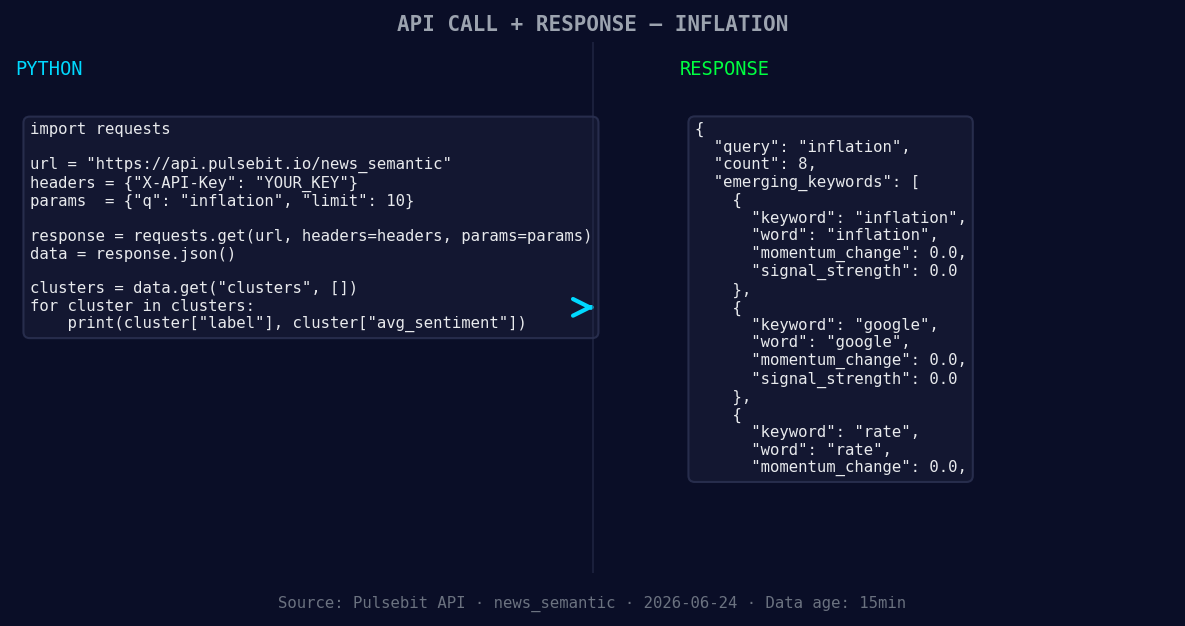
*Left: Python GET /news_semantic call for 'inflation'. Right: returned JSON response structure (clusters: 3). Source: Pulsebit /news_semantic.*
# Geographic origin filter: querying by language
response = requests.get(f'https://api.pulsebit.com/sentiment?topic={topic}&lang={lang}')
data = response.json()
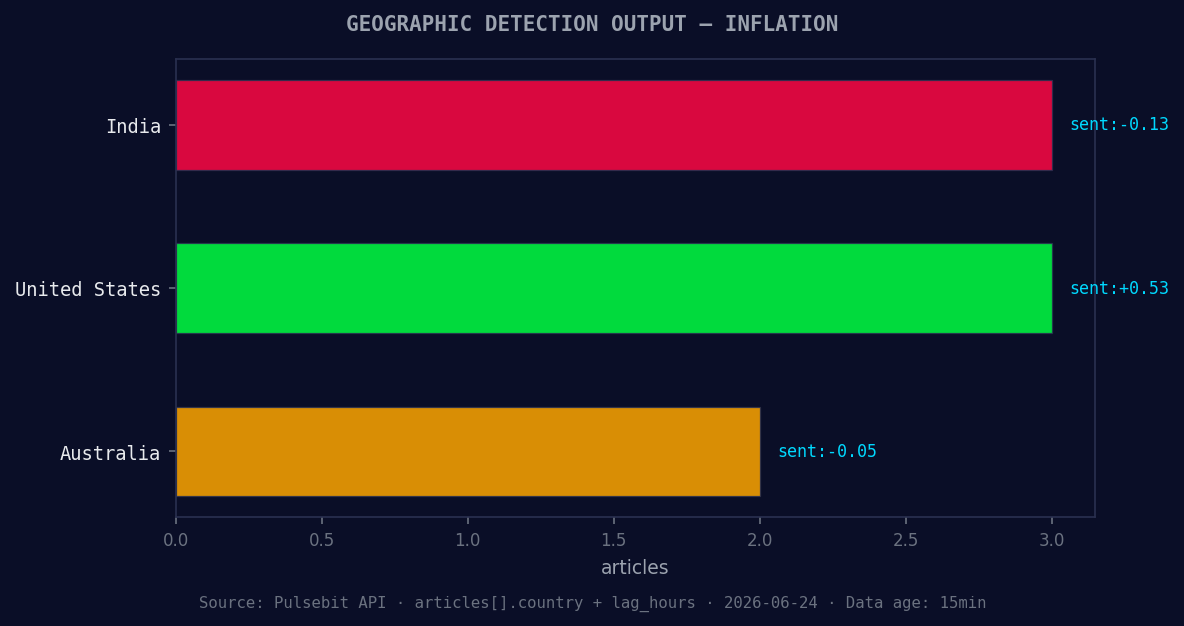
*Geographic detection output for inflation. India leads with 3 articles and sentiment -0.13. Source: Pulsebit /news_recent geographic fields.*
# Check the response
print(data)
# Meta-sentiment moment: running the cluster reason string through POST /sentiment
cluster_reason = "Clustered by shared themes: top, firm's, investing, playbook, before."
meta_sentiment_response = requests.post(
'https://api.pulsebit.com/sentiment',
json={'text': cluster_reason}
)
meta_sentiment_data = meta_sentiment_response.json()
# Output the meta sentiment analysis
print(meta_sentiment_data)
This snippet first queries the sentiment for the topic 'inflation' filtered by the English language. It then sends the cluster reason string back through our sentiment analysis endpoint to evaluate how the narrative itself is being framed. This dual approach helps us understand both the sentiment score and the framing context, allowing us to react swiftly.
Three Builds Tonight
Now that we’ve got a solid understanding of the data, let’s outline three specific builds to leverage this insight:
Geo-Filtered Sentiment Tracker: Create a function that continually queries sentiment data for 'inflation' focusing on English-language sources. Set a threshold for momentum spikes, say -0.5, to alert you when there’s significant downward pressure on sentiment.
Meta-Sentiment Analysis Loop: Develop a routine that captures the reasoning behind clustered narratives. Use the cluster reason string as input and maintain a log of sentiment scores to identify emerging themes related to inflation, such as 'google', 'rate', or 'investment'.
Dynamic Alert System: Build a real-time alert system that notifies you when the momentum for inflation sentiment dips below -0.5. This would not only consider the current sentiment but would also cross-reference with themes from the past, like 'top' or 'firm's' strategies in the context of investing.
Get Started
To implement these insights and begin building, head over to pulsebit.lojenterprise.com/docs. With the provided code, you can copy-paste and run this in under 10 minutes. The data is revealing, and now it’s time to act on it.


Top comments (0)