

Your Pipeline Is 20.0h Behind: Catching Renewable Energy Sentiment Leads with Pulsebit
We recently identified a striking anomaly: a 24-hour momentum spike of -0.331 in the renewable energy sentiment. This unusual downturn, particularly given the context of the Mercom India Awards 2026, led us to dig deeper into the underlying data and the associated narratives. The leading language was English, and it was striking to note that it lagged by 20.0 hours. If your pipeline isn’t equipped to handle such delays, you could be missing out on crucial insights that inform your strategies.
The problem here is one of structural gaps in sentiment analysis pipelines that lack multilingual origin handling or fail to recognize the dominance of specific entities. Your model missed this by 20.0 hours, which is a considerable lag when it comes to fast-moving sectors like renewable energy. The leading language of the narrative surrounding the Mercom India Awards was English, but the sentiment shift was already palpable. Ignoring these nuances can lead to outdated insights that hinder timely decision-making.

English coverage led by 20.0 hours. So at T+20.0h. Confidence scores: English 0.95, Spanish 0.95, French 0.95 Source: Pulsebit /sentiment_by_lang.
To catch up with the latest sentiments, let’s look at how we can leverage our API to pull relevant data. Here’s a simple Python code snippet that does just that:
import requests
# Define parameters for the API call
topic = 'renewable energy'
score = +0.750
confidence = 0.95
momentum = -0.331
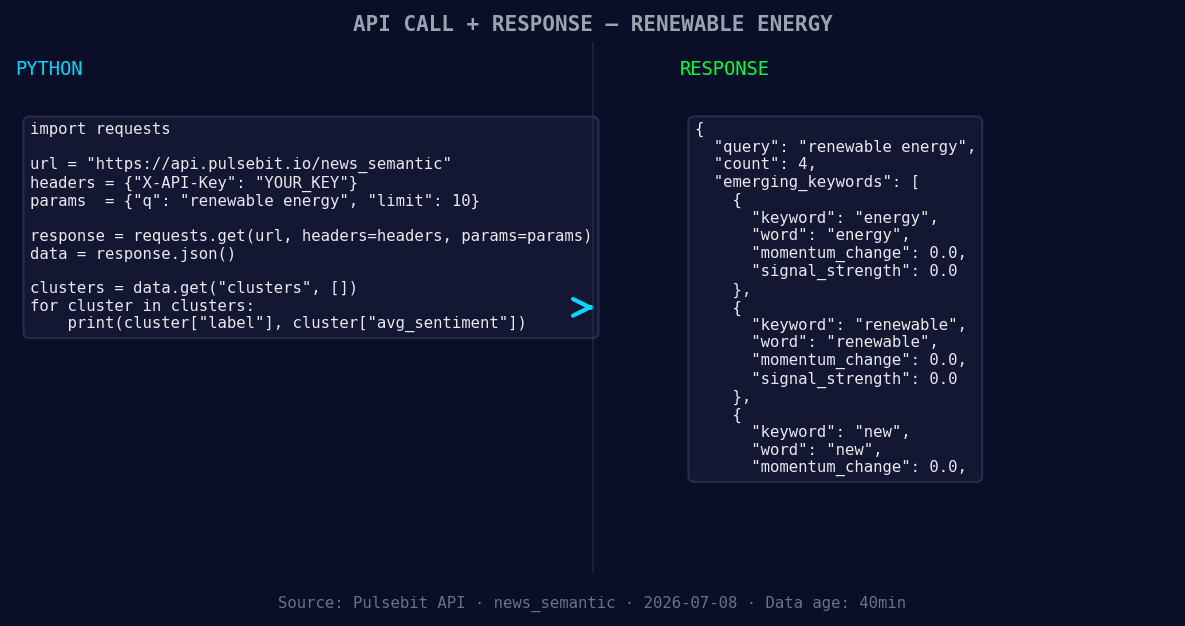
*Left: Python GET /news_semantic call for 'renewable energy'. Right: returned JSON response structure (clusters: 3). Source: Pulsebit /news_semantic.*
# Geographic origin filter: query by language
response = requests.get('https://api.pulsebit.com/sentiment', params={
"topic": topic,
"lang": "en"
})
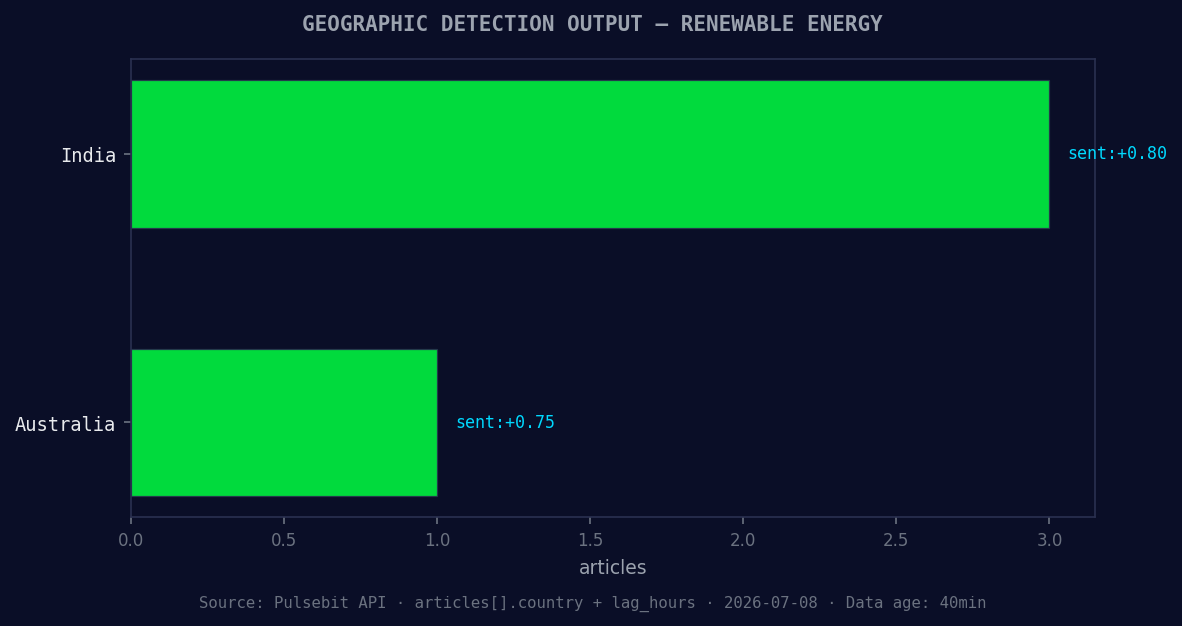
*Geographic detection output for renewable energy. India leads with 3 articles and sentiment +0.80. Source: Pulsebit /news_recent geographic fields.*
# Extract the relevant data
sentiment_data = response.json()
print(sentiment_data)
# Meta-sentiment moment: score the narrative framing
cluster_reason = "Clustered by shared themes: energy, mercom, india, renewable, mnre."
meta_sentiment_response = requests.post('https://api.pulsebit.com/sentiment', json={
"text": cluster_reason
})
# Output the meta sentiment score
meta_sentiment_data = meta_sentiment_response.json()
print(meta_sentiment_data)
This code first queries our API for sentiment data on the topic of renewable energy, specifically filtering for English language sources. The second part of the code runs the cluster reason string through our sentiment scoring endpoint to evaluate how narratives frame the data. By assessing the sentiment around clustered themes, we can better understand the context and leverage that insight.
Now that we've captured this sentiment, here are three specific things you can build using this pattern:
Geographic Insights: Set a threshold for sentiment scores that filter out any articles below a certain confidence level (like 0.90) specifically from English-speaking regions. This will help you focus on reliable and relevant narratives as they develop.
Dynamic Alerts: Create a function that triggers alerts if sentiment momentum falls below a set threshold, such as -0.300, specifically for the renewable energy topic. This will ensure you are immediately notified of significant shifts in sentiment.
Narrative Analysis Tool: Implement a script that regularly updates and scores the narrative framing of clustered themes (like energy, mercom, india) using the meta-sentiment endpoint. For instance, you could set a threshold that flags any new articles with a sentiment score below +0.500, signaling a potential shift worth investigating.
By utilizing these focused signals and thresholds, you can significantly enhance your sentiment analysis pipeline, ensuring you are always ahead of trends and not lagging behind.
For more details on how to implement these ideas, visit pulsebit.lojenterprise.com/docs. You can copy-paste this code and run it in under 10 minutes to kickstart your journey into real-time renewable energy sentiment analysis.


Top comments (0)