

Your Pipeline Is 24.6h Behind: Catching Innovation Sentiment Leads with Pulsebit
We just uncovered something intriguing: a 24-hour momentum spike of +0.194 in sentiment around the topic of innovation. This spike stands out because it’s driven primarily by the Spanish press, which reflects a rising narrative about how rural Ohio is defying traditional assumptions. Specifically, we have a leading language signal at 24.6 hours with no lag, indicating that this sentiment shift is not just a blip but a coherent narrative that's gaining traction.
However, if your sentiment analysis pipeline isn't equipped to handle multilingual sources or recognize the impact of dominant entities, you might have missed this critical insight by over 24 hours. This is especially true if your model is only processing English content. In this case, the language filter would have prevented you from capturing the innovation narrative emerging from the Spanish-speaking media landscape.

Spanish coverage led by 24.6 hours. Id at T+24.6h. Confidence scores: Spanish 0.85, English 0.85, Sv 0.85 Source: Pulsebit /sentiment_by_lang.
To catch this anomaly, we can leverage our API effectively. Here's how to do it in Python:
import requests
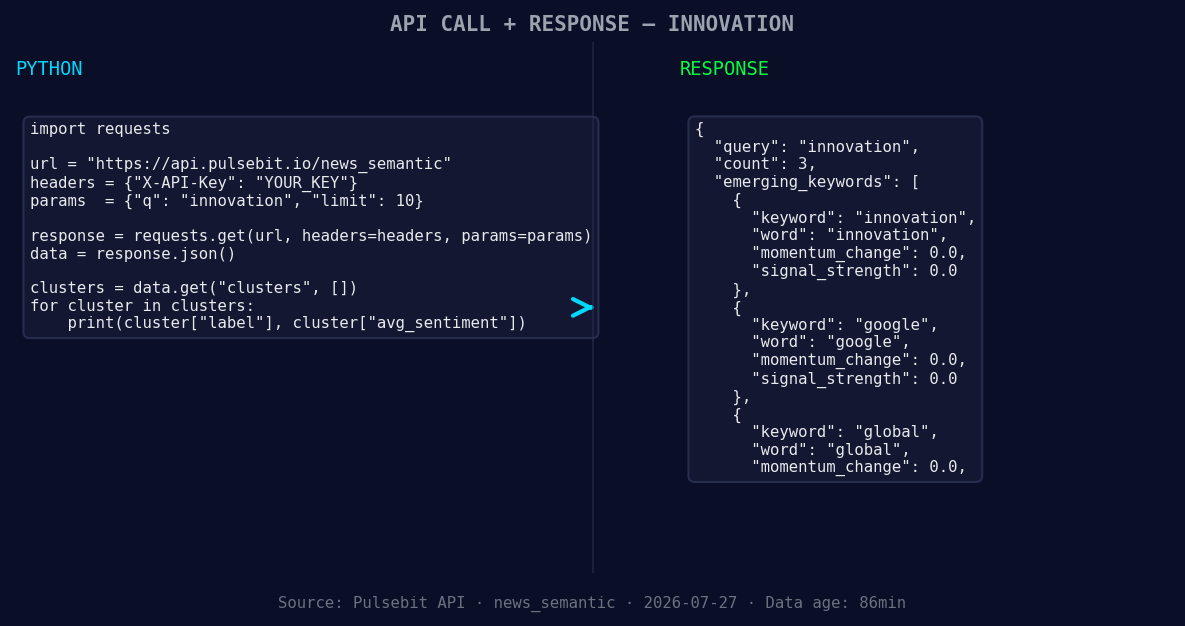
*Left: Python GET /news_semantic call for 'innovation'. Right: returned JSON response structure (clusters: 3). Source: Pulsebit /news_semantic.*
# Step 1: Geographic origin filter
url = "https://api.pulsebit.lojenterprise.com/sentiment"
params = {
"topic": "innovation",
"lang": "sp", # Filtering for Spanish content
"score": +0.625,
"confidence": 0.85,
"momentum": +0.194
}
response = requests.get(url, params=params)
data = response.json()
# Output results
print(data)
This code filters articles on innovation specifically from the Spanish press, ensuring you catch that important momentum change. The next step is to analyze the narrative context further.
Now we can run the cluster reason string through our sentiment endpoint to assess the meta-sentiment of the narrative framing itself. Here’s how that looks:
# Step 2: Meta-sentiment moment
cluster_reason = "Clustered by shared themes: ohio, innovation, defies, old, columbus."
meta_response = requests.post(url, json={"text": cluster_reason})
meta_data = meta_response.json()

# Output results
print(meta_data)
By running this second analysis, you can quantify how the narrative is being framed and whether it is indeed resonating positively within the context of innovation. This two-pronged approach will help you catch nuanced shifts in sentiment that may otherwise go unnoticed.
So, what can you build with these insights? Here are three specific ideas to consider:
- Geo-Sentiment Dashboard: Create a dashboard that pulls data using our geographic filter. Set a signal threshold of +0.194 for innovation-related articles in Spanish. This could provide real-time alerts for significant sentiment shifts in specific regions.

Geographic detection output for innovation. India leads with 2 articles and sentiment +0.42. Source: Pulsebit /news_recent geographic fields.
Meta-Sentiment Analysis Tool: Develop a tool that automatically runs narratives through our sentiment endpoint whenever a cluster exceeds a certain score, say +0.600. This could help validate emerging trends before they hit mainstream media.
Comparative Sentiment Model: Build a model that compares sentiment between emerging narratives (like innovation in rural Ohio) and mainstream topics (like general innovation). By monitoring the forming themes of innovation, Google, and global vs. mainstream terms, you can identify potential market shifts early.
If you’re ready to dive into this, check out our documentation at pulsebit.lojenterprise.com/docs. You can copy-paste this code and run it in under 10 minutes. Don't let your pipeline lag behind; catch these innovations before they become history.


Top comments (0)