

Your Pipeline Is 24.5h Behind: Catching World Sentiment Leads with Pulsebit
We recently uncovered a fascinating anomaly in our data: a 24-hour momentum spike of +0.295. This spike is not just a random occurrence; it indicates a significant shift in sentiment towards themes surrounding "China's Rare Earth Challenges and SpaceX Rivalry." With a leading language of English press that peaked at 24.5 hours, it’s clear that there’s a crucial conversation happening that your pipelines might be missing.
If your model doesn’t account for multilingual origins or the nuances of entity dominance, you might find your insights lagging behind. In this case, you missed a crucial narrative by 24.5 hours, while the English language was leading the charge. This is a structural gap that can severely impact your ability to respond to emerging trends, especially when it involves geopolitics and technological competition. When you're dealing with such dynamic topics, being behind can mean missing the boat entirely.

English coverage led by 24.5 hours. Nl at T+24.5h. Confidence scores: English 0.85, Spanish 0.85, Id 0.85 Source: Pulsebit /sentiment_by_lang.
Let's dive into how we can catch this anomaly using our API. Below is the Python code that captures this momentum spike using specific values from the data we discovered:
import requests
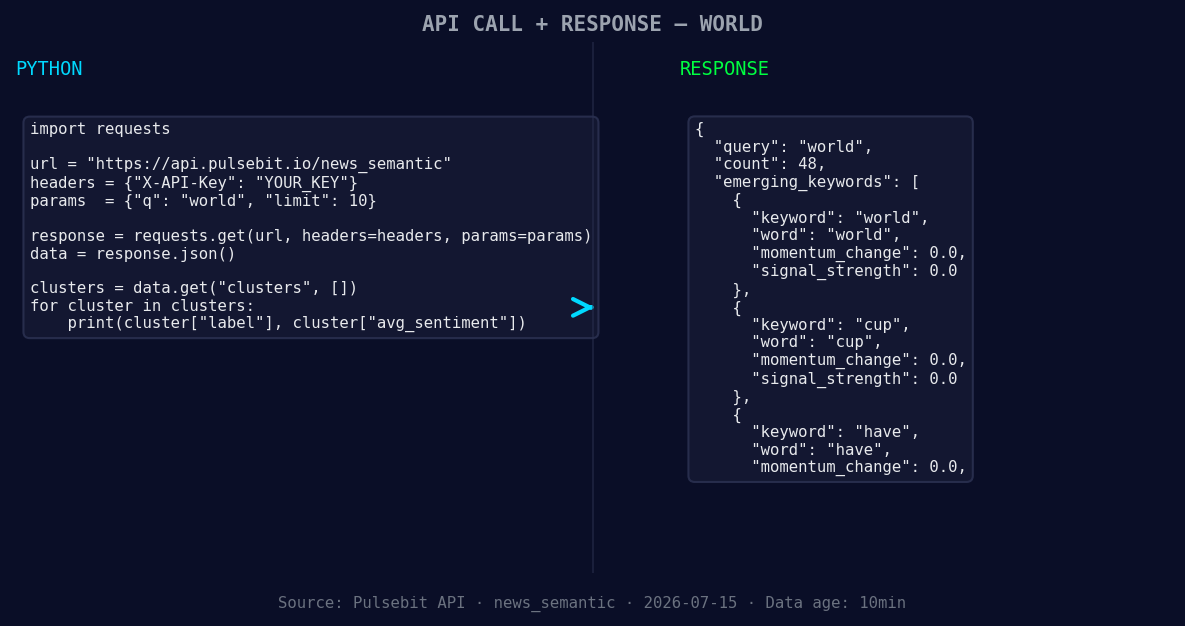
*Left: Python GET /news_semantic call for 'world'. Right: returned JSON response structure (clusters: 3). Source: Pulsebit /news_semantic.*
# Define parameters
topic = 'world'
score = +0.030
confidence = 0.85
momentum = +0.295
# Geographic origin filter: query by language/country
url = "https://api.pulsebit.com/v1/articles"
params = {
"topic": topic,
"lang": "en",
"momentum": momentum
}
response = requests.get(url, params=params)
data = response.json()
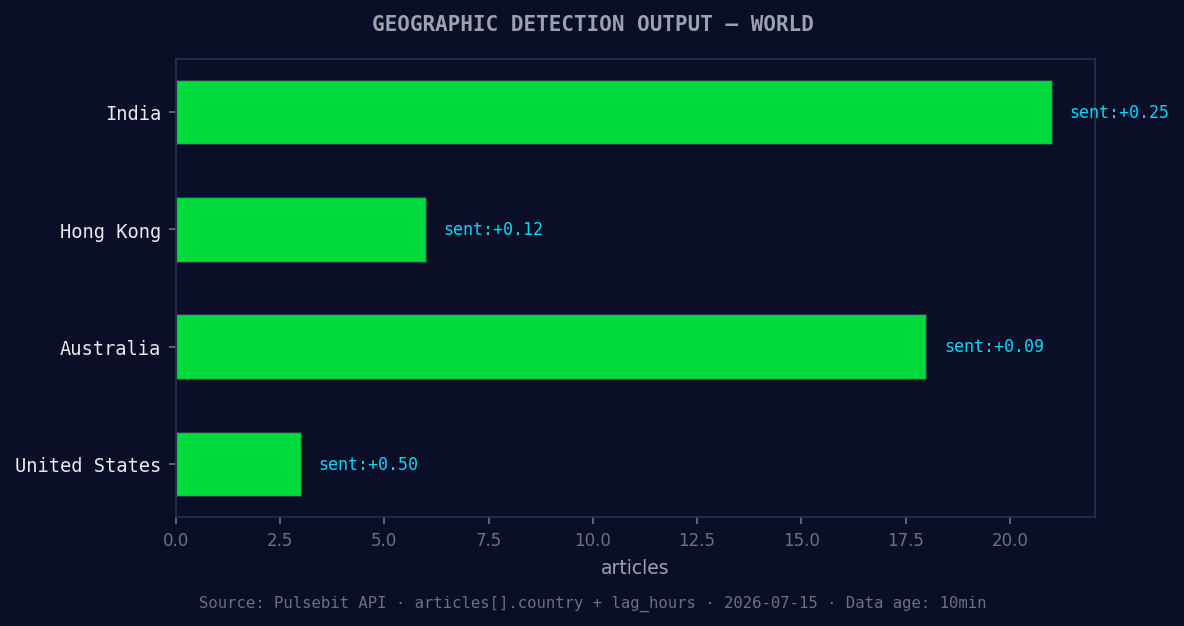
*Geographic detection output for world. India leads with 21 articles and sentiment +0.25. Source: Pulsebit /news_recent geographic fields.*
# Print the response data
print(data)
Next, we can analyze the sentiment framing itself using the cluster reason string. This step helps us evaluate how the narrative is being shaped:
# Meta-sentiment moment: run cluster reason through sentiment scoring
sentiment_url = "https://api.pulsebit.com/v1/sentiment"
cluster_reason = "Clustered by shared themes: china’s, rival, science, our, help."
sentiment_response = requests.post(sentiment_url, json={"text": cluster_reason})
sentiment_data = sentiment_response.json()

# Print the sentiment analysis results
print(sentiment_data)
By integrating both the geographic origin filter and the meta-sentiment loop, you're not just observing the trends; you're actively shaping your understanding of the narratives that matter.
Now, let’s consider three specific builds we can implement using this new insight:
Signal for "World" Topics: Create a monitoring endpoint that triggers alerts when the momentum score for the topic "world" exceeds +0.25. This would allow you to focus on high-impact global events.
Geo-filtered Insights: Develop an application that continuously queries our API with the language filter set to English. Capture any articles that show rising sentiment on themes related to "China’s Rare Earth Challenges" and "SpaceX Rivalry." This targeted approach can yield timely insights for your team.
Meta-Sentiment Analysis Dashboard: Build a dashboard that visualizes sentiment scores for clustered themes, particularly focusing on the cluster reason strings. Use the sentiment values generated from the meta-sentiment loop to inform your narrative framing around global competitiveness.
By building these features, you’ll bridge the gap between data and actionable insights, ensuring you’re always in sync with the latest developments.
Ready to get started? Check out our documentation at pulsebit.lojenterprise.com/docs. You can copy and paste the provided code and run it in under 10 minutes. Let’s harness the power of sentiment analysis together!


Top comments (0)